The CanariasLife webcams blog
A

B

C

D

E

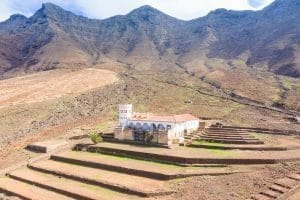
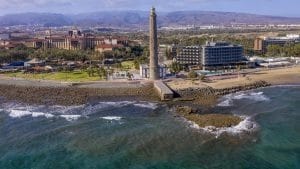
"Maspalomas Lighthouse in the south of Gran Canaria. The image shows the lighthouse and its surroundings. This image commemorates February 1, 1890, when the lighthouse was lit for the first time."
The Maspalomas lighthouse
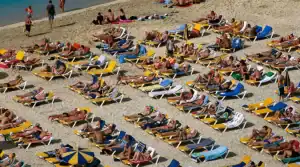
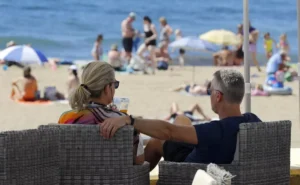
"Tourists enjoying the sun on loungers, lined up on the beach on the coast of the Canary Islands."
Ecotourism in the Canary Islands
Hand holding an antique knife with a decorated handle, possibly for domestic or ceremonial use.
The 'Canarian knife'
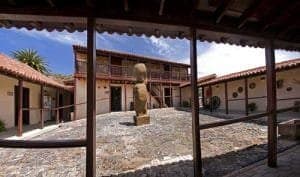
"Facade of the Casa del Capitán Museum in the Canaries, with a wooden entrance and an antique cart in the foreground."
The 'History Museum Casa de El Capitán'
cloudy in Tenerife
The 'Nublado' in Tenerife
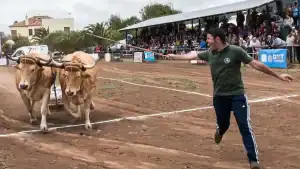
Cattle dragging competition in Tenerife, with a man guiding two oxen in front of the audience.
Ox dragging in the Canaries
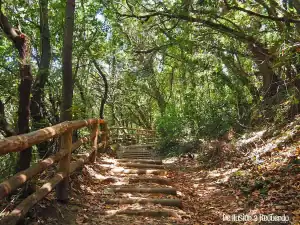
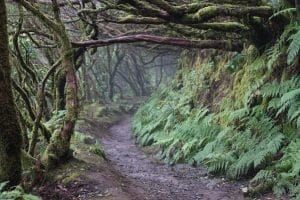
Pathway in the Centenary Guardians Forest, Tenerife, surrounded by lush vegetation and natural light.
The Guardians' Forest
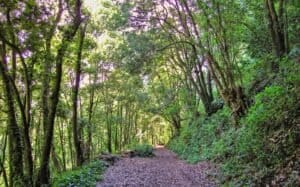
Forest road in the Canaries, natural environment and hiking on the island.
The Los Tilos forest
Purple pansy flower in the webcams from CanariasLife, real-time coverage of the Canary Islands.
The Enchanted Forest of Anaga
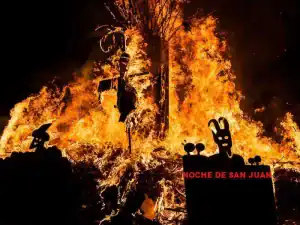
The image shows a large bonfire during the celebration of San Juan Night in the town of San Juan de la Rambla, Tenerife, with figures and symbols in the foreground while the fire burns intensely.
El Bucio in San Juan de la Rambla
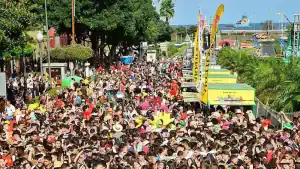
"Colorful view of the Carnival of Las Palmas de Gran Canaria with a group of people in costumes enjoying the festive atmosphere. The costumes are varied and striking, reflecting the joy and vibrant spirit of the event."
The Carnival of Las Palmas
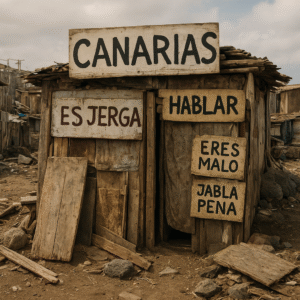
"Wooden shelter with signs that define the local vocabulary."
Linguistic shantytown
sunset, Canary Islands, Gran Canaria, nature, silhouettes
The climate in the Canary Islands
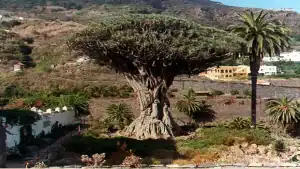
"Panoramic view of the millenary dragon tree in Tenerife, highlighting its imposing trunk and the lush vegetation that surrounds it."
The dragon tree of the Canary Islands
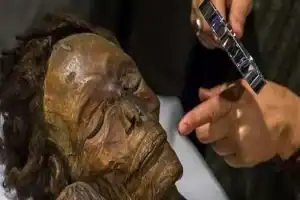
Close-up of a Guanche mummy in the Canaries, with a researcher conducting a detailed analysis of its features.
Embalming in indigenous peoples
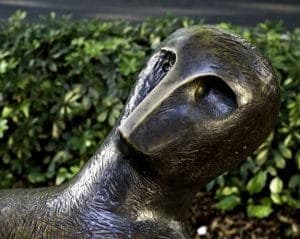
Sculpture "Warrior of Goslar" in Santa Cruz de Tenerife, an abstract piece located in a public space.
The Warrior of Goslar
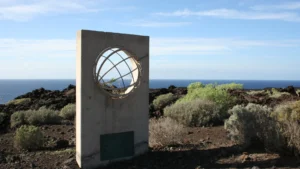
Concrete monument situated in a volcanic landscape next to the ocean. The structure features a metal sphere pierced by rings, symbolizing the globe, and a plaque at the base. In the background, the sea and a dark lava terrain with low vegetation are observed, under a clear sky.
El Hierro Before Greenwich
The image shows a lush and well-kept garden in Puerto de la Cruz, with a variety of colorful plants and flowers. The garden is surrounded by paved paths and has a landscaped layout that includes stone walkways and grassy areas. In the background, a structure of traditional architectural style adds a historical touch to the environment. The overall atmosphere is one of tranquility and natural beauty, ideal for strolling and enjoying the scenery.
The Garden of the Little Brothers
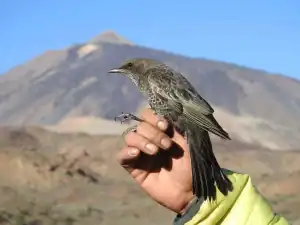
Close-up of a white-capped blackbird, a bird that inhabits the Teide National Park, being held by a hand, with the Teide volcano in the background.
The White-Cap Blackbird in Teide
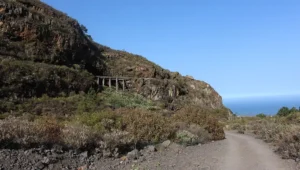
Dirt path winding through a rocky slope with low and dry vegetation, under a clear blue sky. On the mountain wall, there is an ancient or crumbling wooden structure, possibly part of an old bridge or walkway. In the background, the sea is visible on the horizon, suggesting a coastal and natural environment, likely on a volcanic island or Mediterranean area.
The Mystery of Barranco de Badajoz
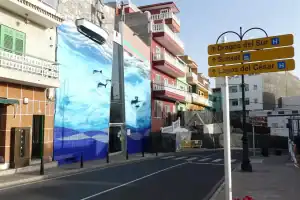
Facade of the Fisherman's Museum in Puerto Santiago, decorated with a mural depicting a marine landscape with waves and fish, along with a small real boat placed at the top of the wall, integrating three-dimensional elements.
The Fisherman Museum in Puerto de Santiago
Portrait of Benito Pérez Galdós, a prominent Canarian writer, reading a book with a focused expression.
The Canary novelist Benito Pérez Galdós
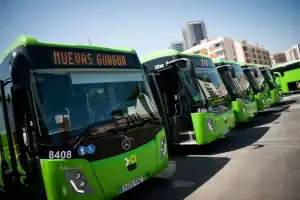
New fleet of buses in the Canary Islands, offering modern and accessible transportation for all.
The origin of the word 'Guagua'
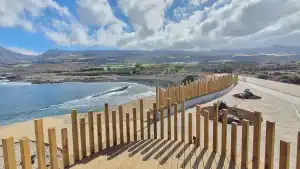
"View of the promenade at Punta Blanca in the Canary Islands, with a paved path lined with palm trees and residential buildings, and the blue ocean in the background under a clear sky."
The Punta Blanca Promenade
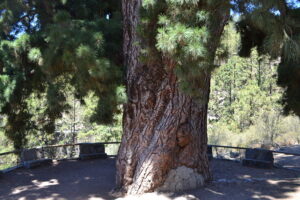
Close-up of the trunk of a huge pine tree, with thick and rough bark, and leafy branches extending sideways. The tree is surrounded by a small area bounded by benches and a stone wall, amidst a pine forest illuminated by daylight.
The Big Pine of Vilaflor
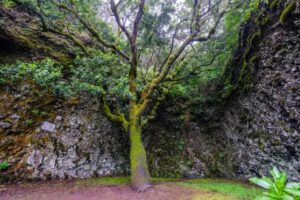
Tree in a canyon with dense vegetation on the CanariasLife webcams.
The Garoé Tree
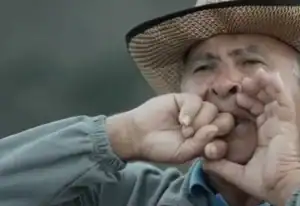
The image shows an elderly man using the "silbo gomero", a traditional whistled language from the island of La Gomera in the Canary Islands. He wears a straw hat and appears to be in a rural setting while performing this ancient means of communication.
The first tweet was born in the Canaries
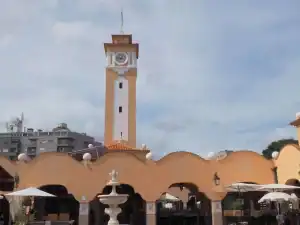
Clock tower of the old Mercado de Nuestra Señora de África, in Santa Cruz de Tenerife, Canary Islands.
The clock of the Market Tower
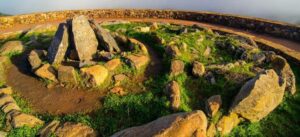
Circle of megalithic stones at the top of a mountain, with large tilted rocks in the center surrounded by green grass and a stone wall in the background, under a clear sky.
The Sanctuary of Alto de Garajonay
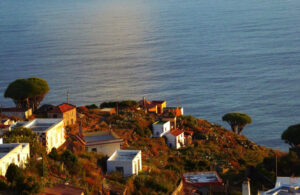
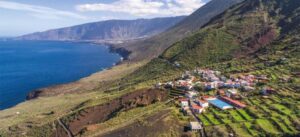
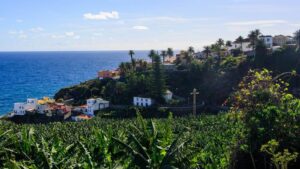
Aerial view of a small coastal village set on a slope descending to the sea. The houses, with white walls and red or green roofs, are nestled between low vegetation and trees with rounded crowns —possibly Canary dragon tree— bathed in the golden light of sunrise or sunset. The blue ocean extends to the horizon, with its serene and rippling surface. The scene conveys calmness, rusticity, and harmony with nature, typical of the Canary Islands, like La Palma.
El Tablado
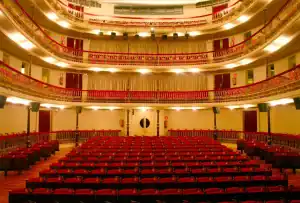
"Interior view of the Teatro Leal in La Laguna, showcasing its elegant architecture with ornamental details, decorative balconies, and an illuminated stage prepared for a performance."
The Leal Theater of La Laguna
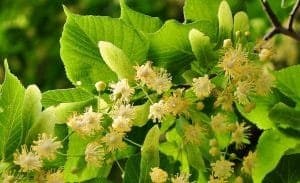
Canary Linden, white flowers and green leaves, with natural light, creating a tranquil and fresh scene.
The Canarian lime tree
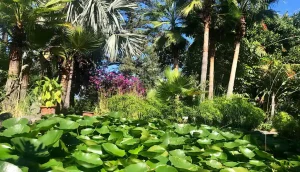
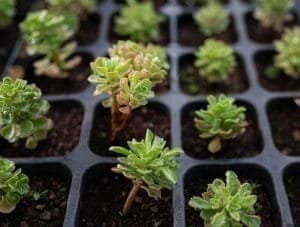
"View of the Teide nursery, featuring a variety of native plants from the Teide National Park in Tenerife." botanical garden
The Teide nursery holds
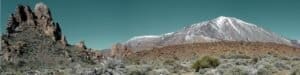
panoramic, teide, canary islands, nature, peak of teide, spain, landscape, tenerife, dear, mountain, teide, teide, tenerife, tenerife, tenerife, tenerife, tenerife
Teide volcano, adventures in Tenerife
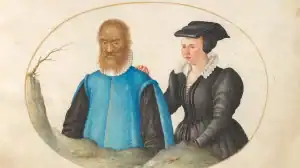
"In Tenerife, an image illustrating the first documented case in the world of werewolf syndrome. The photo shows an individual affected by this rare medical condition, characterized by excessive facial and body hair growth."
In Tenerife the first werewolf
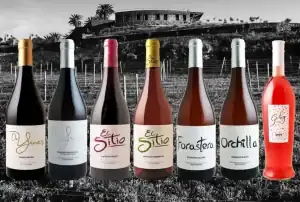
"Bottles of wine from the Forastera Gomera variety in a winery in La Gomera, highlighting the heroic viticulture of the region."
Wine tourism, La Gomera
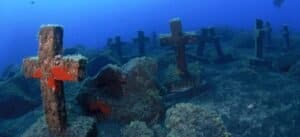
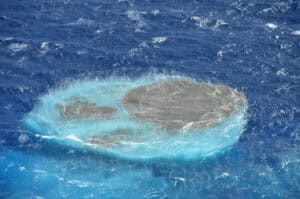
1. Real-time images from webcams in the Canary Islands, views of the Atlantic Ocean and natural beauty.
Underwater Eruption in La Restinga
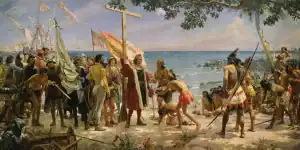
This picture shows protesters holding flags, visibly expressing their disagreement with the dominant narrative regarding Spanish colonization in Latin America. The atmosphere is one of protest and social activism, highlighting the tension between different historical views.
Spain rebels
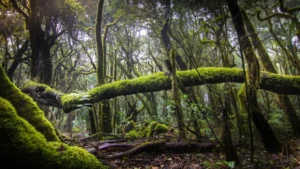
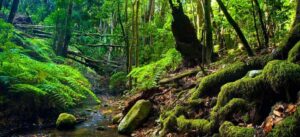
Mysterious, humid forest where twisted trees covered in bright green moss intertwine to form a dense canopy. A fallen trunk, also covered in moss, crosses the scene diagonally, while the ground is covered in leaves, roots, and plant debris. Diffused light filters through the branches, creating a magical and almost enchanted atmosphere—ideal for representing cloudy jungles, primary forests, or high-humidity ecosystems like those of the Canary Islands.
The Primordial Forest
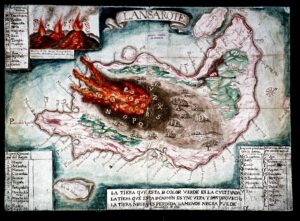
Old map of the island of Lanzarote with illustrated representations of the volcanic eruptions of 1730. In the central and western areas, blackened and reddish zones indicate lava flows, with drawings of erupting volcanoes expelling fire. The map includes names of towns and places, an explanatory legend, and annotations distinguishing cultivated lands, those covered by sand, and those affected by lava.
The birth of Timanfaya
Astronomical observatory with a round dome silhouetted against a mountain, under a starry night sky. In the horizon, the glow of sunset with orange and violet tones can be seen, while a sea of clouds covers the lower part of the landscape.
the cleanest sky in the world

F

G

I

J

L

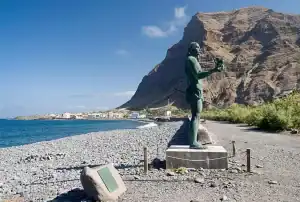
"Statue of a female figure in the Cueva de Iballa, in La Gomera. The figure is carved in stone and represents the local legend of the cave, showing artistic details that evoke the history and culture of the island."
The Iballa cave
Tajuya cave La Palma, view of the volcano
The Tajuya Cave
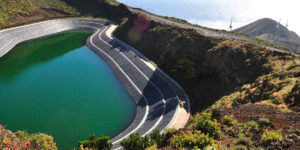
Curved water tank with a dark coating and intense green water, located next to a cliff. At the top, a road is visible, and in the background, hills with wind turbines and the ocean under a clear sky.
the electric currency of El Hierro
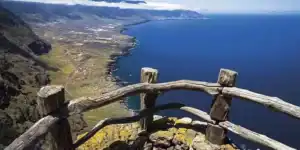
Scenic hike in the Canary Islands with a view of the Atlantic Ocean and volcanic coastlines.
La Garita in El Hierro
Lush laurisilva forest with a small stream winding between rocks covered in moss. The ground is carpeted with ferns and damp leaves, while tall, dense trees filter sunlight, creating a green, fresh, and almost magical atmosphere.
The laurisilva of Garajonay
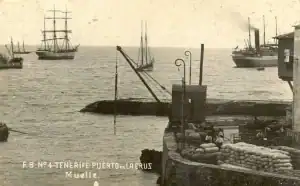
Puerto de La Cruz, historic Tenerife: boats and dock with a crane, port activity.
The cultural history of Puerto de la Cruz
Illustration showing the importance of the letter "ñ" in the word "España", highlighting its linguistic origin.
The history of the letter 'ñ'
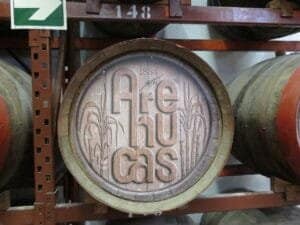
Bottles of Arehucas rum and ronmiel, typical products from the Canary Islands, made in Gran Canaria.
The history of rum
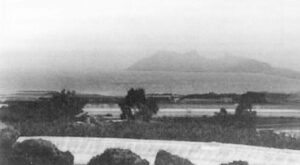
Mountain silhouette on the horizon, flat fields and forest in the foreground; rural landscape with a tranquil atmosphere.
The legend of San Borondón
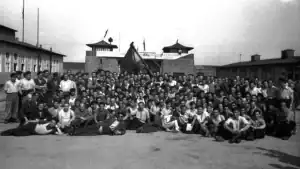
A large group of liberated prisoners posing in the Mauthausen concentration camp, after liberation.
The official list of Mauthausen
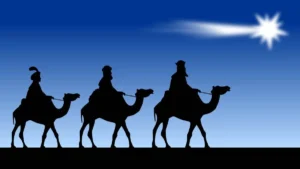
Three wise men on camels, following a bright star in the night sky.
The Magi Parades
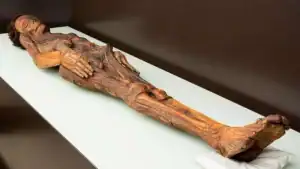
The image shows a **Guanche mummy**, belonging to the ancient indigenous inhabitants of the Canary Islands. It is one of the best-preserved mummies of Guanche culture, displayed in museums on the islands. This mummy is a testament to the advanced embalming techniques practiced by the Guanches to preserve their dead, and has been the subject of scientific studies revealing important details about their culture and way of life.
The Guanche mummy
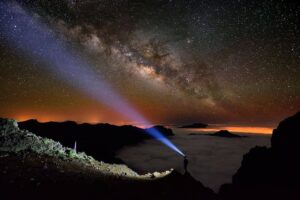
A silhouetted person stands on a volcanic cliff, illuminating the starry sky with a powerful flashlight while observing the Milky Way majestically arching over a sea of clouds. The horizon glows with an orange hue, possibly from a distant city or dawn, contrasting with the dark shadows of the mountains and rocky ground. The scene conveys solitude, wonder, and cosmic connection — ideal for representing astrophotography, nighttime exploration, or destinations like Teide in Tenerife, where the sky is one of the clearest in the world.
La Palma and its Cosmic Phenomena
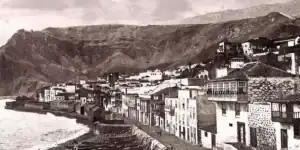
Coastal town with white buildings, mountains in the background, sea to the left; historical and rural landscape.
La Palma: the indomitable Canary Island that resisted the Roman Empire
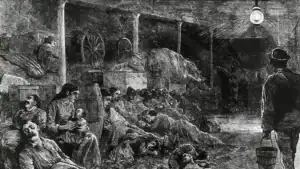
"Historical recreation of the plague in Las Palmas de Gran Canaria during the 17th century, highlighting the invasion of the Dutch privateer Van der Does. The image illustrates the devastation of the disease and the threat of pirate attacks on the city."
The plague in Las Palmas de Gran Canaria
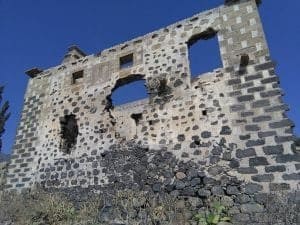
The recovery of Casa Fuerte
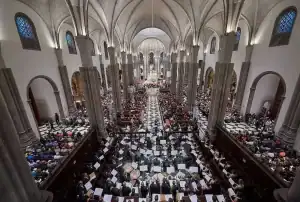
"View of the majestic interior of the Cathedral of La Laguna, highlighting the impressive central altarpiece, considered the largest in the Canary Islands, undergoing restoration."
The restoration of the largest altarpiece in the Canaries
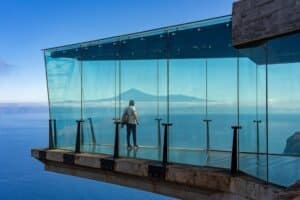
pristine beaches. A person looks out at the sea from a glass platform suspended over the waves, with a volcano visible on the horizon under a clear blue sky.
The route of the Gomeros viewpoints
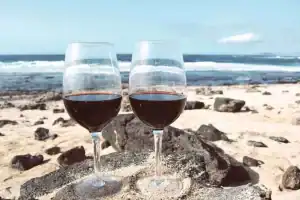
The image shows two glasses of red wine on a rocky surface on the beach, with the sea in the background. This scene represents the connection between the wines of Tenerife and their natural surroundings, highlighting the uniqueness of the island's volcanic landscape, which influences the quality and character of its wines. The presence of the ocean in the background also emphasizes the island identity of Tenerife's wines, famous for their unique varieties due to the special climatic and geographical conditions of the region.
The vine is the main crop of Tenerife
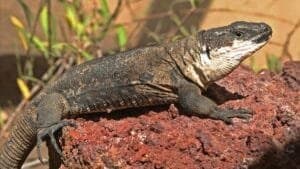
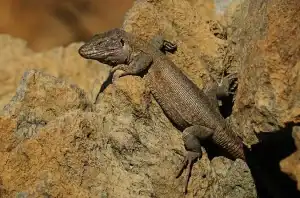
Giant iguana from Tenerife in its natural habitat, showing its characteristic rough skin over rocks.
Giant lizard of Tenerife
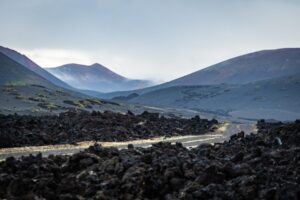
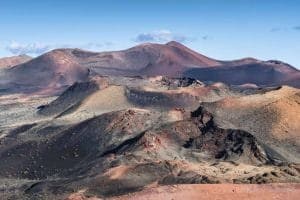
Desolate volcanic landscape with ground covered in dark, rough lava rocks in the foreground. In the background, reddish and gray hills and volcanic cones extend, partially wrapped in morning fog or mist. The sky is clear but muted, suggesting dawn or dusk. Sparse green vegetation sprouts between the rocks, highlighting the resilience of life in this extreme environment. Ideal for representing lunar landscapes, volcanic natural parks like Timanfaya (Lanzarote) or areas of high geological activity.
Lanzarote: The lunar landscape
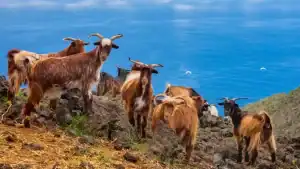
"A group of goats grazing in a green field with the blue sea in the background. The goats are scattered, and there are rocks and vegetation around. The sky is clear, and the seascape extends to the horizon." goat breeding in Fuerteventura
Goat kids
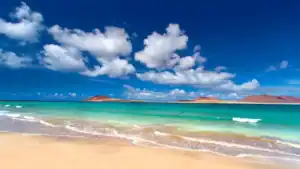
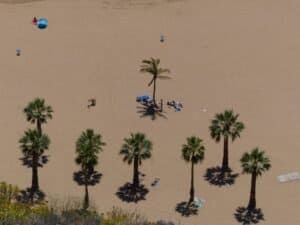
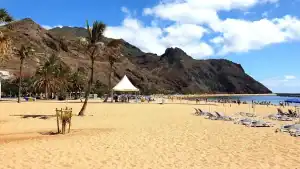
sand beach, beach, palm trees, nature, Playa Las Teresitas, Tenerife
Las Teresitas: a tropical paradise
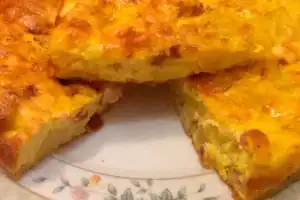
The image shows a homemade potato omelet with pieces of ham or bacon, cut into portions. Its golden and juicy appearance highlights the fluffy texture of the interior, which mixes the ingredients evenly, adding an extra touch of flavor to the traditional dish.
the potato omelettes
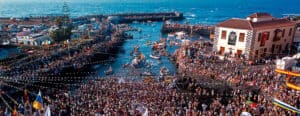
A port filled with people and boats on the coast of the Canary Islands during a festive event.
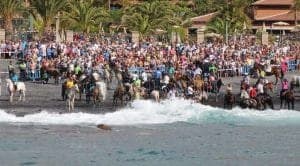
The Wine Boats
Plate of rabbit in salmorejo with potatoes, accompanied by a glass of red wine in a Canary guachinche.
The guachinches of Tenerife
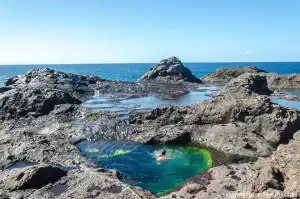
A group of natural puddles in the Canary Islands, surrounded by rock formations and with the Atlantic Ocean on the horizon, offering an ideal place to enjoy a refreshing bath in an impressive natural setting.
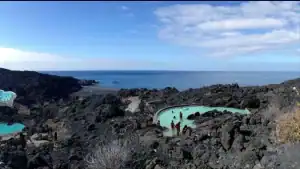
The best natural pools in the Canary Islands
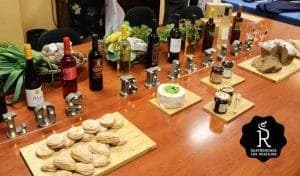
The image presents a gastronomic exhibition with local products, likely from Los Realejos, on the island of Tenerife. On a wooden table, there are bottles of wine, cheeses, breads, preserves, as well as other foods like bananas and fresh herbs. In the center of the table, the illuminated letters "LOS REALEJOS" highlight the name of the place or event. This arrangement suggests a showcase of typical products from the region, which could be part of a promotion of local gastronomy. The logo in the lower right corner reinforces the focus on the gastronomy of Los Realejos.
Los Realejos sells with seal
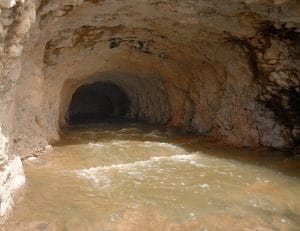
Ancient tunnels made of stone, probably used for storage or defense, are seen from a lateral and frontal perspective.
The Water Tunnels of the Canaries
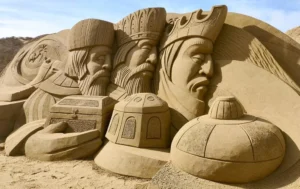
- Sand sculptures with detailed faces and historical elements on the beach of the Canary Islands.
The Sand Nativity Scenes of the Canaries
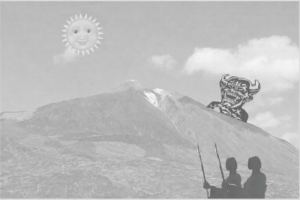
Black and white image showing an imposing mountain under a sky with clouds. At the top left, an anthropomorphic sun with a smiling face and pointed rays. To the right of the peak, the stylized silhouette of a demonic creature with horns and a threatening expression emerges. In the foreground, two shadowy human figures—possibly warriors or explorers—hold spears and look towards the mountain, as if confronting a legend or supernatural force. The scene evokes mythology, fantasy, or cultural symbolism, contrasting the divine (the sun) with the dark (the creature).
the Legend of Guayota in Tenerife
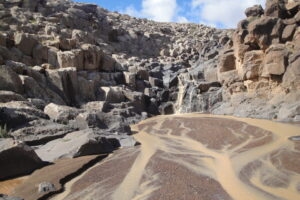
A small cascade of murky water flows between dark, angular volcanic rock formations, creating intricate patterns on the wet sand and gravel bed. The water, with a yellowish-brown hue, meanders down the stream before falling from a modest height. The blue sky with white clouds contrasts with the harshness of the arid and eroded landscape, suggesting a volcanic or semi-arid environment, possibly after recent rain. Ideal for depicting natural erosion, volcanic geology, or ephemeral stream ecosystems.
Signs of the Majos

M

N

O

P

Q

R

S

T

U

V

W

Explore the blog and discover the Canary Islands

The Canary Islands have always evoked a special fascination, both for travelers and for those privileged enough to live there. There is an almost magnetic feeling when thinking about that Atlantic corner where the volcano, forest, and sea blend, and where the local culture bursts with life in every square, festival, and traditional food. However, the true spirit of the islands is revealed when we can access the day-to-day, the spontaneity of the landscape, and the warmth of its people. This is precisely where the role of platforms like CanariasLife Webcams: a digital space that transcends the still image to offer a vital and profound experience of the archipelago.

CanariasLife Webcams: much more than live cameras

The CanariasLife proposal goes far beyond showing beautiful postcards: it integrates live storytelling with cutting-edge technology and vibrant content to bring the daily pulse of the islands to any place in the world. Its network of webcams provides a unique overview of beaches, natural parks, mythical squares, volcanic vineyards, and festivities, all in real time and HD quality.

Moreover, the blog linked to the platform integrates digital marketing strategies to enrich each image with context and detail. Here, a story about the volcanic origin of the beaches dialogues with the live broadcast of the sunset over Las Canteras; a report on the gomero whistling comes to life when heard in a celebration broadcasted from La Gomera. And, as if that weren't enough, everything is accessible from computer, tablet, or mobile, thanks to a multilingual app that amplifies the global reach of the project.
Viewing these cameras is not just a digital voyeurism exercise; it is a way to establish a connection with the territory and culture. A window, yes, but also a constant invitation to be part of the Canary heartbeat.

The unique soul of the Canary Islands: four essential curiosities

On CanariasLife, the bet is to tell the 'real Canary Islands': the one of stories, the one of small singularities that generally escape conventional guides. Here is just an appetizer of facts that do not leave indifferent to those who approach the archipelago:

  1. Laurisilva in Europe: The laurisilva forests of Tenerife and La Gomera are witnesses to a prehistoric Europe. Their mist, coolness, and giant laurels form a humid ecosystem that acts as a "sponge" for rain, allowing the development of one of the largest biodiversity reserves in the entire continent. They are relic forests, jewels of Nature, protected and celebrated as true treasures.
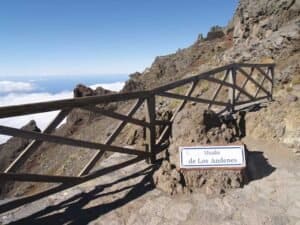
  2. Eternal skies and the Sky Law: Special laws have been necessary for the sky of the Canary Islands, near the Tropic of Cancer, to remain as pure as it once was. The so-called Sky Law makes La Palma and Tenerife sanctuaries for astronomers, where light pollution is firmly regulated to preserve the brightness of millions of stars. In La Palma, the Roque de los Muchachos is an international reference for astronomical observation.
  3. Silbo gomero: In La Gomera, the air is literally used to converse. Silbo Gomero, a cultural heritage recognized by UNESCO, is the most vivid demonstration of how necessity and creativity can challenge geography: a fully functional language based on whistles that allows the communication of complex messages over kilometers in valleys and ravines.
  4. A chameleonic beach: Did you know that the world-famous Las Teresitas Beach glows with its golden sand thanks to tons of sand brought from the Sahara? Previously, it was simply black, like most volcanic beaches. Human intervention transformed not only the aesthetic but also part of the ecosystem and the image associated with Santa Cruz de Tenerife.

CanariasLife: a close and authentic look

The differential value is immediately perceived when browsing the blog: this is not just about recommending places but about opening conversations about customs, characters, curiosities, and events that are part of daily life in the Canary Islands. Stories of fishermen in brotherhoods, the importance of the romerías, the secrets of a traditional market, or the process of making ash wine are just a few examples of the content that can be found.

The platform also adds a dose of immediacy and closeness. There are no intermediaries: users can see for themselves whether the beach is lively, how it dawns over Teide or the atmosphere of a local festival. This makes CanariasLife a reliable resource for getting informed, feeling part of, or simply being carried away by the atmosphere that only the archipelago offers.

The personal blog also amplifies the voice of the community, allowing residents and visitors to share impressions, comments, photos, and suggestions through social networks and actively participate in the digital conversation.
An inclusive channel: for travelers and for residents

Far from being limited to tourists, CanariasLife serves as a two-way channel where both first-time visitors and those who have grown up on the islands find reasons to be surprised, even facilitating blogging about personal experiences in a blog. For foreign visitors, the experience is very different from catalog pages: here, each beach, each meal, and each celebration takes on cultural context and historical depth. For the local population, it not only reinforces island identity but also offers the possibility to rediscover places, anecdotes, or even learn nuances about customs that are sometimes taken for granted.
Access from any device and versatile coverage (lonely and urban beaches, rural landscapes, and busy markets) extends the experience to older and younger people, students and professionals, residents and foreigners. A tool that has even been used in schools to teach geography and regional culture, highlighting the natural and cultural resources of the archipelago.
Table: Diversity of content on CanariasLife

Type of contentExampleWho it interests
Natural environmentNational parks, laurisilva trailsEcotourists, students
Events and traditionsCarnival, romerías, Silbo GomeroTravelers, residents, cultural curious
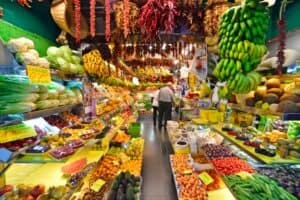
GastronomyPapas arrugadas, traditional marketsFoodies, lovers of local
History and legendsGuanche origins, folklore storiesFolklore enthusiasts, families
Practical informationBeach conditions, events calendarTourists, residents

CanariasLife Webcams: promotion, education, and sustainability

The impact of online publication is not limited to tourism promotion. There is also a clear educational component and awareness towards conservation, using templates to better structure information. The dissemination of festivals, endemic species, and protected landscapes contributes to making the wealth — and fragility — of the Canary ecosystems visible. For example, by showing in real-time the sea of clouds over the laurisilva or the calm pulse of a marine reserve underwater thanks to specialized webcams, empathy and curiosity for environmental protection are generated.

Among its technical strengths, the network of cameras (expanding, also with self-managed "full green" modules in remote locations) ensures:

  • High standard of visual quality, even in hard-to-access spaces.
  • Dissemination of natural and cultural heritage beyond tourism, promoting study and research.
  • Multilingual accessibility and support from a community of millions of visitors through its collaboration with Skyline Webcams.

These initiatives stimulate so-called "responsible tourism" and appreciation for authentic values, positively facing the tourist saturation and ecological challenges of a global destination.

Playa de Las Teresitas: when the natural and the human intertwine

The case of Las Teresitas illustrates how the identity of the islands continues to be forged between nature and human intervention. The conversion of a black volcanic beach into a splendid golden strip is not just a visual anecdote: it involves debates about sustainability, coastal management, and urban symbols.

  • Initially formed by volcanic sands from the San Andrés ravine.
  • Starting in 1973, the importation of nearly five million tons of Saharan sand completely transformed the landscape.
  • Successive regenerations and the protection of the beach require constant investment and attention.

Result? A charming tourist icon, though not without ecological and long-term management challenges. In the CanariasLife blog, this is approached with curiosity and respect, highlighting how the site has already integrated into the local collective memory by capturing the attention of a wide audience.

Traditions, stories, and digital participation

One of the most vibrant aspects of the CanariasLife blog lies in how its writing narrates and preserves traditions. Far from being anecdotal, it addresses festivities, customs, gastronomy, and legends with an approachable, relaxed language, and meticulously documented. The reader becomes an active participant by being able to share, comment, or contribute their own stories on social networks.
Some of the most popular formats include:

  • Narratives and legends: From Guanche myths to local virgin miracles or the story of the recovery of the giant lizard from El Hierro.
  • Reports on festivals: The carnival of Santa Cruz, La Sofía of Gran Canaria, the Bajadas de la Virgen in La Palma...
  • Routes and practical advice: Hiking in Anaga, the best time to see the Perseids from the Roque de los Muchachos, weekend markets in Vegueta.
  • Gastronomy: Traditional recipes, stories of native products, and recommendations for guachinches and markets where you can savor the island essence.
  • Natural curiosities: Unusual endemisms, cetacean migration, or the role of the trade wind in the local climate.

All of this, accompanied by suggestions, photographs, and real comments from internet users, forging a vibrant and highly participative digital community.

CanariasLife as a cultural forum and space of identity

The imprint left by this digital ecosystem is evident: more than being a simple showcase, CanariasLife serves as a forum for exchange where Canarian identity is updated and shared with the world. Each post, each camera, each comment helps weave an inclusive collective narrative that brings together those who feel the Atlantic charm, whether from the islands or any corner of the globe.

The blog, in synergy with webcams and social networks, reveals itself as a powerful tool for new generations and newcomers to appropriate, in the best sense, a dynamic and open culture. The ongoing invitation is to share, to discover, to feel part of something as unique as islands where technological modernity and tradition embrace the future together.

The next step? Open that window, choose a camera, and be amazed by the everyday Canarias that pulses and reinvents itself at every moment. Here, exploration never ends and wonder is always just a click away.

Sports