
A Meeting with the Giant
Suddenly, a thick, cool mist descends from the peaks and wraps the landscapes and villages. It's not a storm: it's the trade-wind fog, the famous «sea of clouds» that so often covers the north of Tenerife. It's a fascinating natural phenomenon that transforms the light and the scenery, and that shares the island's imagination with one of its most famous legends: that of Guayota, the demon of Teide.
The Physics of White Magic
Besides, this phenomenon has a scientific explanation as beautiful as its appearance. The moist, steady trade winds hit the island's northern slopes. As the air rises it cools and the moisture condenses, forming a sea of clouds that usually stays roughly between 800 and 1,500 meters in altitude. However, far from being a barrier, the cloud cover acts like a giant filter of life. It traps ocean humidity, irrigating the lush laurisilva forests, a relic from the Tertiary Era. So while the south of the island shines under an intense sun, the north dresses in lush greenery, creating two worlds in one.
Guayota, the Spirit of the Volcano
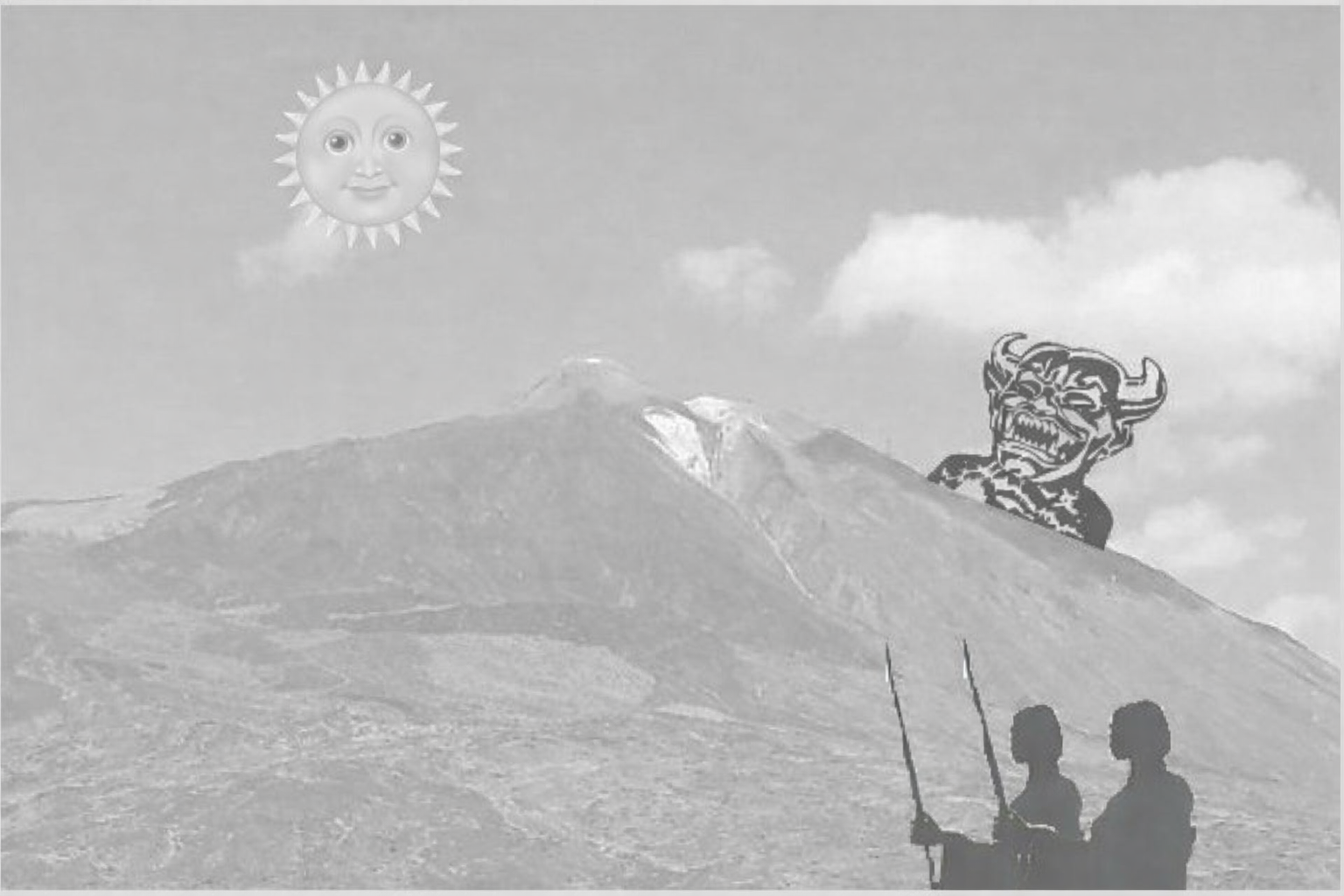
The Guanches, the ancient inhabitants of Tenerife, had their own explanation for the power of the volcano: the legend of Guayota. According to tradition, Guayota was an evil spirit who lived inside Echeyde, the Teide. One day he kidnapped Magec, the sun god, and plunged the world into darkness. The Guanches asked their supreme god, Achamán, for help; he defeated Guayota, freed the Sun and sealed the volcano's mouth with the demon trapped inside. That plug would be the Pan de Azúcar, the cone that crowns the Teide. When the volcano roars, they say, it's Guayota trying to escape.
A Landscape That Transforms
When the fog settles, the trails of the Parque Rural de Anaga or the northern hills take on an air of mystery. Trees emerge like shadows from the mist and sounds are muffled. And if you climb above the clouds, for example toward Las Cañadas del Teide, you can see the «sea of clouds» at your feet, with the summits peeking out like islands. It's a paradise for landscape photography.
A Blanket of Unique Life
Likewise, this constant microclimate is directly responsible for an exceptional ecosystem. The laurisilva, or laurel forest, is a true botanical relic, a living remnant of the subtropical forests that covered the Mediterranean millions of years ago. Walking these paths, like those of Anaga in Tenerife or those of Garajonay National Park in La Gomera, it's like stepping back in time. The air smells of damp earth, moss and green leaves; the tree canopy filters the soft light and everything drips with life. It's the habitat of endemic species such as the laurel and Bolle's pigeons, whose calls echo through the thicket, offering an unmatched nature tourism experience.
A Taste of Tradition amid the Fog
Likewise, island culture has been shaped by this phenomenon. The villages of the mid-mountain area, such as La Orotava or La Laguna, have grown in the beneficial shade (and moisture) of the nublado. Here, traditional farming flourishes: vineyards producing unique grapes for the famous wines of Tenerife, along with potato crops and orchards. So a stop at a guachinche or local restaurant, while the mist brushes the window, becomes a ritual. Savouring a plate of wrinkled potatoes with mojo and a glass of local red wine is to taste the very essence of a landscape turned into culinary tradition.
The Adventure Lies in Going Up and Down
Consequently, the magic of Tenerife lies in this accessible duality. In a short time you can go from a sunny beach in the south, like Las Américas, to the humid forests of Anaga or to Las Cañadas del Teide, above the clouds. This contrast is not only geographic but also recreational. In the morning, practicing hiking among giant ferns and, in the afternoon, relax on the coast under the sun. The island is a giant natural adventure park where choosing your own weather and experience is part of the fun.
Get Ready for the Experience
To fully enjoy it, it's advisable to bring light warm waterproof clothing, even in summer, if you're going into the mid-elevation areas. Suitable footwear for paths that may be wet is essential. Also, driving on mountain roads can require caution when visibility is reduced. However, these small preparations are part of the adventure. Remember to check the weather forecast and, above all, come with an open mind ready to be surprised. The nublado is unpredictable and every encounter with it is unrepeatable.
An Inspiring End to Your Trip
Tenerife is much more than sun and beach; it is an island of contrasts where nature writes its own epic among volcanoes, ancient forests and a living sea of clouds. The Legend of Guayota is not just a tale from the past, but a feeling that fills every corner, inviting you to gaze in wonder at the power of the Teide and the gentle touch of the nublado. Here, every path, every viewpoint and every dish hides a story waiting to be discovered. We invite you to live your own legend: to climb where the sky can be touched by hand, to lose yourself in forests that whisper ancient secrets and to celebrate, at the end of the day, the warmth of its people and its flavours. Let the island surprise you, because in Tenerife, the real adventure is discovering that every corner, sunny or wrapped in magical mist, offers a treasure all its own. Before you go up, check how Teide looks live with our webcam of Teide National Park.