
Grandes Playas de Corralejo Fuerteventura live
9 kilometres of white sand between the dunes and the Atlantic


This is how the Grand Beaches of Corralejo feel today
👉 What feeling does this place convey to you right now?
The Pulse reflects how this place is perceived at the moment.

Perfect day

A lot of wind

Rough sea

Very calm

Ideal stroll

Variable day
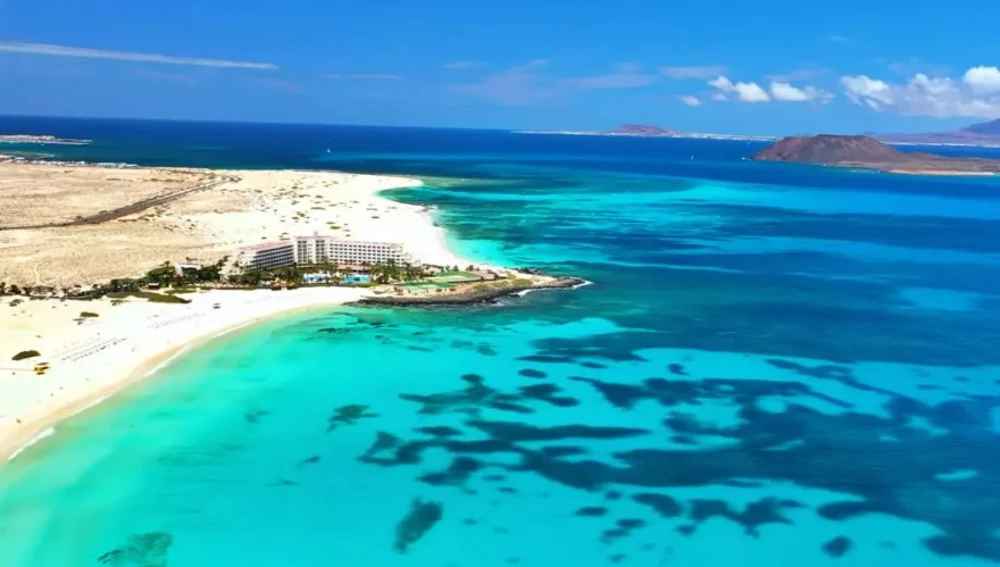
Nine kilometres of white sand, dunes advancing towards the sea and turquoise water that changes colour with the light: that's the Grandes Playas de Corralejo, Fuerteventura, the most spectacular coastal front of the largest dune natural park in the Canary Islands. Thanks to our Grandes Playas de Corralejo live camera, you can see the state of the sea, the wind and the atmosphere in real time before planning your visit.
Our live camera of the Grand Beaches of Corralejo shows the beach and the sea in real-time. Since the trade winds are frequent and intense in this area, checking the camera before going out is particularly useful to know if the day is suitable for calm swimming, surfing, or kitesurfing.
What the Grandes Playas de Corralejo are in Fuerteventura
The Corralejo Large Beaches are the set of beaches that line the Parque Natural de las Dunas de Corralejo along nine kilometres of coastline, in the municipality of La Oliva, in the northeast of Fuerteventura. The park, declared a protected area in 1994, covers 2,600 hectares and is the largest dune field in the whole Canary archipelago. Its sand, white and very fine, does not come from the Sahara as is popularly believed: it actually formed over thousands of years from the breakdown of mollusc shells and marine organisms, which gives it that characteristic pale colour.
Besides its size, what makes this stretch special is the visual contrast: on one side, the mobile white sand dunes advance inland over dark volcanic soil; on the other, the Atlantic shows colours ranging from turquoise to deep blue depending on the depth and time of day. The result is a landscape reminiscent of a desert by the sea, unique in Spain.
The beaches in the park: which they are and what they're like
Within the Grandes Playas de Corralejo (Fuerteventura) several named beaches stand out. Playa del Moro is the most secluded and wild, surrounded by dunes on three sides, with golden sand and crystal-clear water. El Dormidero is somewhat more accessible and combines calm swimming with days of moderate surf where surfing is also practised. El Bajo Negro shares the same natural features and is popular with those seeking peace and quiet. Finally, the beach closest to the village of Corralejo is the busiest, with sunbed, parasol and beach bar services.
A distinctive feature of these beaches is the so-called corralitos: small stone walls built by hand by beachgoers themselves as protection against the trade winds, which blow strongly from North Africa. They are part of the landscape and character of this coastline.
Wind sports and activities at the Grandes Playas de Corralejo
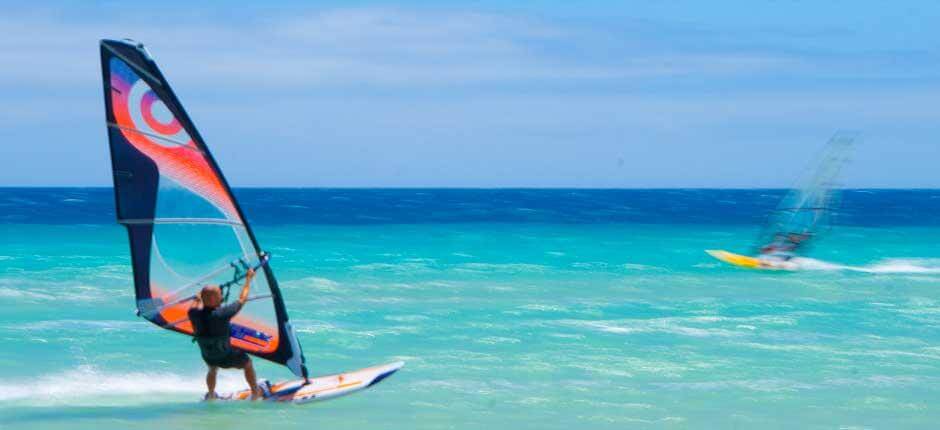
Fuerteventura is known as the European capital of windsurfing and kitesurfing, and the Corralejo Large Beaches are one of its main settings. The steady trade winds create perfect conditions for both sports almost all year round. There are several schools and equipment rental centres in the area, for both beginners and advanced athletes. Every November, the natural park also hosts the Media Maratón Internacional Dunas de Fuerteventura, a race whose route runs mostly over the park's sand.
For those who prefer things calmer, snorkelling and diving are also possible in the stretches with less swell, where water visibility is exceptional. Walking barefoot on the dunes at sunset, when the light turns low and dyes the sand orange, is also one of the experiences visitors to the island remember most.
How to get to the Grandes Playas de Corralejo and practical tips
The Grandes Playas de Corralejo (Fuerteventura) are located along the FV-1 road, which connects Puerto del Rosario with Corralejo. By car, there are several parking areas at the beach front, although they fill up quickly in the summer. It is also possible to get there by bus taking line 6 from Puerto del Rosario to Corralejo and then walking or taking a taxi to the more distant beaches. It is recommended to bring water, sunscreen, and footwear for walking on hot sand. Before you leave, check our live camera to see the state of the wind and sea at that moment. If you want to discover more corners of the island, also explore the live cameras from Fuerteventura in CanariasLife.
What they ask us the most
What can you see on the Grandes Playas de Corralejo live camera?
The camera shows the beach and sea at Corralejo in real time. It is especially useful for checking the wind and wave conditions before heading out, since trade winds are common in this area and determine which activity best suits the day.
What are the Grandes Playas de Corralejo in Fuerteventura?
They are the set of beaches that line the Parque Natural de las Dunas de Corralejo along nine kilometres of coastline, in the municipality of La Oliva. The park covers 2,600 hectares and is the largest dune field in the Canary Islands, declared a protected area in 1994.
Where does the white sand of the Corralejo dunes come from?
The sand does not come from the Sahara, as is popularly believed. It formed over thousands of years from the breakdown of mollusc shells and marine organisms, which gives it that characteristic white colour and very fine texture.
What beaches are there at the Grandes Playas de Corralejo?
The main ones are Playa del Moro, the most secluded and wild; El Dormidero, with moderate surf; El Bajo Negro, calmer; and the beach closest to the village, the busiest and with the most facilities. All have golden sand and turquoise water.
Can you kitesurf and windsurf in Corralejo?
Yes, it is one of the best destinations in Europe for both sports. The trade winds blow strongly and steadily almost all year round. There are several schools and equipment rental centres in the area for all levels.
How do you get to the Grandes Playas de Corralejo?
By car along the FV-1 road, with car parks set up right by the beach. Also by bus on line 6 from Puerto del Rosario to Corralejo. It is recommended to bring water, sun protection and footwear for the hot sand.
