
a journey of more than 2,000 km.
The Water Tunnels of the Canaries
The tunnels that hold water in the Canary Islands
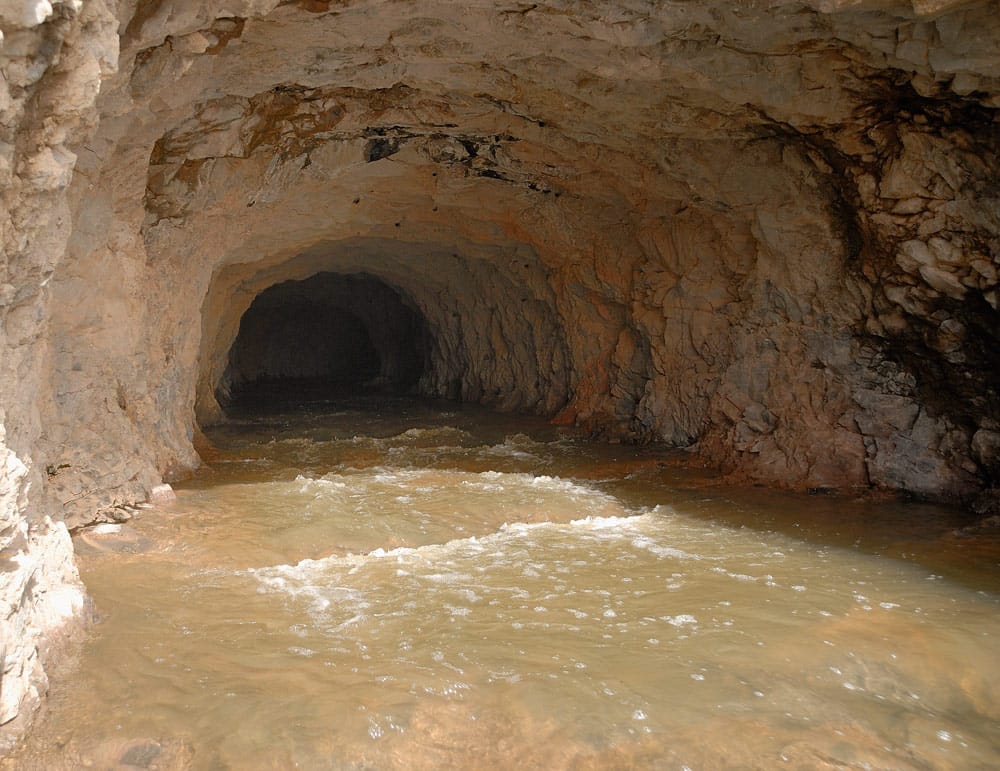
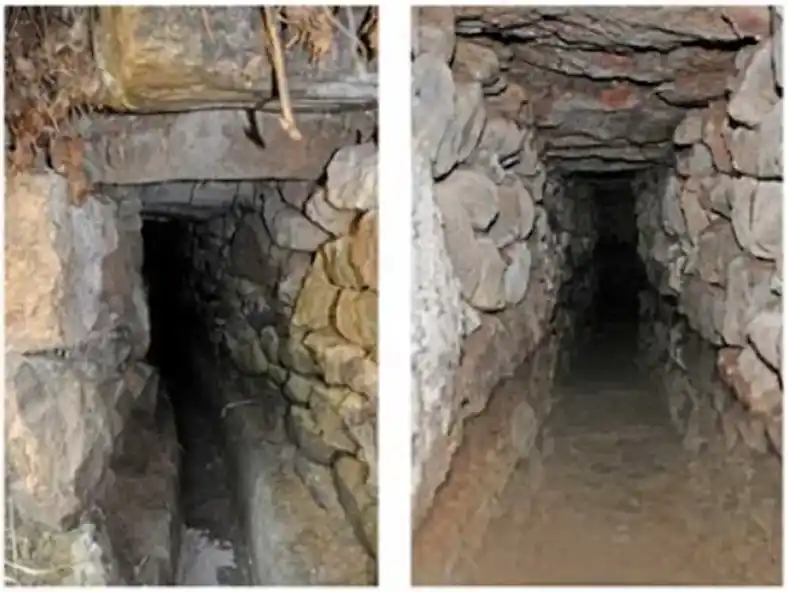
Did you know that beneath the Canary Mountains there are thousands of kilometers of hand-dug tunnels to search for water? They are called galleries and, along with wells, have been the main source of water for the western islands for over a century.
Why are they important?
In the Canaries, there are hardly any rivers, and rain quickly seeps into the volcanic ground. This water accumulates inside the islands, in large aquifers. To reach it, galleries and wells were drilled. In Tenerife, for example, around 84% of the water consumed still comes from galleries and wells; the rest comes from desalination of seawater and from the reuse of treated wastewater for irrigation.
How do they work?
A gallery is an almost horizontal tunnel, approximately one and a half meters wide and slightly less than two meters high, which delves into the mountain until it finds water. With a slight incline towards the exit, the water flows out on its own, without the need for pumps, and is channeled through conduits to the reservoirs.
Many galleries are several kilometers long. In total, there are more than 1,500 galleries in the Canaries, amounting to about 2,000 kilometers of tunnels.
An ancient idea that traveled the world
The concept of capturing groundwater with tunnels is very ancient. In Iran, it is known as qanat, and the Arabs spread it throughout North Africa and the Iberian Peninsula. From there, it passed to the Canaries, where in the eastern islands and in Gran Canaria, "mines" or small tunnels of this kind were excavated.
The large galleries of Tenerife and La Palma are more recent: most were dug between the late 19th century and the mid-20th century, with enormous human effort, to irrigate export crops and supply the population.
Where are they?
Most of the galleries are in Tenerife, which has more than 1,100, and in La Palma. In Gran Canaria, Fuerteventura, and Lanzarote, wells and old water mines are abundant, some of which are now abandoned.
A natural and historical heritage
Galleries not only serve to obtain water: they are also part of the heritage of the Canaries and the memory of thousands of workers, the gallery excavators, who dug them under very harsh conditions. They are proof of how our ancestors learned to make the most of a territory without rivers.
Today, with aquifers increasingly exploited, conserving water is more important than ever. If you want to learn more about how nature provides water to the islands, read our article about the Garoé tree.