
Does it never get cold in the Canaries? Discover the secret
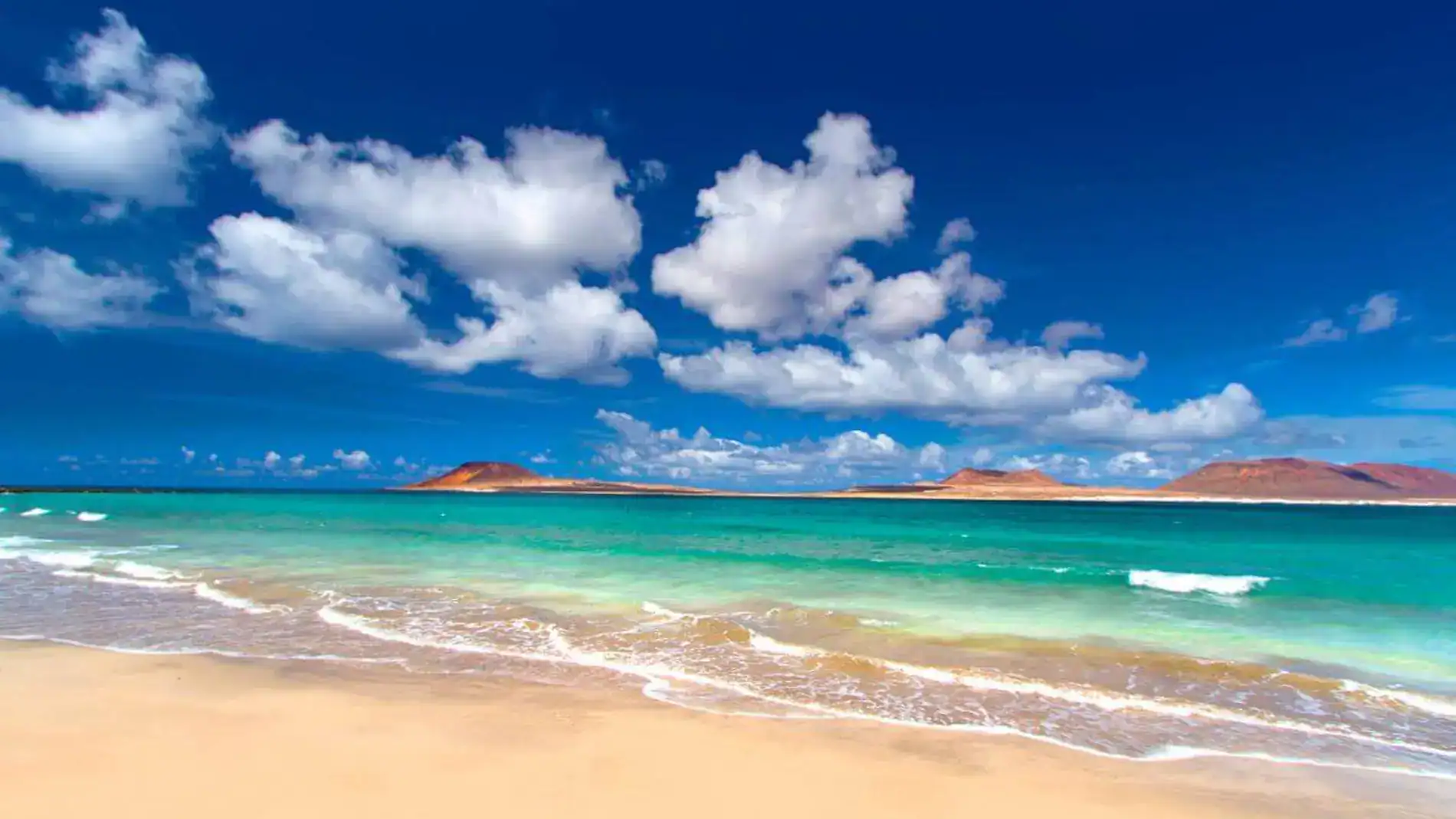
There is a phrase that every Canarian has repeated at some point: "it never gets cold here." And yet, just look at Teide in January to see its summit covered in snow under a clear sky. How is it possible to bathe in the Atlantic in the morning and walk next to the snow in the afternoon, less than 50 kilometers in a straight line? The answer lies in two ideas: an ocean that softens the temperatures of the coast and islands that are, in reality, mountains rising from the bottom of the sea.
Mild climate all year round: what it really means
The climate of the Canary coast is subtropical oceanic. The cold Canary current and the Azores anticyclone keep temperatures within a narrow range: in the low areas, winter minima rarely drop below 13-15 °C, and in summer, maximum temperatures usually hover around 26-28 °C. The sea, with a stable temperature almost all year round, acts as a large thermal buffer.
To this backdrop are added the trade winds, which blow from the northeast with great regularity and push the clouds against the northern slopes of the mountainous islands. There the famous sea of clouds, typically between 1,000 and 1,800 meters, forms. Above that layer, the sky tends to be clear and the sun shines brightly.
Altitude, the key to snow on Teide
Temperature drops with altitude: approximately between 6 and 7 °C for every 1,000 meters. If it is 20 °C on the coast, at the summit of Teide, at 3,715 meters, the thermometer may hover around 0 °C. In winter, when masses of cold air arrive, precipitation falls as snow on the summits of Tenerife and, sometimes, also on Pico de las Nieves (Gran Canaria) or Roque de los Muchachos (La Palma).
In the high mountains, the air is cool even in summer, much drier than on the coast, and with very intense solar radiation. In winter, nights are cold and frosts are frequent.
So why is it said that it never gets cold?
Because the saying comes from where people live. Most of the population concentrates on the coast and in the low areas, where temperatures are very stable and thick coats are rarely needed. But there are nuances:
- In the midlands, between 500 and 1,500 meters, winter can be cool and damp, especially on the northern slopes.
- The strong trade wind and humidity can make the thermal sensation on the coast feel colder than the thermometer indicates.
- With entries of cold air, the high areas record minima in single digits and even frosts.
- The relief creates great contrasts in just a few kilometers: the north and south of the same island can have very different weather.
- Calima, suspended dust from the Sahara, does not bring cold but can raise temperatures and reduce visibility.
"It never gets cold here" is, at its core, a half-truth: true on the beach, not so much at the summit.
Contrast plans: from the beach to the summit
- Tenerife: morning bath in El Médano or Las Teresitas, ascent in the afternoon to the Teide National Park and dinner in La Orotava or La Laguna, where the atmosphere is cooler.
- Gran Canaria: morning walk through Las Canteras and, in the afternoon, hike to the summit towards Pico de las Nieves and Roque Nublo, which some winters wake up white.
- La Palma: Tazacorte coast in the morning and ascent to Roque de los Muchachos in the afternoon, ideal for stargazing with a clear sky.
- La Gomera: Hermigua valley in the morning and, in the afternoon, the laurisilva of Garajonay National Park, cool and damp even in summer.
When it snows on Teide, access may close: check the state of the roads and do not go up with just beachwear.
Tips for transitioning from one climate to another in the same day
- Dress in layers: t-shirt for the coast and fleece or jacket for the midlands and the summit.
- High sun protection even in winter: at high altitudes, radiation is much more intense.
- Water always on hand: mountain air is very dry.
- Inform yourself beforehand: to ascend to the summit of Teide via the Telesforo Bravo trail, a permit is required, and on some trails in the park, non-residents of Tenerife pay an ecotax.
- Respect the environment: do not stray from the trails or collect rocks or plants.
Check the weather live
The best way to know what awaits you is to check it beforehand. In CanariasLife.com you can see live beaches, cities, and summits from across the archipelago: check if there are sea clouds, if calima has arrived, or if Teide wakes up snowy, for example with our webcam of Teide National Park.