

Cost of living in the Canary Islands: rent, buying property, bills and salaries in 2026
The Canary Islands have become one of the most attractive destinations in Europe for living, working remotely or enjoying a long stay. Spring-like weather all year round, good infrastructure and quality of life mean more and more people are considering moving to the archipelago.
Before making the decision, however, it is essential to understand the cost of living in the Canary Islands. How much does it cost to rent a flat? Is buying a home expensive? How much do you pay in bills? And are salaries enough to live well?
In this complete guide we look at rent, buying property, monthly expenses and salaries in the Canary Islands, with real examples and practical tips for anyone wanting to move or spend a long stay on the islands.
How the cost of living in the Canary Islands compares with the rest of Spain
The cost of living in the Canary Islands tends to be slightly lower than in big Spanish cities like Madrid or Barcelona, but it depends a lot on the island and the municipality.
The most touristy areas, or those with higher international demand, tend to have higher prices, especially for housing.
Generally speaking:
- Cheaper than Madrid or Barcelona
- Similar to medium-sized Spanish cities
- More expensive in popular tourist areas
The islands with the highest cost tend to be:
- Tenerife
- Gran Canaria
- Lanzarote (tourist areas)
While the most affordable tend to be:
- La Palma
- La Gomera
- El Hierro
The municipality also has a big influence. For example, living in Santa Cruz de Tenerife or Las Palmas de Gran Canaria is more expensive than living in inland villages.
Rent in the Canary Islands: prices by island and city

Rent is the biggest expense for most people living in the Canary Islands.
In recent years, the arrival of digital nomads, long-stay tourists and new European residents has increased demand for housing, especially in coastal areas.
Average rental price in 2026
These are approximate prices for long-term rentals.
Studio or small apartment
- €500 – €750 per month
1-bedroom apartment
- €650 – €950 per month
2-bedroom
- €850 – €1,300 per month
3-bedroom
- €1,100 – €1,700 per month
In tourist areas prices can be considerably higher.
Real examples by city
Santa Cruz de Tenerife
- Studio: €650 – €850
- 1 bedroom: €750 – €1,000
- 2 bedrooms: €1,000 – €1,400
Las Palmas de Gran Canaria
- Studio: €650 – €900
- 1 bedroom: €800 – €1,100
- 2 bedrooms: €1,100 – €1,500
Puerto de la Cruz
- Studio: €600 – €800
- 1 bedroom: €700 – €950
Arona / Costa Adeje
- 1 bedroom: €900 – €1,300
Tips for finding cheaper rent
If you want to reduce the cost of living in the Canary Islands, consider:
- Living outside tourist areas
- Looking for long-term rentals
- Avoiding neighbourhoods with a high concentration of holiday rentals
- Exploring nearby municipalities
Many residents choose to live 10-20 minutes from the coast, where prices drop quite a bit.
Buying property in the Canary Islands: current prices
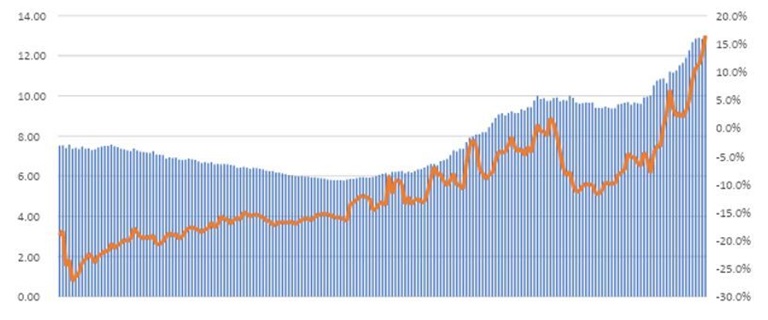
Buying property in the Canary Islands can be a good option if you plan to live on the islands for several years.
Prices have risen in recent years, but they are still more affordable than in many European cities.
Average price per square metre
Approximate averages:
- Tenerife: €2,200 – €3,200/m²
- Gran Canaria: €2,100 – €3,000/m²
- Lanzarote: €2,400 – €3,500/m²
- Fuerteventura: €2,000 – €2,800/m²
- La Palma: €1,200 – €1,800/m²
Examples of property prices
Small apartment
- €120,000 – €220,000
2-bedroom apartment
- €180,000 – €350,000
House or villa
- €300,000 – €800,000 or more
Homes with sea views or close to the beach tend to be much more expensive.
Costs when buying a home
When calculating the long-term cost of living in the Canary Islands, you also need to factor in the costs of buying.
These usually include:
- Property Transfer Tax (6-7%)
- Notary
- Land registry
- Solicitor/agent fees
In total these usually add up to between 8% and 10% of the property price.
Monthly bills in the Canary Islands
Monthly bills in the Canary Islands are similar to the rest of Spain, although the mild climate helps save on heating.
Electricity
Monthly average:
- €60 – €120
Depends on:
- size of the home
- use of air conditioning
- appliances
Many households use an electric water heater for hot water.
Water
Approximate cost:
- €20 – €40 per month
Internet
Fibre optic connections are widely available.
Average price:
- €30 – €50 per month
Homeowners' association fees
If you buy a home in a building or development:
- €30 – €120 per month
Includes maintenance, cleaning or communal pool.
Transport in the Canary Islands

Transport also affects the cost of living in the Canary Islands.
Public transport
Buses (guaguas) run quite well in the main cities.
Approximate price:
- Single ticket: €1.40 – €2.00
- Monthly pass: €30 – €50
Some islands offer discounts for residents.
Having a car in the Canary Islands
Many residents prefer to have a car, especially outside the cities.
Approximate costs:
- Fuel: €1.20 – €1.50/litre
- Insurance: €300 – €600 per year
- Parking: free in many municipalities
Fuel tends to be cheaper than on the mainland thanks to different taxes.
Food: how much does grocery shopping cost

Spending on food depends a lot on lifestyle, but the Canary Islands have fairly affordable local produce.
Approximate monthly spend
For one person:
- €200 – €350
For a couple:
- €350 – €600
Prices of common foods
Approximate examples:
- Bread: €1.20
- Milk: €1
- Eggs: €2.50
- Chicken: €6 – €8 / kg
- Local fruit: €2 – €4 / kg
The local markets and greengrocers tend to be cheaper than some supermarkets.
Eating out in the Canary Islands
Eating out is quite affordable compared with other European tourist areas.
Approximate prices
Set menu of the day:
- €10 – €15
Dinner at a mid-range restaurant:
- €18 – €30 per person
Tourist restaurant:
- €25 – €40
One advantage of living in the Canary Islands is the huge number of bars, guachinches and local restaurants where you can eat well at reasonable prices.
Salaries in the Canary Islands
Salaries in the Canary Islands tend to be somewhat lower than the Spanish average, although the cost of living can also be lower depending on lifestyle.
Approximate average salary
- €1,200 – €1,600 net per month
Best-paid sectors:
- technology
- engineering
- medicine
- specialised tourism
Sectors with lower salaries:
- hospitality
- retail
- basic services
Remote work and digital nomads

Many people who move to the Canary Islands work remotely for international companies.
This can completely change the cost of living.
For example:
- remote salary of €2,500 – €4,000
- housing €900
- monthly expenses €600
This makes it possible to maintain a high standard of living on the islands.
Monthly budget for living in the Canary Islands
A realistic example for one person.
Moderate lifestyle
1-bedroom rent
850 €
Bills
120 €
Food
250 €
Transport
80 €
Leisure and extras
200 €
Approximate total: €1,500 per month
A couple living in the Canary Islands
Rent
1.000 €
Bills
150 €
Food
450 €
Transport
120 €
Leisure
300 €
Approximate total: €2,000 – €2,200
Is it expensive to live in the Canary Islands?
The answer depends on lifestyle and area.
Compared with other European regions, the cost of living in the Canary Islands can be considered moderate.
Advantages:
- pleasant climate all year round
- relatively affordable food
- good healthcare system
- high quality of life
Disadvantages:
- lower salaries than on the mainland
- rising rents
- dependence on tourism
Even so, many people feel that living in the Canary Islands offers an excellent balance between cost and quality of life.
Tips for reducing the cost of living in the Canary Islands
If you're thinking about moving, these tips can help you save.
Choose the area carefully
Tourist areas are much more expensive.
Look at nearby municipalities such as:
- La Laguna
- Telde
- Arucas
- Güímar
Avoid holiday rentals
Areas with lots of Airbnbs tend to have more expensive rents.
Buy local produce
Local markets have fruit, vegetables and fish at better prices.
Use public transport
In many cities it is enough to get around.
Conclusion: is it worth living in the Canary Islands?
The cost of living in the Canary Islands depends a lot on the island, the type of housing and lifestyle.
However, for many people the balance between costs and quality of life is hard to match anywhere else in Europe.
The islands offer:
- mild climate all year round
- spectacular nature
- safety
- good healthcare system
- a relaxed lifestyle
If you work remotely or have international income, the Canary Islands can become one of the best places in Europe to live.
Frequently asked questions about the cost of living in the Canary Islands
How much money do you need to live in the Canary Islands?
A single person usually needs between €1,300 and €1,700 per month, depending on rent and lifestyle.
Is it cheaper to live in the Canary Islands than in Madrid?
Yes. Generally the cost of living in the Canary Islands is lower, especially for housing outside tourist areas.
Which is the cheapest island to live on in the Canary Islands?
The most affordable tend to be La Palma, La Gomera and El Hierro, where housing prices are lower.
Can you live well on €1,500 in the Canary Islands?
Yes, especially if rent doesn't exceed €800. Many people live comfortably on that budget.
Is rent expensive in the Canary Islands?
Rent has risen in recent years, especially in Tenerife and Gran Canaria, but it can still be cheaper than in many European cities.