
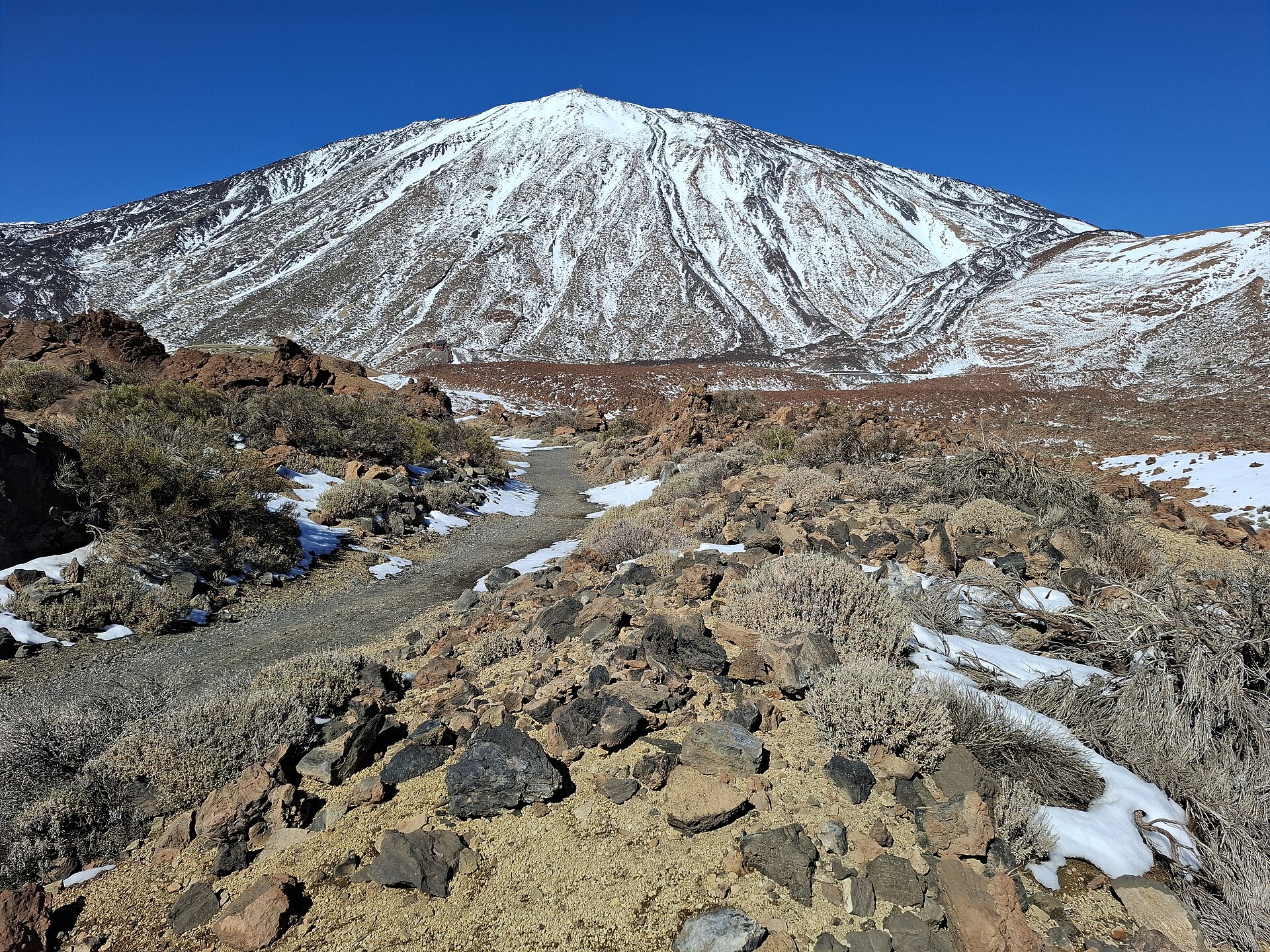
Snowy Teide and sea of clouds: how to see them live with the webcams
Seeing Teide covered in snow or peeking over a sea of clouds is one of those images that never get old. With the webcams, you can see if there is snow or clouds live, before going up or from home.
When it snows on Teide
At 3,715 meters, Teide is the highest peak in Spain. Snow typically arrives between November and April, almost always with the passing of cold fronts, and sometimes lasts only a few days. When it snows heavily, the Cabildo de Tenerife may close the access roads to the National Park, so it's advisable to check the road conditions before going.
What is the sea of clouds
The sea of clouds forms when humid trade winds collide with the northern slopes of the islands. The air rises, cools, and forms a layer of clouds that usually stays at an altitude of about 800 to 1,500 meters. Above, the sky is clear; below, the day is gray: this is what the Canarians call 'donkey's belly'. It is more frequent in summer when the trade winds blow more consistently.
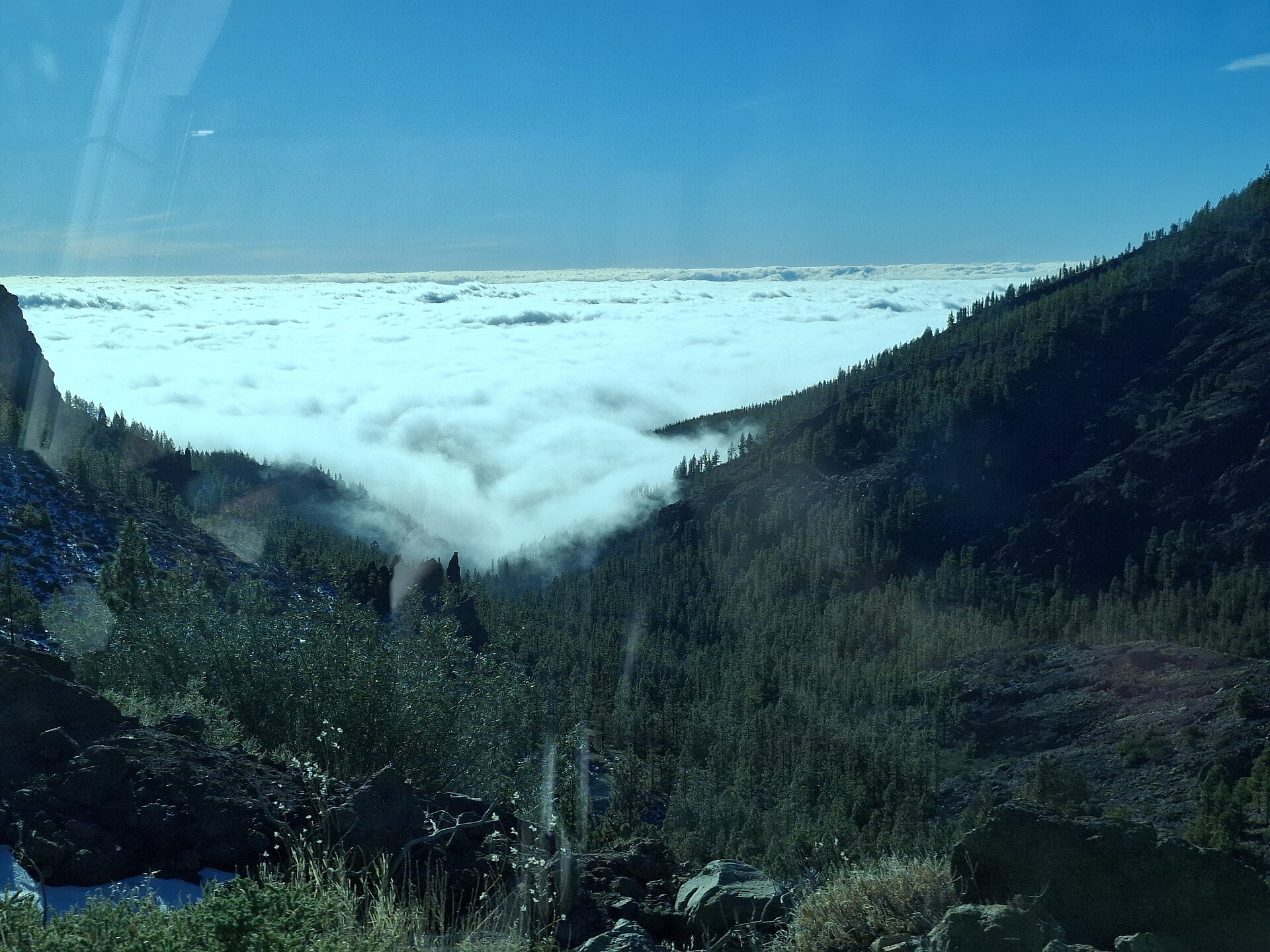
The webcams to see them live
- Teide National Park: the closest webcam to the volcano. It shows the snow in Las Cañadas and, many times, the sea of clouds below, with the blue sky above.
- La Orotava, Plaza del Ayuntamiento, Orotava Valley and Valle de Los Realejos: Teide seen from the north. When there are low clouds, you can see the sea of clouds from below.
- Martiánez Lake and Puerto de la Cruz: the volcano behind the coast, with its white summit in winter.
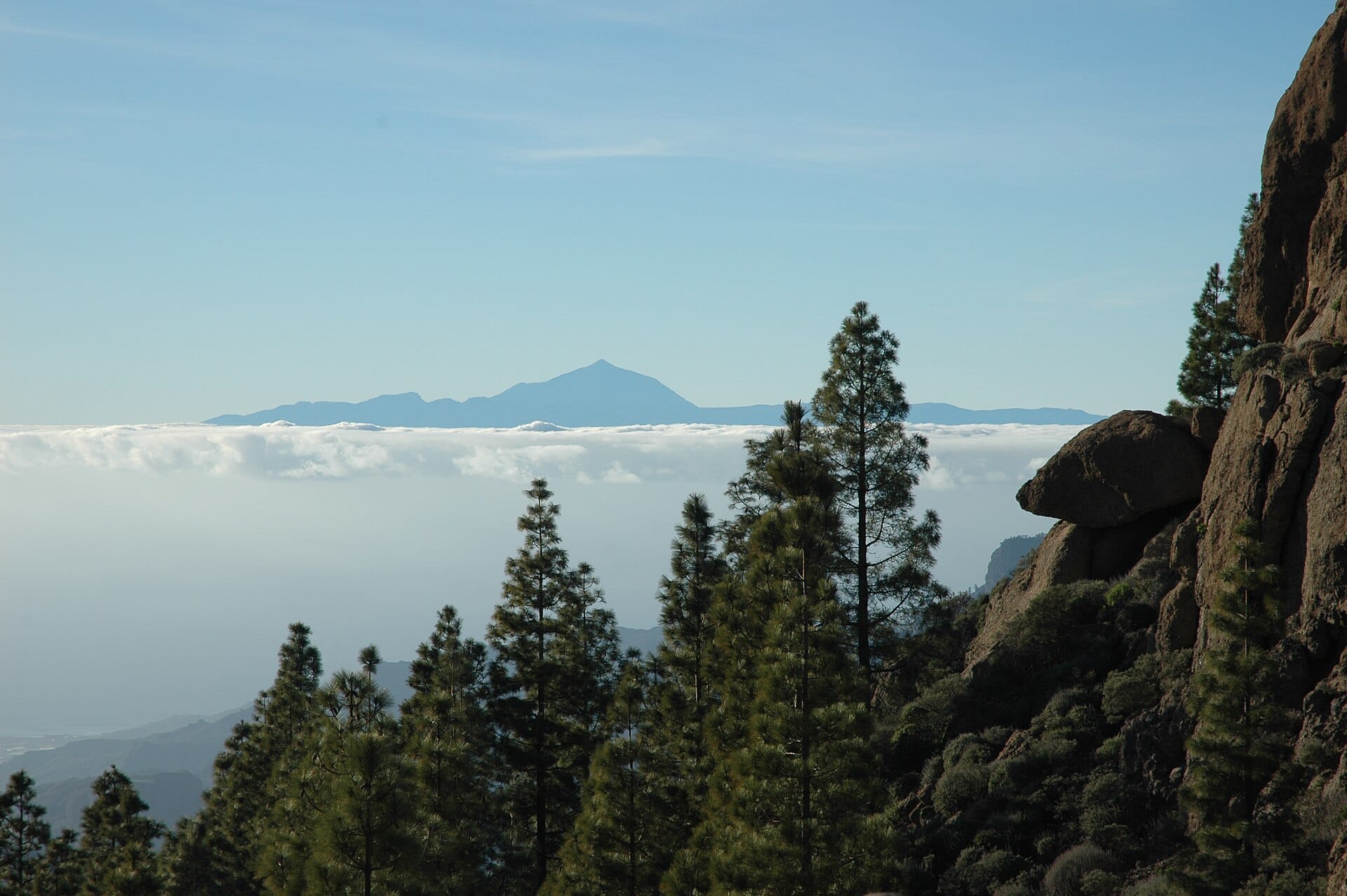
- Las Canteras Beach: from Gran Canaria, on very clear days, Teide can be seen across the sea.
A tip: if the webcams in the north are gray and the one from the National Park is clear, it is very likely that there is a sea of clouds. That is the day to go up.
Tips for climbing Teide
- Wear warm clothing: in Las Cañadas the temperature can be 15 or 20 degrees lower than at the coast.
- With snow, do not leave the open roads or step on icy areas without proper equipment.
- To climb to the summit via the Telesforo Bravo path, you need a free permit from the National Park.
More about the sea of clouds and its legend in our articles about the legend of Guayota and the donkey's belly in the Canary Islands.