
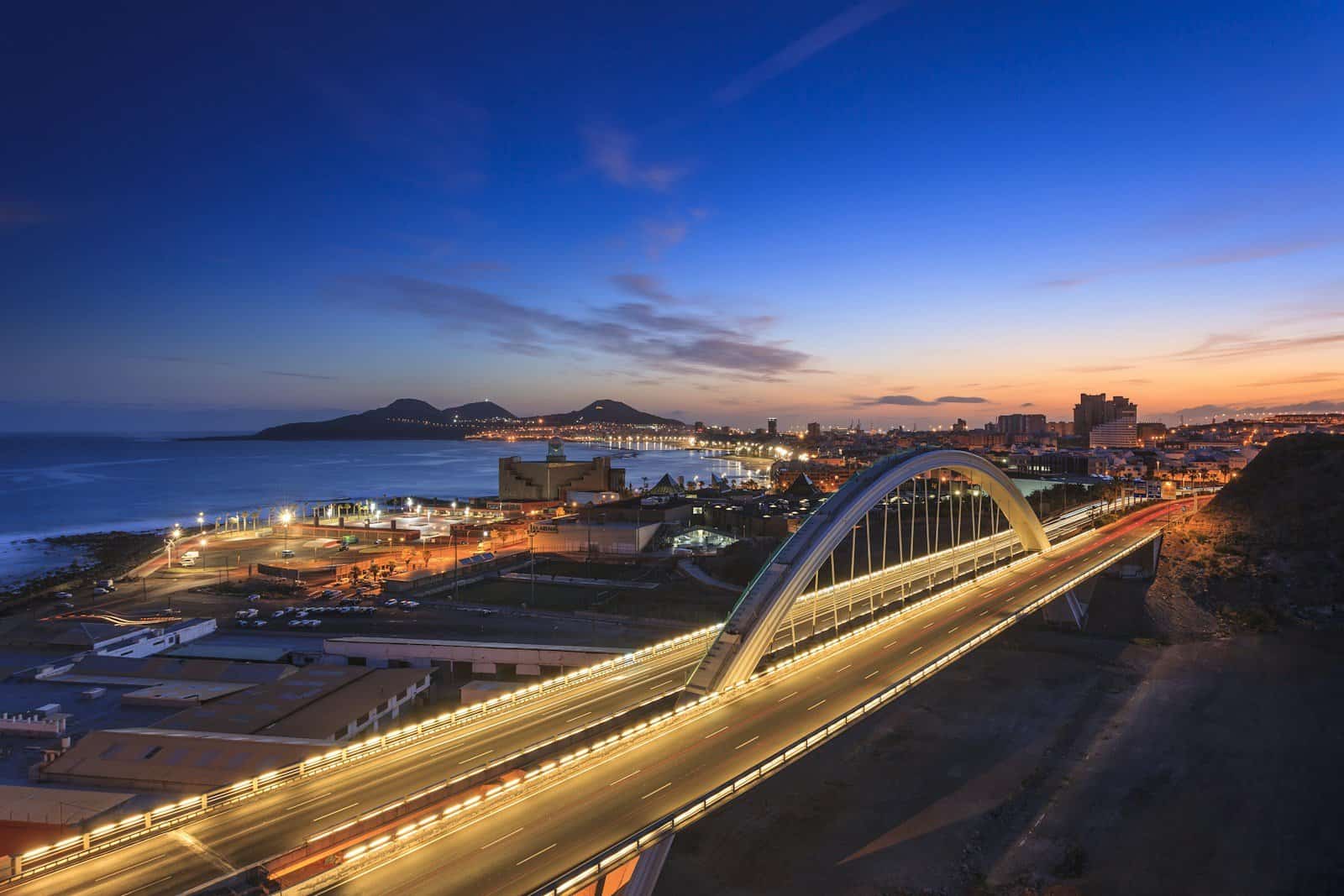
Live webcams Gran Canaria: must-see views
Gran Canaria fits on a screen, but it never runs out. A look at a live webcam is enough to feel the breeze of Las Canteras, to guess the wind at Pozo Izquierdo or sense the smell of salt at Amadores. This immediacy turns the live webcams into something more than a curiosity: they are tools for planning, visual inspiration, and a constant link with the island.
An immediate window to the island
What you see is what is happening. Live webcams show the real color of the sea, the height of the waves in La Cícer, whether the “belly of the donkey” has settled over the north or if the sky is clear towards the Pico de las Nieves. They also show something difficult to measure in a weather app: the atmosphere.
Many decisions depend on that live image. A family adjusts its plan if Amadores appears calm in the early morning. A surfer changes breaks if Las Canteras is flat and Pozo Izquierdo is blowing hard. Those teleworking in Madrid open a browser window with the beach of Mogán and immerse themselves in nature.
The usefulness is twofold. On the one hand, it complements the official prediction with hyperlocal information about the weather in the Canary Islands. On the other, it prevents overcrowding. Seeing a crowded beach at noon invites delaying the visit or changing spots. This flexibility enhances everyone's experience.
Where to look: directory of cameras at key points
The island is well covered, with a special density in the capital and the tourist south. Some essential hotspots:
- Las Palmas de Gran Canaria
- Grande Beach
- La Cícer
- Puerto de La Luz
- Poema del Mar Aquarium
- Other urban areas near Vegueta and Triana, depending on the season and active projects
- Mogán
- San Bartolomé de Tirajana
- Playa del Inglés
- San Agustín Beach
- Areas close to Maspalomas and Meloneras depending on availability
- Santa Lucía de Tirajana
- Pozo Izquierdo and its windsurfing area
Each camera offers a different angle. Las Canteras combines urban life and reef. La Cícer is the thermometer of surfing in the capital. In Mogán, the range of blues and tranquility reigns. Pozo Izquierdo summarizes the trade winds in action.
What each type of traveler gains by using webcams
The same signal serves very different purposes. That's why it's important to know what to look for.
| Traveler profile | Usual use of the webcam | Key examples and applications |
|---|---|---|
| Families | Choosing beaches with calm waters and less crowd; avoiding windy areas. | Confirming a relaxed atmosphere in Amadores Beach or Anfi del Mar in the early morning; check if there is a green flag and low swells. |
| Adventurers and athletes | Validate wind, waves, visibility in the mountains; decide on a spot and time. | See waves at La Cícer, wind at Pozo Izquierdo. |
| Urban dwellers and cultural travelers | Anticipate the pulse of squares and neighborhoods; locate events and fairs. | Look at the surroundings of Triana and Vegueta, activities in the area of Puerto de La Luz or visible events on the capital's coast. |
| Couples, singles, retirees | Seek tranquil or romantic atmospheres; choose less crowded hours. | Tune into sunsets from Las Canteras or the port of Mogán; choose walks with soft light and less traffic. |
The key is to combine the camera and purpose. With three clicks, the day organizes itself, taking advantage of live webcams to know the weather and nature of the Canary Islands.
Best times and angles to watch
Gran Canaria changes with the light. That is part of its magic.
- Sunrises: pink tones over the east coast and clear skies above if the trade winds sweep the clouds away. The crest of Roque Nublo and the summit benefit from the first sunlight.
- Noon: the south shines with its intense palette, ideal for calibrating the water transparency in Amadores, Anfi del Mar, or Patalavaca.
- Afternoon: the sand of Maspalomas and Playa del Inglés gains texture. Mogán paints facades and docks in gold.
- Sunset and night: Las Canteras offers a constant spectacle, with urban lights reflected in the ocean. The Puerto de La Luz adds movement of boats and industrial silhouettes.
Guideline to make the most of the schedule:
| Interest | Suggested location | Recommended moment | What to observe |
|---|---|---|---|
| Mountain dawn | Pico de las Nieves, Roque Nublo area | 06:30–08:00 | Clear skies, occasional sea of clouds, long shadows. |
| Turquoise blue | Amadores, Anfi del Mar, Patalavaca | 11:00–13:00 | Water color and wave conditions; ideal for deciding on snorkeling or swimming. |
| Surf and wind | La Cícer, Pozo Izquierdo | Depending on conditions, often morning and afternoon | Series of waves, wind direction, number of boards in the water. |
| Urban sunset | Las Canteras, surrounding Poema del Mar | 18:30–21:00 | Orange sky, streetlights turning on, reflections at low tide. |
| Quiet walk | Puerto de Mogán, Taurito, Las Marañuelas | 09:00–11:00 or 17:00–19:00 | Low turnout, terraces with service set up, calm sea. |
Little trick: if you see a “belly of the donkey” covering the north in the early morning, the south is usually clear. The webcam will confirm it in seconds.
From the sofa to the plan: how to use what you see to decide your day
- Check the real state of the sea. Flat waters in Amadores invite floating and snorkeling. Short wave series at La Cícer call for longboarding. Crosswind at Pozo Izquierdo suggests small sail.
- Check the influx. If Las Canteras is full at noon, aim for La Cícer in the early morning or move to El Perchel or La Lajilla in the late afternoon.
- Observe the cloud cover on the summit. If Pico de las Nieves is covered, change the hike for a coastal walk in San Agustín.
- Watch for shadows and tides. At Las Canteras, low tide reveals La Barra and completely changes the landscape and swimming possibilities.
- Plan a backup. If the Playa del Inglés webcam shows strong wind, consider Taurito or Puerto Rico.
Logistical advice: cross what you see with the official prediction. The webcam gives you the present, the forecast suggests the next move.
Sea, mountain, and city live
The variety of Gran Canaria is perceived live without effort. In minutes you can jump from the city to the countryside, from the Atlantic to volcanic rock.
- A coast with character. Las Canteras unites reef, surf, and urban walk. In Amadores, the sandy arch protects a bay of calm waters. Puerto Rico and Patalavaca alternate coves and marinas. Las Marañuelas and El Perchel preserve the maritime pulse.
- Sporting Atlantic. Pozo Izquierdo is synonymous with windsurfing. The composition of the frame shows gust, direction, and density of sails. La Cícer sets the tone for surfing in the capital.
- Volcanic interior. Although there are fewer cameras in high mountains, some views towards the summit help to know if pines, rock, or sea of clouds will appear. Roque Nublo cuts the sky.
- Urban life. Puerto de La Luz is pure movement. In the vicinity of Poema del Mar, the line between family leisure and architecture is clearly drawn. Triana and Vegueta, when featured in special broadcasts, add squares and heritage.
This combination is ideal for those wanting to design varied routes in a single day.
Emotional connection and cultural dissemination
For thousands of people living far away, tuning into a beach in Gran Canaria is almost a ritual. Watching the tide rise at Las Canteras or the light of Mogán in the late afternoon keeps the bond with the island alive. This connection is also felt on special occasions: carnivals, pilgrimages, concerts by the sea. Some live cameras capture fragments of this shared life.
Education finds a valuable resource here. Teachers and guides use live images to explain coastal phenomena, the effect of the trade winds, dune dynamics, or urban geography. They also use them to talk about material culture and traditions that are occasionally reflected in the real-time views from live cameras and in the panoramas of the Canary Islands.
For tourism promotion, webcams act as a showcase. On social media, a live clip of the sunset at Las Canteras or the blue of Amadores achieves what once required an entire production: to display beauty at the exact moment.
Tools, platforms, and access methods
- Official and local tourism portals. They usually concentrate links to live cameras from Gran Canaria and high-quality tourist webcams with well-thought-out framing.
- Weather apps and websites. Meteoblue, Windy, or Windfinder integrate live webcams with data on wind, waves, and cloudiness. Useful for sea sports and paragliding.
- Private initiatives. Hotels.
- Media and regional projects. They add signals from different municipalities and include cultural contexts, festivities, or recommended routes.
Quick usage guide:
- Choose your area of interest and save 2 or 3 reference cameras.
- Before you go out, look at each for 20 seconds. Note the state of the sky, sea, and influx.
- Confirm with your weather app the expected evolution of wind and cloud cover.
- Decide on the first stop and leave an alternative plan reserved in case the situation changes.
- If you're going to do sports, check the webcam again 30 minutes before entering the water or going to the mountains.
Itineraries inspired by live webcams Gran Canaria
- Surf and wind day
- Morning: validate waves at La Cícer. If it is weak, check El Confital or move to another suitable break.
- Noon: pause in the vicinity of Poema del Mar or walk along the isthmus.
- Afternoon: check Pozo Izquierdo. If the trade wind comes in clean, windsurfing or kitesurfing session. Alternative: watch the action from the shore and photograph sails against the blue.
- Mogán coasts with family
- Morning: peek at the webcam of Amadores. If the sea is flat.
- Food: enjoy at the port of Mogán. Check the dock camera to choose either a sunny or shaded terrace, combining tourism and nature.
- Afternoon: decide between Taurito.
- Capital with an Atlantic flavor
- Morning: walk along Las Canteras. Check the tide to walk alongside La Barra without getting your shoes wet.
- Afternoon: area of Puerto de La Luz. Watch the webcam to catch ferries and cargo ships entering or leaving.
- Sunset: set the Grande beach webcam on a second screen and wait for the exact moment of sunset for a synchronized photo from the promenade.
Image quality and safety tips
- Quality and latency. Many cameras offer HD with seconds of delay.
- Lighting. At dawn and dusk, some cameras adjust exposure with a slight delay. You will see it stabilize in a minute.
- Rain and salt spray. On stormy days, drops on the glass reduce clarity. Switch to another nearby camera for better current conditions in the Canary Islands.
- Privacy. Public webcams focus on open spaces and respect regulations. Avoid capturing and broadcasting that identifies individuals without consent, preserving an ethical live experience.
- Mobile signal. If you are already on the road, lower the streaming quality to avoid depleting data. If there is sound, you can mute it, ensuring you continue enjoying the time in Gran Canaria without interruptions.
Micro-guide to beaches and spots monitored by cameras
- Las Canteras, Playa Grande, and La Cícer: urban, lively all day long. La Cícer is a surf reference; Playa Grande offers sunset postcards.
- Puerto de La Luz: maritime traffic, cranes, and horizon. Hypnotic.
- Poema del Mar: architecture and surroundings of the aquarium.
- Playa del Inglés and San Agustín: long, open.
- Mogán and its satellite beaches
- Playa de Mogán: pier, white houses, and sun reflection at the end of the afternoon.
- Amadores: serene arch, turquoise waters, and family atmosphere, ideal for families seeking dream beaches in the Canary Islands.
- Puerto Rico: constant activity.
- Taurito and del Cura: sheltered, a good option if the wind is blowing, monitored through tourist webcams.
- Patalavaca and La Lajilla: very photogenic tones with the sun high.
- Las Marañuelas and El Perchel: local flavor and little boats.
- Anfi del Mar: clear sand and palm trees; intense color at noon.
A small useful weather note: when the northern coast appears overcast at dawn, the south often wakes up clear. The mosaic of webcams will allow you to confirm it without wasting time.
For teachers, creators, and professionals
- Classes and workshops. Explain the daily cycle of the trade wind with Pozo Izquierdo, or the tidal effect at Las Canteras over a week.
- Photography and video. The webcams help to “catch” the exact moment of light. Use them as a golden clock to prepare perfect frames.
- Marketing and social networks. Inserting a live image on your accommodation or activity website conveys transparency and encourages bookings on clear days.
- Events. Monitor setup and access to areas with live cameras, reducing uncertainties in logistics and communication.
Quick questions
- Can one trust the webcam more than the forecast? The ideal is to use them together. The webcam shows you the local present; the forecast warns you of potential changes.
- Do they help avoid queues and crowded beaches? Watching the influx live saves unnecessary trips and improves the distribution of visits throughout the day.
- Are there cameras in the interior? Fewer than on the coast, but those that look towards the summit and some viewpoints allow inferring cloudiness and visibility.
- Is it worth seeing the island at night? Yes. Las Canteras and Puerto de La Luz illuminated are pure visual poetry; moreover.
- What do I do if the image looks blurry? Change the camera, wait for the rain to pass, or reduce the streaming quality if your connection is weak.
Watching Gran Canaria live inspires, organizes the day, and maintains a direct connection with a unique territory. Today you can start with a beach, tomorrow with a port, and the day after with a cliff. The island always has another side ready for those who observe it in real time.