
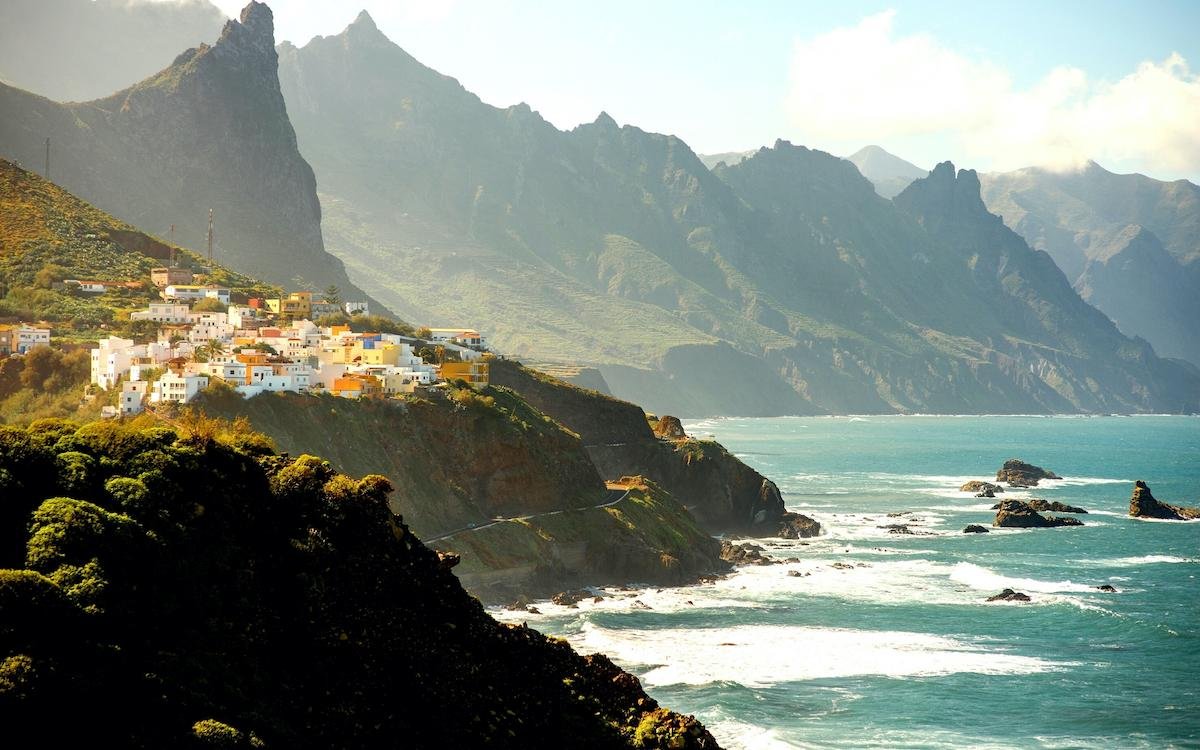
Taganana: The Hidden Heart of Anaga
Imagine a place where time seems to have stopped. A corner where the mountains embrace the sea and the mist caresses ancient forests. This place exists, and it is called Taganana. This remote village in Tenerife is not just a destination; it's a feeling, a whisper of the island in its purest state. To venture into it is to embark on a journey to the essentials, where every path is a promise and every corner holds a story.
A Refuge Between the Laurisilva and the Cliff
Taganana clings to the slopes of the Anaga massif with the tenacity of one who has learned to live in harmony with the force of nature. On one side, the imposing Laurisilva Forest, a living relic from the Tertiary Era, envelops the village in a mantle of green mystery. On the other hand, the dramatic Anaga cliffs drop down to the Atlantic, offering breathtaking views. This duality defines its soul: it is tradition and pristine nature in perfect balance.
The White Essence of a Village with History
Upon arrival, the landscape transforms into the charm of the village. Its steep streets wind between traditional houses, which seem to stack upon each other seeking the best view of the valley. Taganana is one of the oldest centers in Tenerife, founded shortly after the conquest. Its church of Our Lady of the Snows is the heart of the village and holds a valuable Flemish triptych from the 16th century.
A Natural Paradise for the Senses
For hiking enthusiasts, Taganana is a great starting point. From here, paths from the Anaga Rural Park, a Biosphere Reserve, lead to viewpoints and small hamlets. Along the coast, very close by, are the beaches of Roque de las Bodegas, Almáciga, and Benijo, with black sand and strong waves: they are beautiful, but caution is necessary when swimming. In the area, there are restaurants where you can enjoy fresh fish by the sea.
Flavors that Smell of Tradition
The the typical cuisine of Taganana is another pillar of its authenticity. In its small bars and restaurants, the cooking is honest and deeply rooted. Try the fresh local fish, like the vieja, accompanied by some wrinkled potatoes with mojo. In addition, you can't leave without tasting the wine of Taganana, a historic wine cultivated on the slopes of the valley, in small vineyards that almost reach the sea, which holds in every sip the character of this rugged land.
The Magic of the Authentic and the Playful
Despite its aura of tranquility, Taganana also pulses with life. During its patron saint festivities, in honor of the Virgin of the Snows, in August, the village dresses in color and celebrates its identity with music and living traditions. Thus, it is a perfect destination for those seeking rural getaways in Tenerife without giving up on the local culture. Every corner invites calm, but also curiosity: to photograph its nooks, converse with its people, or simply sit in a plaza to observe the slow passage of the day.
How to Get There and Enjoy to the Fullest
Getting to Taganana is already part of the adventure. It is accessed by the Anaga road from Santa Cruz or La Laguna, with many curves and spectacular views, and there are also buses from Santa Cruz. Bring comfortable shoes, a jacket, because in the Anaga peaks, mist is frequent, and a camera.
Find Your Own Corner on the Island
Taganana is more than a village; it is a reminder that authenticity still has a refuge in the world. Visiting this remote village in Tenerife is to gift yourself the opportunity to reconnect, to feel solid ground underfoot and the ocean's wind on your face. It is an invitation to slow down and savor the details. Because Tenerife is an island of infinite contrasts, and each valley, each forest, and each coastline has a unique story to tell. Dare to explore, to get lost on its paths. The true essence of the island awaits, patient and beautiful, in corners like Taganana, where the untamed nature and the traditional charm weave the fabric of an authentic experience is unforgettable. Before you go, you can check the weather live with our webcams of Santa Cruz de Tenerife.