
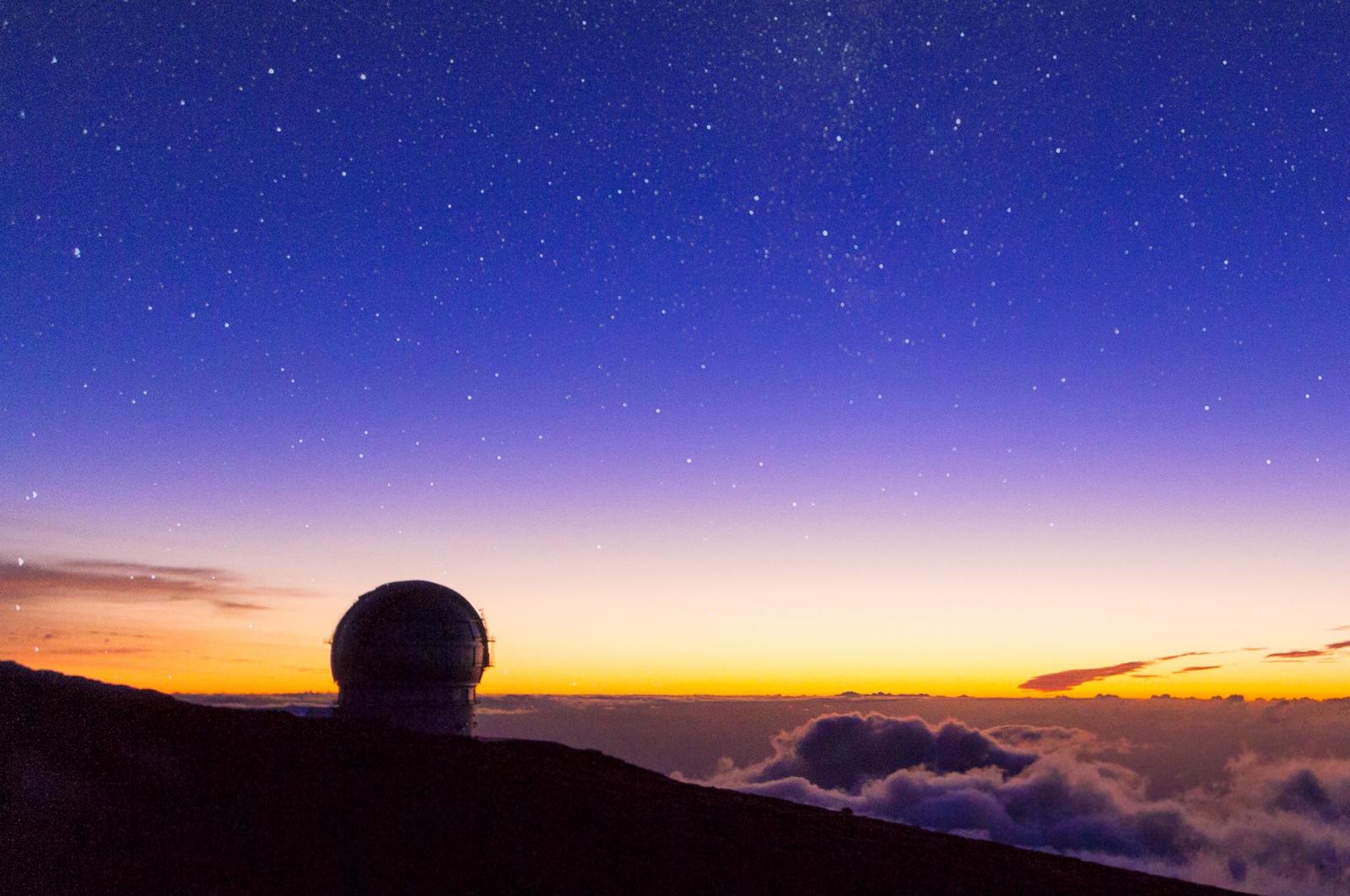
🌌 Stargazing in La Palma: a privilege under the cleanest sky on the planet
Known as the Isla Bonita, La Palma captivates not only with its volcanic landscapes, laurisilva forests and hiking trails, but also for having one of the cleanest and most protected skies in the world. Here, stargazing is not just a tourist activity, but an almost spiritual experience that combines science, nature and absolute silence beneath a blanket of millions of points of light.
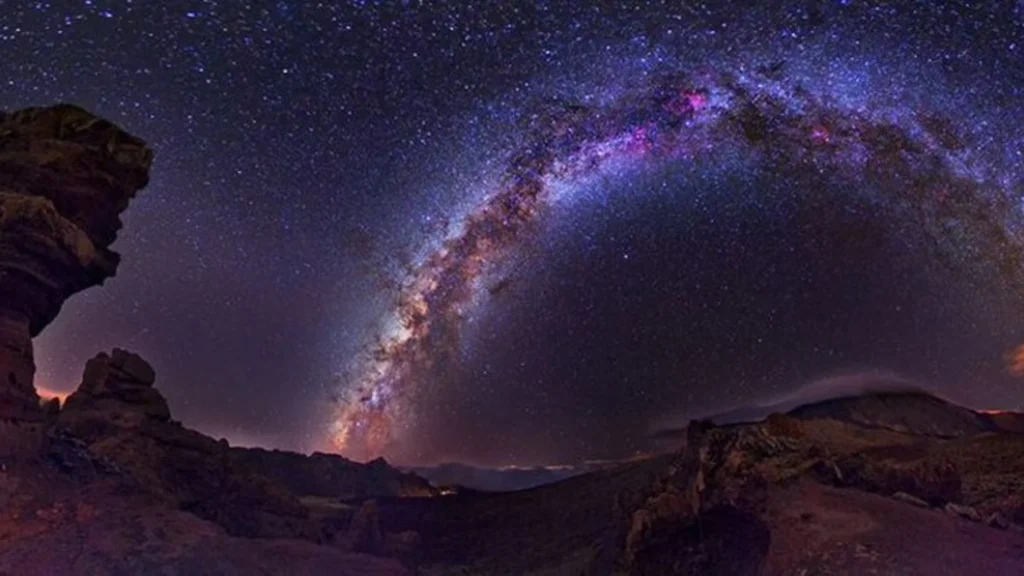
A pioneering law to protect the sky
Since 1988, La Palma has had the Sky Law, a globally pioneering regulation that strictly controls public and private lighting to minimise light pollution. This legislation benefits not only astronomers, but also any visitor who wants to enjoy a night sky at its very best. Thanks to it, the glow of the Milky Way can be seen with the naked eye even from areas close to urban centres.
The Roque de los Muchachos Observatory: a window onto the universe
Situated at more than 2,400 metres above sea level, on the edge of the Caldera de Taburiente, the Roque de los Muchachos Observatory is one of the most important astronomical centres in the northern hemisphere. It houses cutting-edge telescopes from more than 20 countries, including the Gran Telescopio CANARIAS (GTC), the largest optical-infrared telescope in the world.
This privileged spot brings together unique conditions:
- High altitude, above the cloud layer.
- Low humidity and minimal atmospheric turbulence.
- No artificial lights for dozens of kilometres around.
All of this makes La Palma a sanctuary for professional and amateur astronomy.
Astronomical experiences for everyone
Beyond scientific research, La Palma offers many ways to connect with the cosmos:
- Guided visits to the observatory: although the scientific facilities are not open to the general public, the Roque Visitor Centre organises exhibitions and informational talks.
- Astrotourism routes: local companies offer night excursions with portable telescopes, live explanations and long-exposure photography.
- Celestial events: during the Perseids, eclipses or meteor showers, the island becomes a gathering point for sky lovers.
- "Starlight" accommodation: hotels and rural guesthouses certified under the Starlight Destination label guarantee dark areas and themed activities.
Why La Palma is unique for astronomical tourism
While other destinations fight against artificial light, La Palma has turned darkness into an added value. Its commitment to sustainability, environmental education and science has made the island a global benchmark for responsible tourism and authentic experiences.
Its location in the Atlantic, far from major urban centres, and its mountainous terrain also act as natural barriers that reinforce the purity of the night sky.
Tips for your stargazing visit
- Ideal time: all year round, but especially in summer (longer nights) and during announced astronomical events.
- Bring warm clothing: despite the island's mild climate, night temperatures at altitude can drop considerably.
- Avoid sources of light: turn off torches or phones; if necessary, use red light to preserve your night vision.
- Check the lunar calendar: moonless nights are the best for seeing the Milky Way clearly.
Connect with the universe from the Canary Islands
Stargazing in La Palma is not just about looking up: it is about reconnecting with the essential, feeling the immensity of the cosmos and understanding why this corner of the archipelago has been declared a Starlight Reserve by UNESCO. In a world saturated with screens and noise, La Palma offers a gift every night: silence, darkness... and the entire universe above your head.
Ready for an experience that goes beyond the visual? From CanariasLife, we invite you to explore La Palma not only by day, but also under its endless sky, live online or in person. Because here, every star has a story... and you can be part of it.