
Live webcams of San Bartolomé de Tirajana, Gran Canaria
Maspalomas, Playa del Inglés and the dunes
San Bartolomé de Tirajana, the great south of Gran Canaria
San Bartolomé de Tirajana is the most important tourist municipality in Gran Canaria and one of the largest in Canary Islands. Its territory extends from the peaks of the Caldera de Tirajana to the coast, where you can find Playa del Inglés, the Dunes of Maspalomas, Meloneras and San Agustín: the main sun and beach destination of the island.
However, the municipality has two very distinct faces. The coast is touristy and lively. The interior, with towns like Tunte (the historic center) and Fataga, retains a landscape of ravines, palm groves, and rural architecture that surprises those who venture in.
Moreover, the CanariasLife Webcams in Playa del Inglés and Playa San Agustín allow you to see live the state of the sea, the wind, and the conditions before choosing a beach.
Beaches of the south of Gran Canaria
The municipality concentrates the beaches most famous on the island:
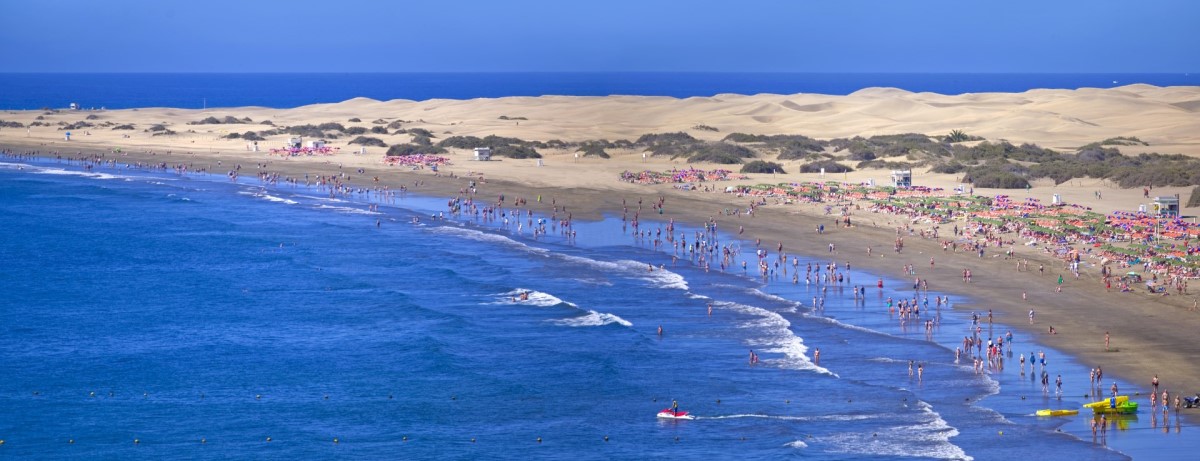
Playa del Inglés is the largest and liveliest: kilometers of golden sand, an international atmosphere, and direct connection to the Dunes of Maspalomas. It has moderate waves and is popular for bodyboarding and sunset walks.
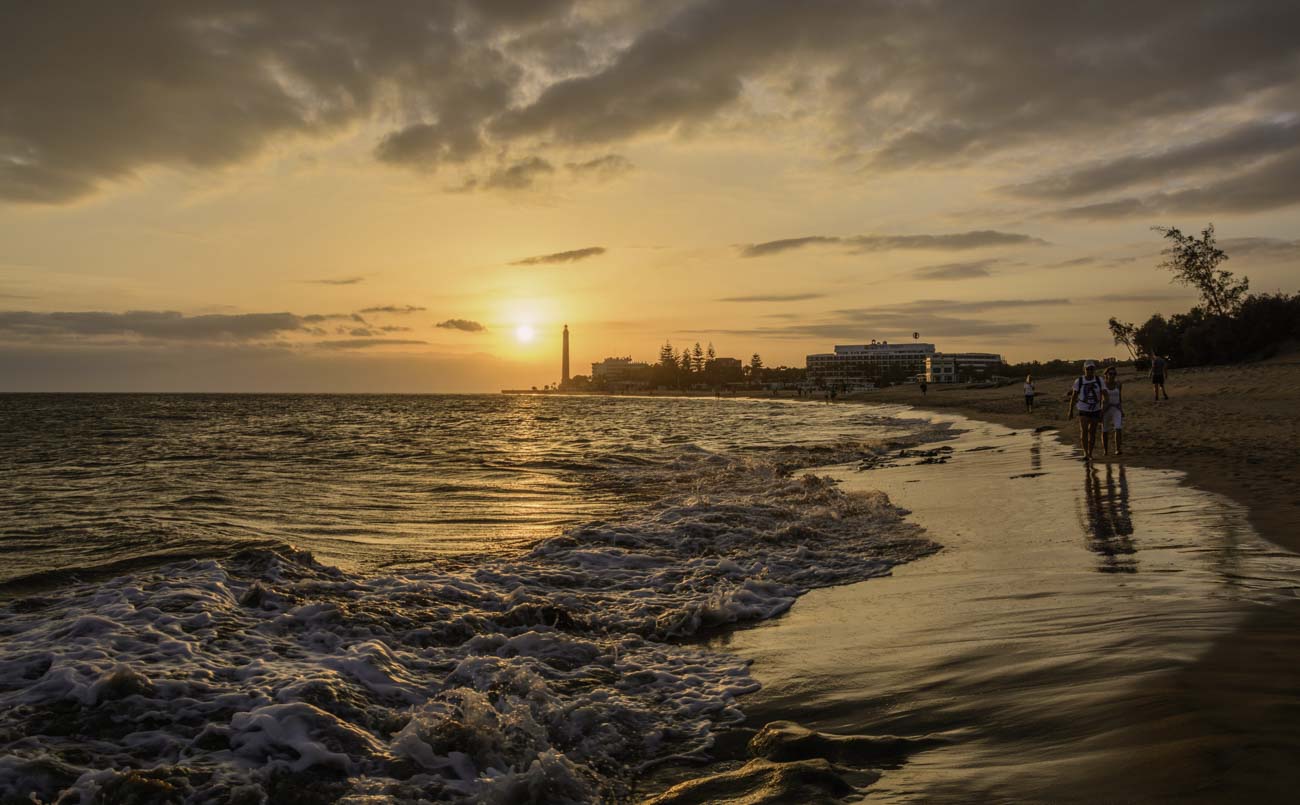
The Dunes of Maspalomas, declared Special Nature Reserve, create a unique desert landscape next to the Atlantic. You can walk among them until you reach the Maspalomas Lighthouse, the symbol of the south of Gran Canaria. Next to the lighthouse, the Charca de Maspalomas is a wetland that shelters migratory birds.
Meloneras offers a modern promenade with restaurants, shops, and a calmer atmosphere. Meanwhile, Playa San Agustín, to the east, has calm waters and a more family-friendly and relaxed environment.
Fataga and the interior of the municipality
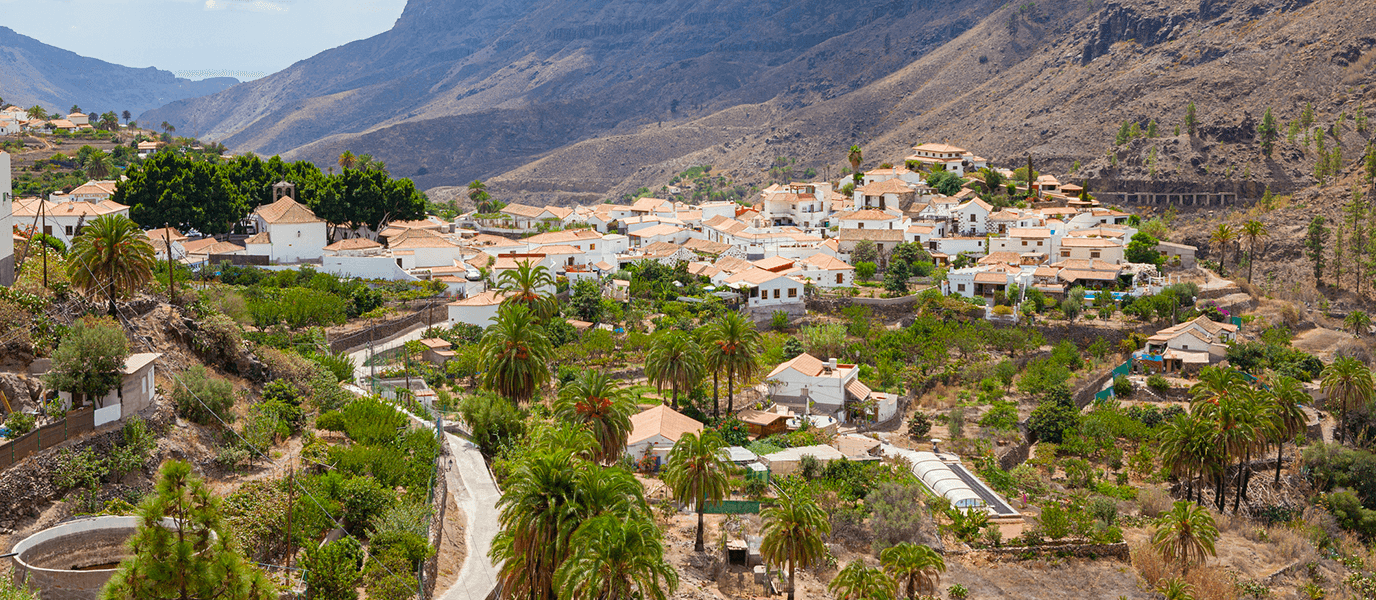
Only 20 minutes from the coast, the Barranco de Fataga offers a completely different landscape. The village of Fataga, with white houses and palm trees, is known as the 'Valley of a Thousand Palms' and is a popular excursion from the south.
Further up, Tunte (San Bartolomé de Tirajana village) is the historic center of the municipality, about 900 meters above sea level. The Church of San Bartolomé overlooks the square, and the rural atmosphere contrasts with the hustle and bustle of the coast. In fact, few tourists know that the village that gives the municipality its name is in the mountains.
Hiking and nature
The Caldera de Tirajana and the Pilancones Natural Park offer routes of hiking with spectacular views of the south of Gran Canaria. The ravines, with Canarian pines and endemic vegetation, are ideal for hiking and cycling mountain climbing.
The Camino de la Plata is a historic route that connects the interior with the coast, traversing the natural and cultural heritage of the municipality. In addition, the Dunes of Maspalomas have marked trails for exploring without damaging the ecosystem.
Gastronomy in San Bartolomé de Tirajana
On the coast, Meloneras and Playa del Inglés has the largest gastronomic offer in the south: from international cuisine to fresh fish with sea views.
restaurants. However, to try authentic Canarian cuisine, it's best to go inland. In Fataga and Tunte the taverns serve wrinkled potatoes with mojo, gofio, flower cheese (a specialty of Gran Canaria, made with vegetable rennet from cardoon) and grilled meats.
Leisure and nightlife
Maspalomas is the entertainment center of the south. The Maspalomas Lighthouse and the promenade of Meloneras concentrate restaurants and terraces. The Yumbo Centrum, in Playa del Inglés, is an open-air shopping center known for its nightlife.
For families, Palmitos Park (nature park with birds and dolphins) and the water parks in the area complete the offer.
Festivals and traditions
The Romería de San Bartolomé, in August, goes up to the village of Tunte in traditional costumes, floats, and gastronomy. The Maspalomas Carnival is one of the best known in Gran Canaria, with parades, shows, and a festive atmosphere that lasts for several weeks.
How to get to San Bartolomé de Tirajana
Playa del Inglés and Maspalomas is about 30 minutes from the Gran Canaria airport via the highway GC-1. There are frequent buses from Global that connect the airport and Las Palmas with the entire southern coast.
To get to Fataga or Tunte from the coast takes about 20-30 minutes by mountain road. It's worth the detour.
Frequently asked questions about San Bartolomé de Tirajana
What are the best beaches in San Bartolomé de Tirajana?
Playa del Inglés is the largest and liveliest. The Dunes of Maspalomas offer a unique landscape. Meloneras has a modern promenade and a calm atmosphere. San Agustín is the most family-friendly, with calm waters.
What are the Maspalomas Dunes?
They are a dune field declared Special Nature Reserve, next to the Maspalomas Lighthouse. They create a unique desert landscape facing the Atlantic. You can walk among them on marked trails.
Is it worth climbing to Fataga?
Yes, Fataga is only 20 minutes from the coast and offers a landscape of palm trees, white houses, and ravines that completely contrasts with the tourist area. The taverns serve authentic Canarian cuisine with flower cheese and wrinkled potatoes.
What is flower cheese?
It is a specialty of Gran Canaria, made with vegetable rennet from cardoon instead of animal rennet. It has a mild and slightly bitter flavor. You can try it in the taverns in the interior of the municipality.
When is the Maspalomas Carnival?
It usually takes place between February and March. It is one of the most well-known in Gran Canaria, with parades, shows, and a festive atmosphere for several weeks.
Are there webcams in San Bartolomé de Tirajana?
Yes, in CanariasLife you can see the webcams of San Bartolomé de Tirajana live, with cameras at Playa del Inglés and Playa San Agustín.