
Live webcams from San Andrés y Sauces, La Palma
Charco Azul and Los Tilos forest
San Andrés y Sauces, laurisilva and natural pools in La Palma
San Andrés y Sauces is a municipality in the northeast of La Palma that brings together three hard-to-beat attractions: the Charco Azul Charco Azul Bosque de Los Tilos (laurisilva declared a Biosphere Reserve by UNESCO) and the Nacientes de Marcos y Cordero, a hiking route with tunnels and waterfalls that is one of the most popular in Canary Islands.
All of this in a municipality of barely 4,200 residents, with two historic villages and a fishing harbour where time seems to have stopped. Thanks to the CanariasLife webcam in the Charco Azul you can watch live the state of the sea and the conditions of the pools before going.
Charco Azul: award-winning natural pools
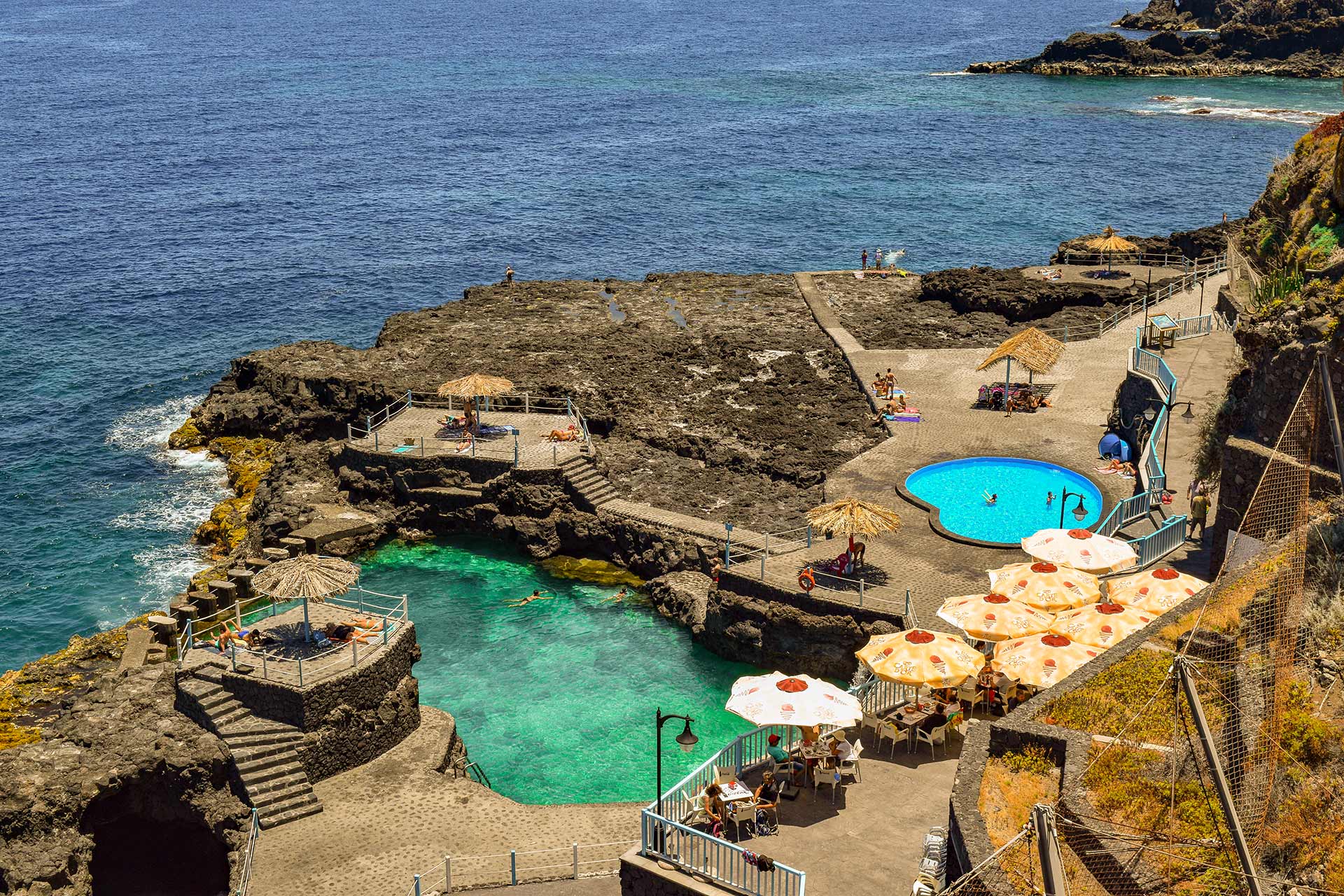
The Charco Azul is the municipality's most visited attraction. It consists of three natural pools carved into volcanic rock along the El Melonar pedestrian promenade. Their waters are fed directly by the Atlantic and were named in 2012 one of the ten best natural pools in Spain.
As well as swimming for adults, the complex has a children's area with a waterfall, changing rooms, showers, a sun terrace and a restaurant. Admission is free. With the CanariasLife webcam you can check the swell and the atmosphere before heading down.
Forest of Los Tilos
The Bosque de Los Tilos is one of the most important laurisilva forests in Canary Islands. In fact, it was the first area of La Palma declared a Biosphere Reserve by UNESCO in 1983.
Its trails, among which the PR LP 6stands out, run through damp ravines with giant ferns, moss and ancient trees that create a filtered-light, deep-green atmosphere. It is an easily accessible walk with extraordinary ecological value.
Nacientes de Marcos y Cordero
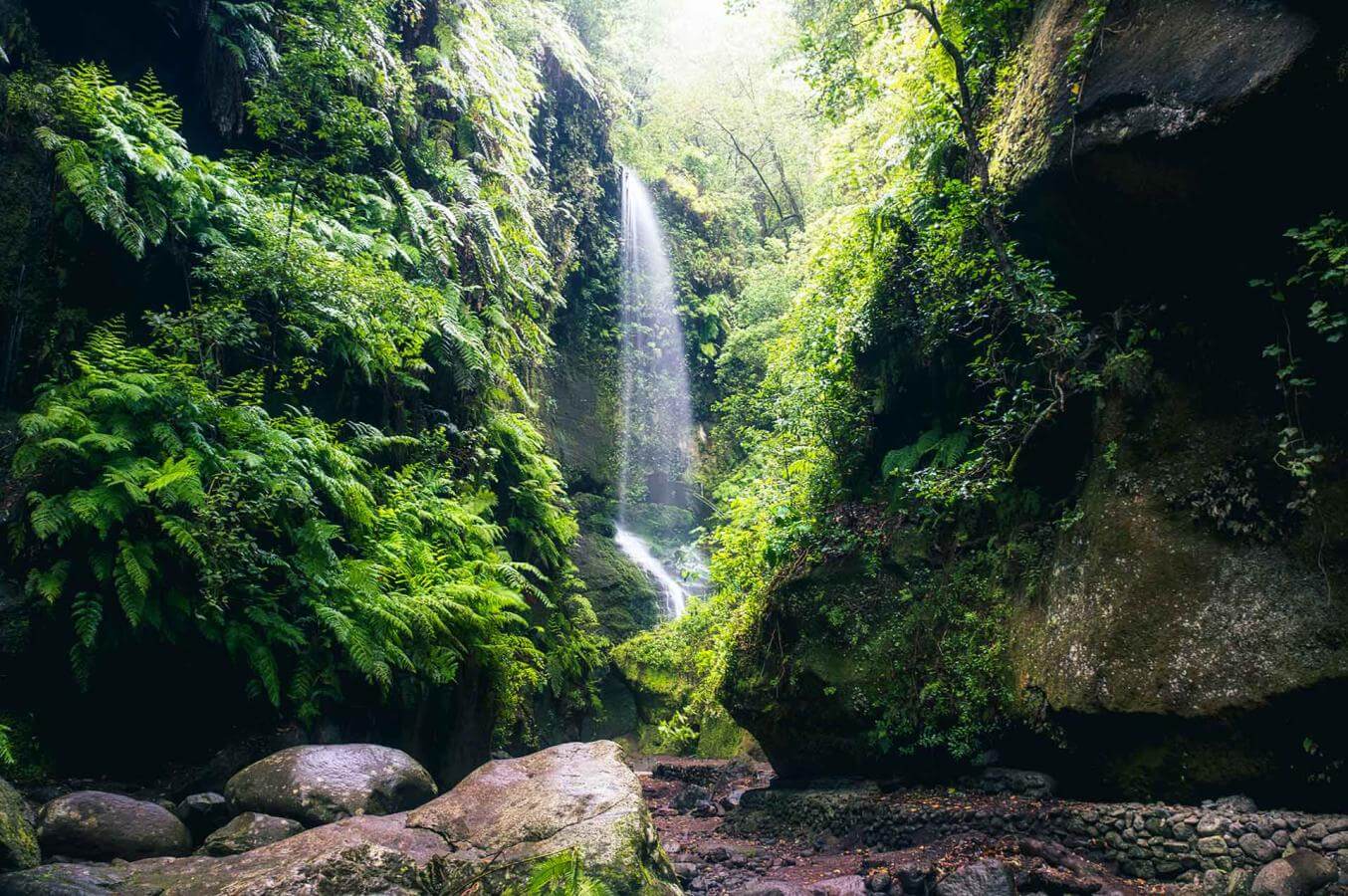
A few kilometres from the Bosque de Los Tilos is one of the most spectacular hiking hiking routes in La PalmaThe weekly Nacientes de Marcos y Cordero are thirteen tunnels carved into the rock, where the water forms curtains and small natural waterfalls.
The trail runs through the densest vegetation in the north of the island and is suitable for intermediate-level hikers. A torch is essential (for the tunnels) as well as waterproof clothing, since a lot of water falls along the way.
San Andrés and Los Sauces: two villages with history
The municipality was formed by the union of two towns. San Andrés retains a cobbled old quarter declared a Cultural Heritage of Interestwith the Iglesia de San Andrés, one of the oldest on the island, and streets of vernacular Canarian architecture.
Meanwhile, Los Sauces is the most populous centre in the north, with the Iglesia de Nuestra Señora de Montserrat, a market, services and bars where you can try the wine and the cheese . Both preserve the legacy of the sugar caneera, which was the main livelihood for centuries.
Puerto Espíndola and gastronomy
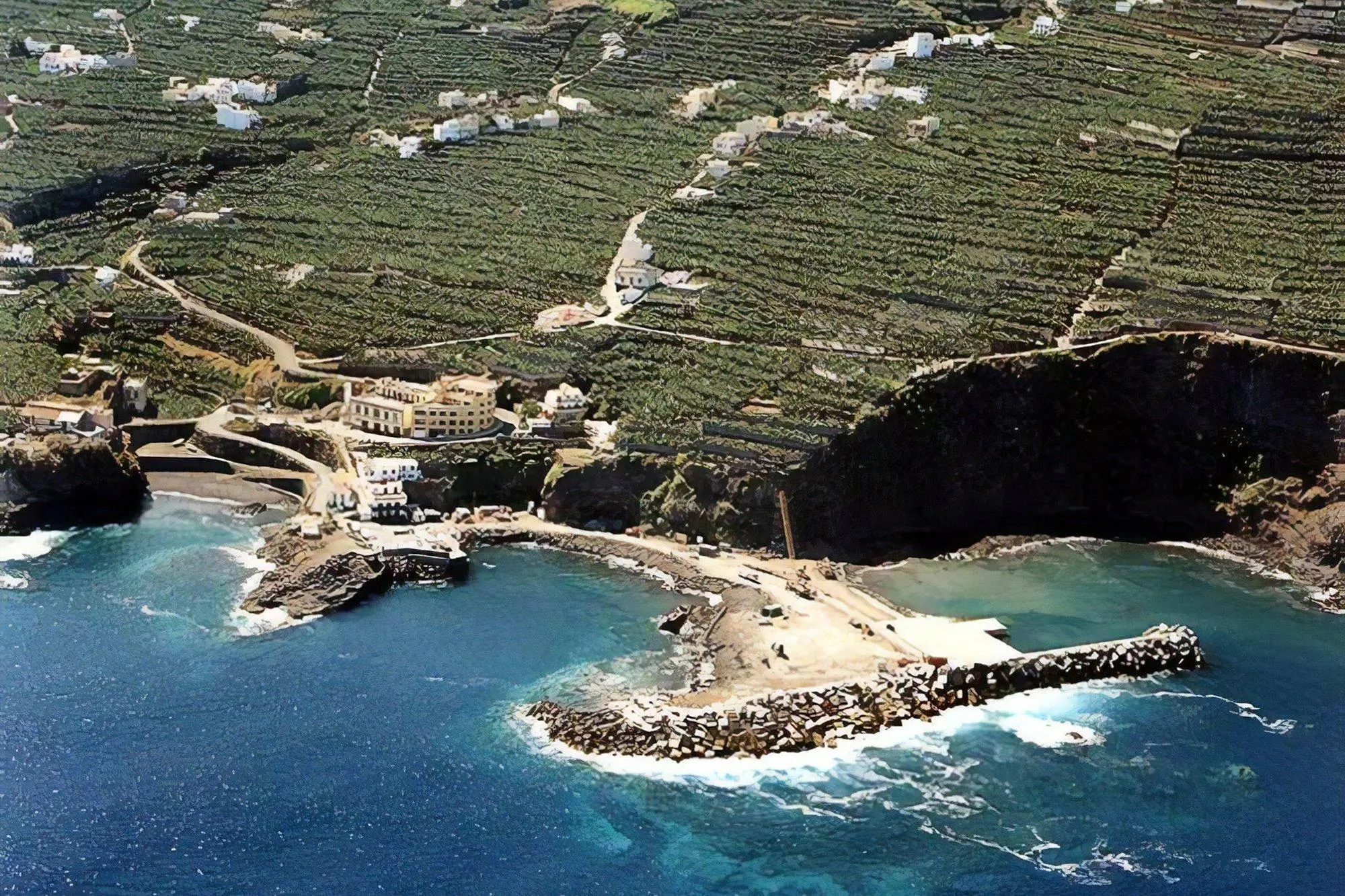
Next to the Charco Azul, the Puerto Espíndola is the municipality's fishing harbour. It was once a loading point for sugar, and today it is a quiet place to eat fresh fish and to go diving among soft corals and volcanic seabeds.
The area's restaurants serve the most representative dishes of Palmera cuisine: catch of the day, limpets grilled, wrinkled potatoes with mojo and queso palmero cured with oil. All with sea views and no crowds.
How to get to San Andrés y Sauces
From Santa Cruz de La Palma take the LP-1 heading north, a journey of about 20 minutes by car. Buses on lines 100, 210 and 300 connect the capital with the municipality, although not very frequently.
To get to La Palma, there are daily flights from Tenerife, Gran Canaria and Madrid to La Palma airport.
Frequently asked questions about San Andrés y Sauces
What is the Charco Azul?
It is a set of three natural pools volcanic ones in San Andrés y Sauces, named in 2012 one of the ten best in Spain. Their waters are fed by the Atlantic. The complex has a children's area, showers, changing rooms, a sun terrace, a restaurant and free admission.
What is the Bosque de Los Tilos?
It is one of the laurisilva forests in Canary Islands, declared Biosphere Reserve by UNESCO in 1983. It is explored via trails through damp ravines with giant ferns and ancient trees.
What are the Nacientes de Marcos y Cordero?
They are thirteen tunnels carved into the rock, where the water forms curtains and natural waterfalls. The route is one of the most popular in La Palma, suitable for intermediate level. You need to bring a torch and waterproof clothing.
What to see in San Andrés y Sauces in one day?
The Charco Azul in the morning, the old quarter of San Andrés (declared a Cultural Heritage of Interest) and eat fresh fish in the Puerto Espíndola. If there's time left, the Bosque de Los Tilos is a few minutes away.
How do you get to San Andrés y Sauces?
From Santa Cruz de La Palma it's 20 minutes by car via the LP-1. There are buses on lines 100, 210 and 300, although not very frequently.
Is there a webcam in San Andrés y Sauces?
Yes, in CanariasLife you can see the webcam of the Charco Azul live, with a view of the natural pools and the state of the sea in real time.