
El Hierro: Where the Ancient World Marked Time and Space
Before the Greenwich Observatory imposed its meridian as the universal reference in 1884, the island of El Hierro had already been the world’s “Prime Meridian” for centuries..
Located at the western end of the Canary archipelago, this small volcanic island not only marked the limit of the known world for medieval navigators but also served as a starting point for explorers, traders, and European cartographers..
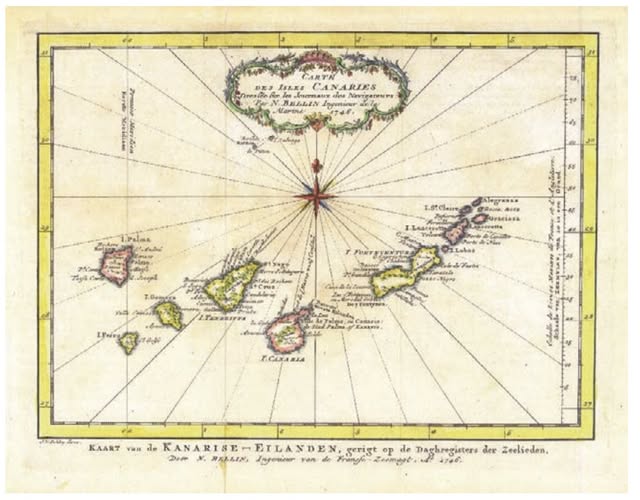
The idea dates back to Antiquity: in the 2nd century, the geographer Ptolemy placed the prime meridian in the Fortunate Islands, the westernmost tip of the known world. Centuries later, in 1634, King Louis XIII of France, at the request of an assembly of scientists convened by Cardinal Richelieu, ordered that French maps adopt the meridian of El Hierro as zero meridian, and the practice spread throughout much of Europe.
This choice was not arbitrary: the island represented the last piece of land before the vast and uncertain Atlantic Ocean,which made it a powerful symbol of transition between the known and the unknown.
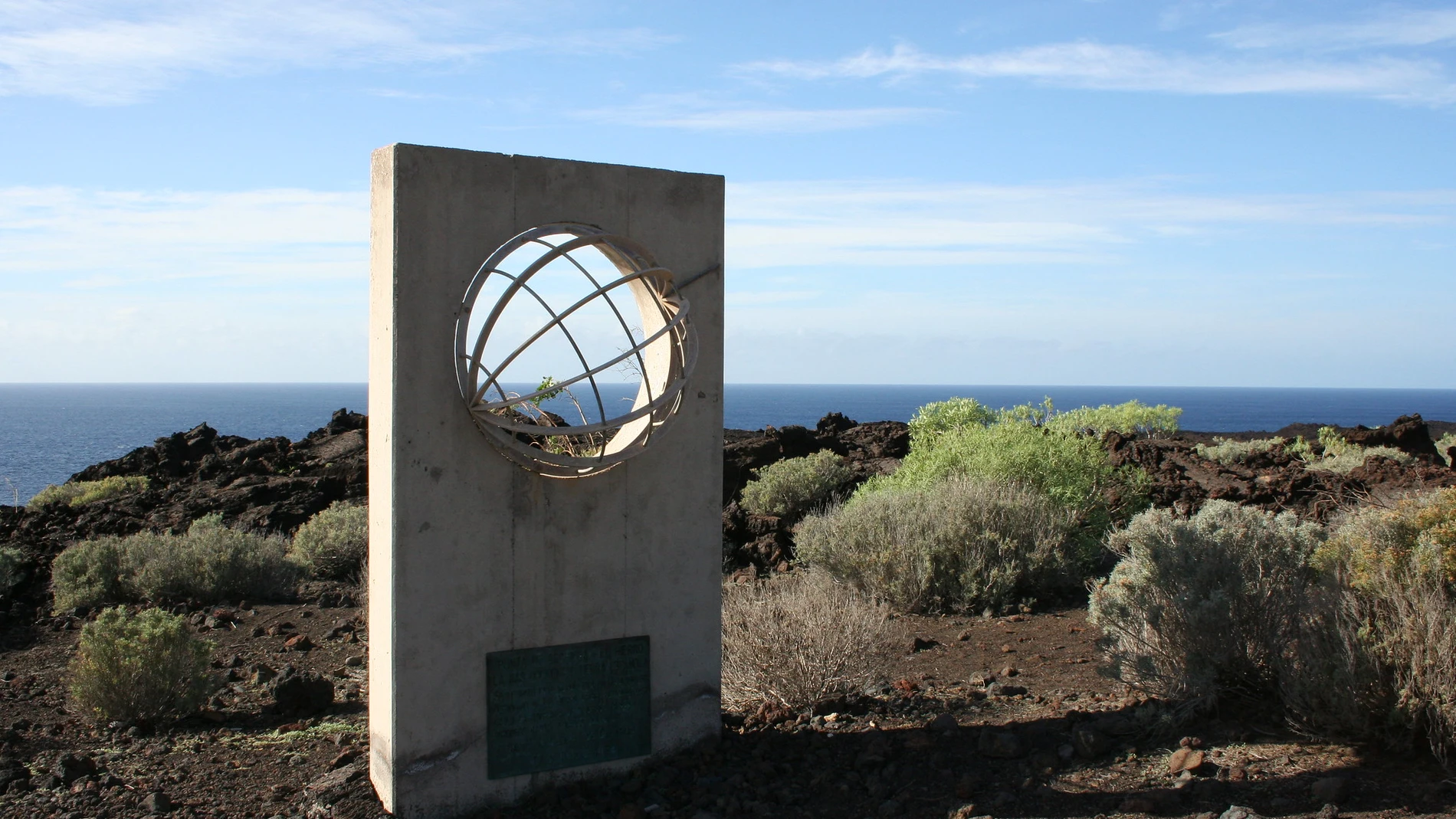
The Zero Meridian Monument, next to the Orchilla lighthouse
Today, this legacy is remembered at the Punta de Orchilla, in the municipality of El Pinar, at the southwestern tip of the island. There, near the Orchilla lighthouse, a simple monument marks the location of the old zero meridian; it is reached by a short path from the lighthouse track.
The monument, set in an almost desolate volcanic landscape, invites reflection on the role of El Hierro in the history of cartography.
This corner is much more than a geographical landmark: for more than two centuries, many European maps measured longitude from this island, the last piece of known land before the open ocean.
A Legacy that Goes Beyond Cartography
The title of 'end of the world' was not just a metaphor: for centuries, El Hierro was the last known land to the west. That almost mystical perception still lingers in its trails, cliffs, and the silence of its villages.
But El Hierro does not live solely on its past. Today it is a Biosphere Reserve since the year 2000, a pioneer in renewable energies with the Gorona del Viento hydro-wind power plant, and a reference in sustainability. Its commitment to nature and tradition creates a fascinating contrast: an island that looks to the future without forgetting that, for centuries, it was the point from which the entire world was measured..
Why Visiting El Hierro is a Unique Experience
Besides the Orchilla monument, the island offers multiple ways to connect with its historical and natural identity:
- Orchilla Lighthouse: the lighthouse of the old zero meridian, in a spectacular volcanic landscape by the sea.
- Mirador de la Peña: the work of César Manrique, with views over the El Golfo valley and the ocean.
- Ecomuseum of Guinea: a restored traditional settlement, next to the Lagartario, where you can learn about the life of ancient inhabitants of El Hierro and the giant lizard of El Hierro.
- La Restinga and the Sea of Calm: a marine reserve considered one of the best diving spots in Europe. You can see the port live with our webcam of La Restinga.
El Hierro Today: Between History and Sustainability
While other islands compete for mass tourism, El Hierro bets on a model of slow, conscious, and cultural tourism. Here there are no skyscrapers or crowds, but cobblestone paths, terraced vineyards, and communities that preserve centuries of wisdom.
Visiting El Hierro is, in many ways, going back to the origin: to the origin of maps, to the origin of respect for nature, and to the origin of a worldview where knowledge and humility went hand in hand. And if you want to peek at the island before traveling, take a look at our webcams of El Hierro.