

How to Start Your Life as a Self-Employed Worker in the Canary Islands
Opening a self-employment activity in the Canary Islands is not only a professional decision but also a bet on a unique lifestyle. The archipelago has its own tax regime, a privileged environment, and a growing entrepreneurial community. However, the process requires knowing the specific procedures, both state and Canary Islands, to avoid mistakes that could delay your start or result in penalties.
In this practical guide, updated to October 2026, we explain step by step how to register as self-employed in the Canary Islands, taking advantage of the benefits of the Economic and Tax Regime (REF) and complying with all legal obligations from day one. If you are thinking about settling in the islands, you may also be interested in our guide for working in the Canary Islands.
Advantages of Being Self-Employed in the Canary Islands
Before diving into the procedures, it is key to understand why the Canary Islands is an attractive destination for entrepreneurs:
- IGIC instead of VAT: In the Canary Islands, VAT does not apply; instead, the Canary Islands Indirect General Tax (IGIC) is applied. Its general rate is 7%, compared to 21% VAT on the mainland, and there are reduced rates of 0% and 3% for certain activities.
- IGIC exemption for small self-employed workers: Since July 2026, self-employed individuals with an annual turnover of up to €50,000 can benefit from the special regime for small entrepreneurs or professionals. They do not charge IGIC on their invoices, although they cannot deduct the IGIC they pay on their purchases either.
- Reserve for Investments in the Canary Islands (RIC): Self-employed persons under direct estimation can reduce their tax burden by allocating part of their profits to investments in the islands.
- Government of the Canary Islands supports: Such as the 'Zero Rate', which reimburses the flat rate fees to new self-employed individuals (explained further below).
- Quality of life: Exceptional climate all year round and increasingly better digital connectivity.
These advantages are part of the Economic and Fiscal Regime (REF), a regime unique to the islands recognized by the European Union for its status as an outermost region. If you want to delve deeper, consult our article on taxes in the Canary Islands.
Step 1: Define Your Activity and Modality
You must decide:
- What you are going to do: Professional services (consulting, design, translation), trade, hospitality, etc.
- Where you will work: At home, in an office, online, or mobile.
- Whether you will bill individuals or businesses (this affects the withholding of IRPF on your invoices).
- How much do you expect to charge: If you do not exceed €50,000 annually, consider applying for the IGIC exemption.
Important: Some activities require municipal licenses (for example, hospitality, hairdressing, or workshops). Check with your city council before registering.
Step 2: Registration with the Tax Agency (Model 036) and the Canary Islands Tax Agency (Model 400)
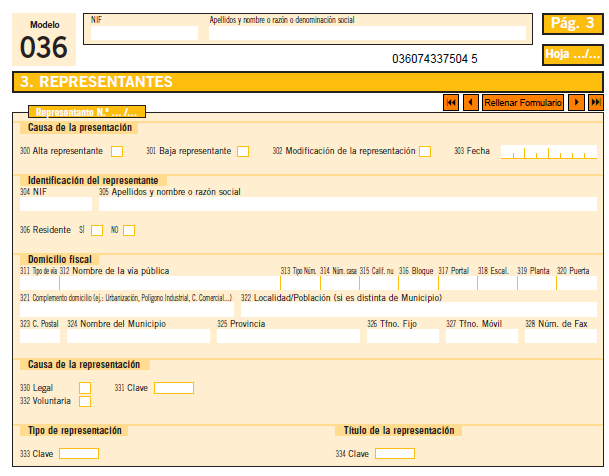
In the Canary Islands, you have to register with two tax administrations: the national one for IRPF, and the Canary Islands one for IGIC.
- Tax Agency (national): Submit the Model 036. The old simplified Model 037 was eliminated in February 2025, so now all self-employed persons use model 036.
- Choose the IAE section that best describes your work (for example, 769.9: 'Other professional activities').
- Indicate if you will apply IRPF withholding of 7% or 15% on your invoices. Professionals starting their activity can apply the 7% in the year of initiation and the following two years.
- Canary Tax Agency: Submit the Model 400, which is the registration in the IGIC census. In this same model, you can request the special regime of the small entrepreneur if you invoice up to €50,000 per year.
Local advice: If you provide services to clients located outside the Canary Islands, those operations may not be subject to IGIC. Consult your case with an advisor.
Step 3: Registration with Social Security
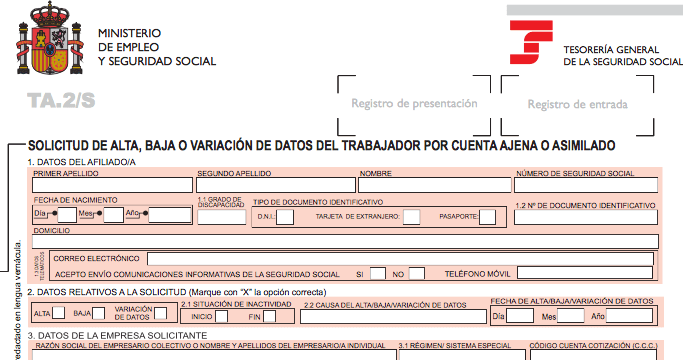
You must register in the Special Regime for Self-Employed Workers (RETA):
- Deadline: you can request it with up to 60 days in advance of the actual start of the activity and never after starting.
- Flat rate: €80/month during the first 12 months. You can extend it for another 12 months if you expect net revenues to be lower than the Minimum Interprofessional Salary, as long as you request it before the first year ends.
- In the Canary Islands, the program Zero Rate from the Government of the Canary Islands reimburses the fees paid with the flat rate (see below).
Complete the procedure online at the Electronic Headquarters of the Social Security.
Step 4: Communicate the Start of Activity to the Town Hall
Depending on your municipality (Santa Cruz, Arona, Las Palmas, etc.), you must submit a responsible declaration of activity opening or request a license. This is especially relevant if:
- You have a commercial premises
- You generate noise, waste, or environmental impact
- You offer services to the public in person
In many town halls, this procedure is done online. Fees vary depending on the municipality and the type of activity, so check them before starting.
Step 5: Invoicing, Accounting, and Periodic Obligations

Once registered:
- Issue legal invoices: They must include your NIF, consecutive number, date, taxable base, applicable IGIC (or the mention of exemption if you are in the small entrepreneur regime), and, if applicable, the IRPF withholding.
- Keep a book of income and expenses: You can use apps like Quipu, Holded or Contasimple (compatible with IGIC).
- IGIC: Submit the Model 420 to the Canary Islands Tax Agency quarterly and, in January, the annual summary with the Model 425. If you are in the small entrepreneur regime, you do not submit the quarterly 420.
- IRPF: Submit the Model 130 quarterly to the national Tax Agency, unless at least 70% of your income has withholding.
- Self-employed fee: It is charged by direct debit on the last business day of each month.
Common mistake: Forgetting that IGIC is not VAT. The models are different (420 instead of 303) and are submitted to the Canary Tax Agency, not to the national Tax Agency.
Aid and Local Resources for Self-Employed in 2026

The Government of the Canary Islands consolidates its assistance in the Support Plan for the Self-Employed. The most useful for those starting are:
- Zero Rate: Reimburses the reduced fees of the flat rate to self-employed individuals with a tax residence in the Canary Islands. The call is annual and is requested through the electronic headquarters of the Government of the Canary Islands.
- Help during medical leave: Covers part of the Social Security fees while you are on leave due to temporary incapacity.
- Other programs: Assistance for family reconciliation (Concilia Program) and to hire your first employee.
- Free advice: At the Points of Attention for Entrepreneurs (PAE), for example, in the Chambers of Commerce of each province.
Check the requirements and deadlines of each call in the electronic headquarters of the Government of the Canary Islands.
Errors You Should Avoid
- Not registering on time: Social Security may require you retroactive fees with a surcharge.
- Forgetting to register for IGIC: Registering only with the Tax Agency is not enough; you also have to submit Model 400 to the Canary Islands Tax Agency.
- Confusing VAT with IGIC: This can lead to fines for errors in invoicing.
- Ignoring municipal obligations: Sanctions for operating without a license or without responsible declaration.
- Not separating personal and professional accounts: Complicates accounting and tax declaration.
Frequently Asked Questions (FAQ)
Can I register as self-employed if I am a foreigner?
Yes. If you are an EU citizen, you need the EU citizen registration certificate with your NIE and then the same procedures as any self-employed person. If you come from outside the EU, you must have a residence and work authorization as a self-employed.
Is it mandatory to have a commercial premises to be self-employed in the Canary Islands?
No. You can work from home, as long as your activity does not generate disturbances (noise, traffic, odors). Many activities, such as private tutoring or programming, are compatible with a private residence.
How much does it cost to register as self-employed in the Canary Islands?
The procedures with the Tax Agency, the Canary Islands Tax Agency, and Social Security are free. The usual expenses are:
- Monthly self-employed fee (€80 with flat rate, which in the Canary Islands you can recover with the Zero Rate)
- Municipal fees if your activity requires them (vary according to the municipality)
- Advisory services (optional)
Can I become self-employed while receiving unemployment benefits?
Yes. In some cases, you can temporarily combine unemployment benefits with registration as self-employed, or receive it all at once (capitalization or single payment) to invest in your business. Check your situation with SEPE before registering.
Is the IGIC declared the same as the VAT?
No. It is declared before the Canary Islands Tax Agency with specific models: the quarterly 420 and the annual 425. Furthermore, the rates are different, and if you invoice up to €50,000 per year, you may be exempt from charging it.
Information updated as of October 2026 for reference purposes. Tax regulations change frequently: before registering, confirm your case with an advisor or with the mentioned administrations.