
The 'House of Captain History Museum' in San Miguel de Abona
History and celebration of the House of the Captain Museum in the Canary Islands
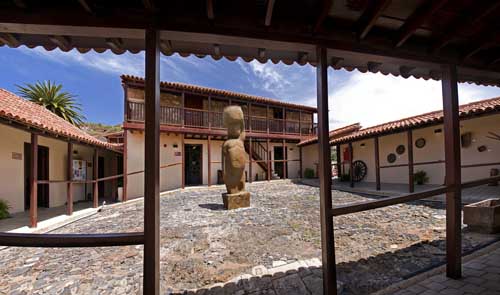
The House of Captain Museum, in San Miguel de Abona, occupies a house built about two centuries ago. It was commissioned by D. Miguel Alfonso Martínez, who lived there until his death in 1854. This house is a typical example of upper-class Canarian homes of the time.
It has a main floor with a central patio, main rooms, and a basement that includes a cellar, barn, and spaces to store agricultural tools. Its design is simple yet functional, made with local materials such as Canary pine wood, chasna stone, and Spanish tiles.
Museum spaces and activities
Today, the museum has rooms dedicated to the artisanal porcelain of San Miguel de Abona, local history, wine, and the harvest. Additionally, it features a space for events, debates, and presentations. In the inner courtyard, there is a corridor used for exhibitions, while the back patio serves for craft markets and other cultural activities.
One of the main attractions is the traditional pottery workshop of San Miguel de Abona, where classes are offered throughout the year.
If you want to learn more about the culture and history of the Canary Islands, you cannot miss this important tourist destination. You can find more information about other museums in the Canary Islands here .
Why is it called Casa de El Capitán
The house belonged for decades to the Alfonso family, one of the wealthiest in the municipality. One of its members, born in the late 18th century, was the highest-ranking military official in San Miguel at the time, and that's where the name of the building comes from.
In 1978, a fire damaged the house. The San Miguel de Abona City Council rehabilitated it and turned it into the museum that can be visited today, with its inner courtyard and, in the semi-basement, the wine cellar and the press.
A walk through the historic center
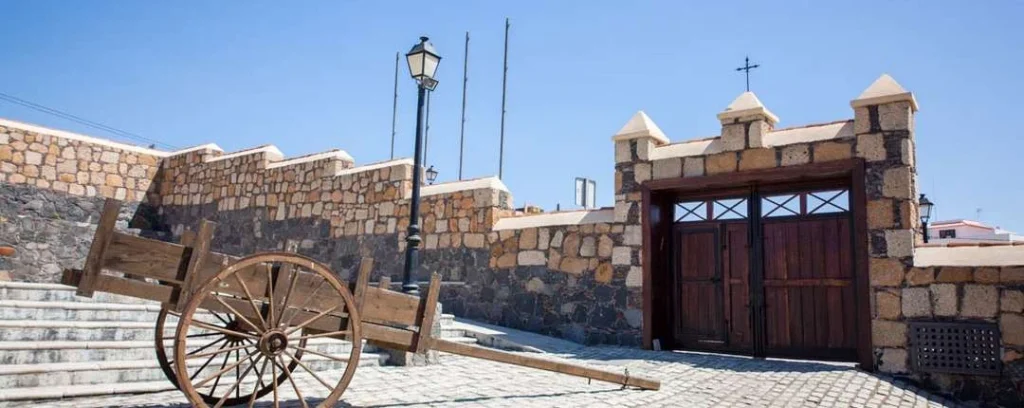
The museum is located in El Calvario, at the edge of the historic center of San Miguel, declared a Cultural Heritage Site with the category of Historical Complex. The old royal street, now La Iglesia street, connects it with the Church of San Miguel Arcángel, dating from the 18th century.
Along the way, you will see one- and two-story houses from the 18th to the 20th centuries, the Casa Azul, where the City Hall is located today, and the ancient fountains that supplied water to the town until well into the 20th century.