
The highway sign in Tenerife, at km 31,
simply says “Mueca is optimism.”
The cultural history of Puerto de la Cruz
Cultural History of Puerto de la Cruz
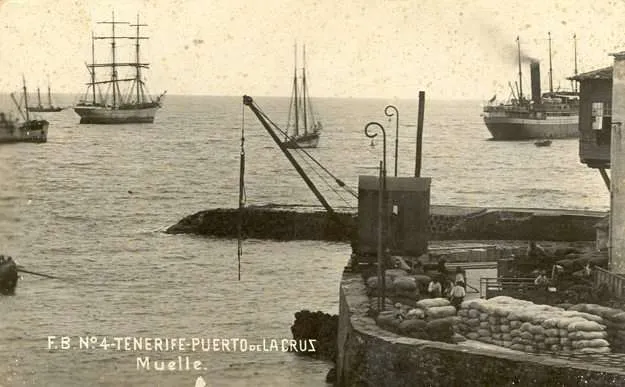
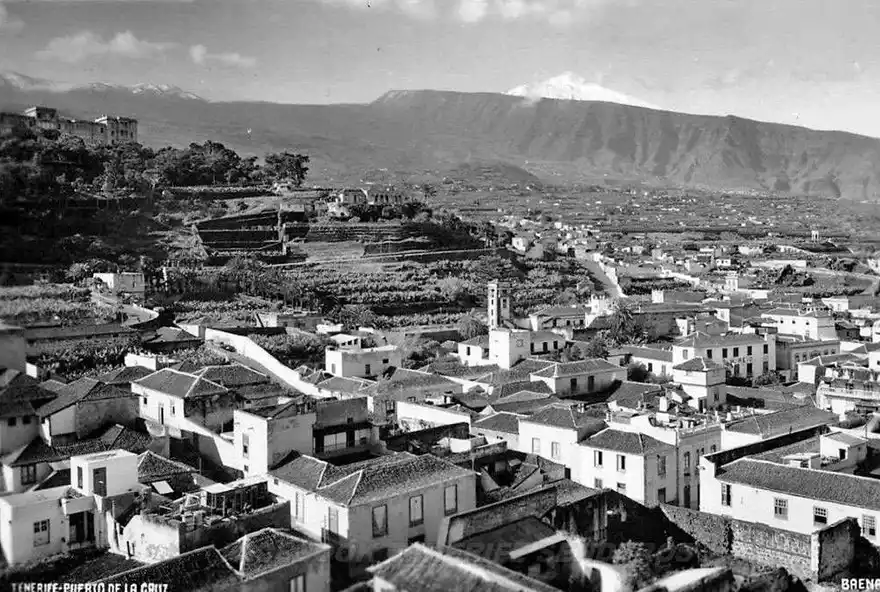
Puerto de la Cruz is an iconic city in Tenerife, whose cultural history dates back to the 17th century. In 1648, it began its development as a commercial port thanks to the fishermen of La Ranilla and European merchants. Its strategic location in the Taoro Valley and its connection to the Atlantic made economic growth possible based on agricultural products such as sugar cane, grapevines, and bananas.
During the 18th and 19th centuries, this locality not only stood out for its agriculture but also for the cultural influence of important figures. Among them were the Iriarte brothers, especially Tomás, considered the father of fairy tales in Spain, and Agustín de Betancourt, a renowned engineer whose work transcended borders. Luis de la Cruz, the official painter of Fernando VII, was also born here.
In 1799, the German naturalist Alexander von Humboldt visited the area after climbing Teide, allowing him to study the local flora and compare it with that of other regions of the world. Over time, tourism became one of the main economic drivers. The Hotel Taoro and Sitio Litre Garden were the first signs of this change.
In the mid-20th century, cultural institutions were established such as the Institute of Hispanic Studies of the Canary Islands (IEHC) and the Eduardo Westerdahl Contemporary Art Museum (MACEW). Loro Parque was inaugurated in 1972, and in 1977 Lake Martiánez, created by César Manrique, merged art and nature.
Today, Puerto de la Cruz continues to promote its cultural history of Puerto de la Cruz through projects like the Cultural Strategy 2020, establishing itself as a destination for cultural tourism in Tenerife .