
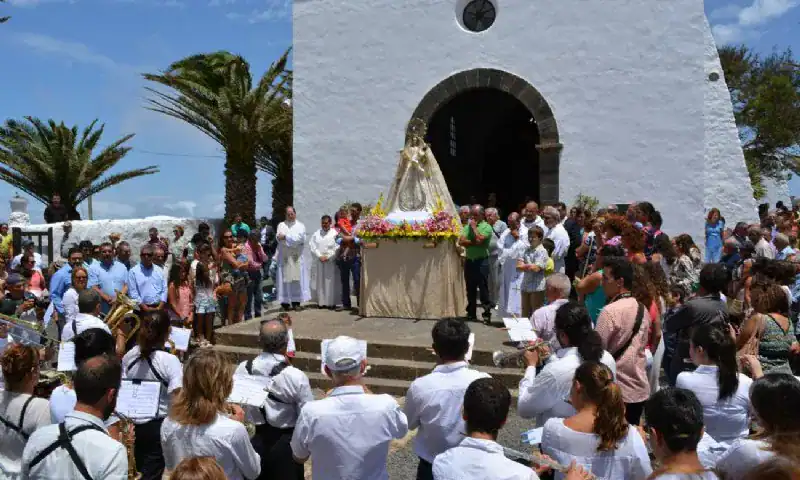
Fiesta de la virgen de Haría: tradición y cultura en Lanzarote
Lanzarote in spring is not just a nature destination. It's also a place where history and traditions shape the calendar. For example, the village of Haría, in the north of the island, becomes each year the centre of a beloved celebration: the Virgen de Haría. However, it's much more than a religious festival. It represents the music, the crafts and the joy of a people proud of their past. What's more, they like to share the best of themselves with neighbours and visitors.
The heart of Lanzarote's culture
Haría is famous for its palm trees rising over a green valley. It's something rare in Lanzarote's volcanic landscape. But when spring arrives, that tranquil scenery fills with colour. The streets fill with locals and visitors who pay tribute to the town's patron saint. Many wear traditional costumes and revive old songs and dances.
Yet this event goes far beyond faith. It's an invitation to feel the island's cultural pulse, where faith mixes with tradition and joy. For several days, Haría offers a programme that blends the calm of the processions with the liveliness of the verbenas. In this way, an ancient tradition remains alive over time.
Tradition, music, and local flavor
The activities change every year, but they always retain the authentic flavour of Lanzarote. That's why it's almost impossible not to get swept away by the decorated streets. There, folk music accompanies the comings and goings of artisans and the curious.
These are some of the festival's most cherished experiences:
- Processions: moving and full of symbolism, they wind through the streets of the old town. Meanwhile, the locals accompany the Virgin with songs and prayers.
- Concerts and popular dances: local groups play traditional songs and dances like the isa or the sorondongo. They also encourage anyone who comes to join in.
- Gastronomy and crafts: there are typical products, such as cheeses, mojos and sweets, and also pieces of ceramics and basketry. Thus, the market invites you to taste and to take home a little bit of Lanzarote.
- Canarian games and sports: several generations share the bola canaria, the lucha canaria or popular races. Without a doubt, these are staple events on the agenda.
A calendar full of activities
The art of knowing how to celebrate shows in the variety of events, such as the visit to the local hermitage. Generally, the programme begins with proclamations and games for children. After that, it gains momentum until the big day, when the whole village turns into a party.
This is a summary of the events that usually enliven the festival week:
Day | Main activity | Place |
|---|---|---|
Thursday | Opening ceremony and market openings | Plaza León y Castillo |
Friday | Exhibition of Canarian sports | Municipal field |
Saturday | Main procession and fair | Parish of Our Lady of the Incarnation and Haría Square |
Sunday | Gastronomic contest and workshops | Social hall and equipped tents |
Thus, each day is a reason to connect with the essence of Haría and of Lanzarote.
More than a festival, a way of life
The commitment of the locals is exemplary. In fact, whole families prepare for months so everything goes smoothly. They sew traditional costumes, set up food stalls and rehearse the dances. So taking part, even as an audience member, is to feel part of an open and welcoming town.
What's more, there's special care in the details: decorated balconies, music on every corner, the invitation to try a gofio cake or to learn the steps of a folía. These little things make the difference. In the end, they turn an ordinary day into something unique.
Identity and hospitality
Those who have experienced this festival highlight how warmly the people of Haría receive visitors. Here the pride of being from the town and the desire to share come together. That creates an atmosphere of joy that wins everyone over. Also, in Haría generations and cultures come together, as visitors and locals learn from one another in a relaxed atmosphere.
Many travellers arrive looking for beach or nature and yet discover Lanzarote's great cultural richness. Some even return year after year. They are drawn not only by the festival, but by the way of living it: sincere, open and full of nuance.
A lovingly marked calendar
It's no coincidence that spring is one of the best times to visit Haría. The weather, already mild, announces the arrival of summer. Also, the landscapes look their best and, above all, the local calendar shines brighter than ever.
Other festivals liven island life throughout the year. However, the Virgen de Haría has a special aura. Maybe it's because of the locals' devotion or the unique setting of the Valle de las Mil Palmeras. Or perhaps it's that sense of belonging so typical of Lanzarote.
That's why those seeking a cultural holiday find a safe bet here. The atmosphere, the variety of plans and the strength of its living culture make Haría a symbol of the authentic Lanzarote.
Remembering the origin and looking to the future
This festival has its roots in the island's history. At the same time, it feeds on the eagerness of young people and families to keep customs alive while renewing them. That's why the Virgen de Haría is not anchored in the past. Each year it adds new elements and activities that open the way to new generations and visitors.
In short, anyone who comes will experience something that goes beyond folklore. These days, Haría shows how a small village can keep its traditions alive. It also knows how to adapt them to current times without losing their original meaning.
Finally, visiting this festival is much more than attending an event. It's being part, for a few days, of a village that celebrates its identity, its history and its way of welcoming people with contagious joy.