
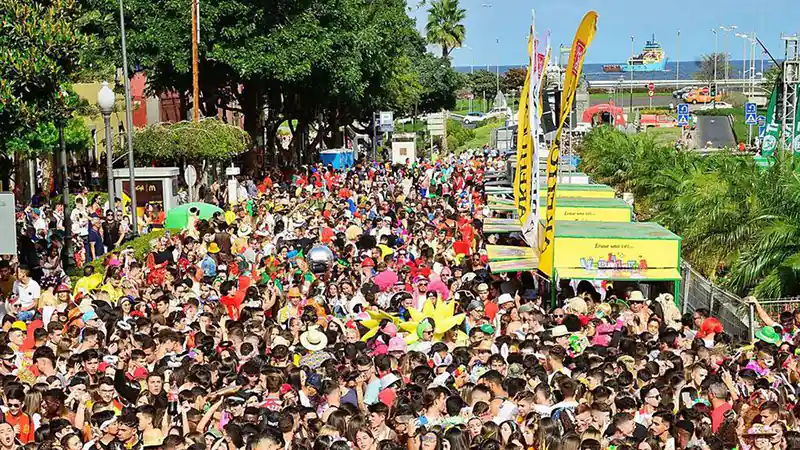
The Carnival of Las Palmas de Gran Canaria
The Carnival of Las Palmas de Gran Canaria is one of the oldest celebrations, with the most history and character of the capital of Gran Canaria.
More than five centuries of life characterize this event, with its masks, its imposture... and the meat. Its origins and its history are undoubtedly intertwined.
The capital of Gran Canaria, founded on June 24, 1478, immediately demonstrated a great capacity to welcome and assimilate cultures, given the presence of populations from different origins. The first direct reference to the Carnival is found in the 16th century, precisely in 1574, with the masked ball held at the house of canon Pedro León to celebrate the marriage of Matías Cairasco.
In the History of the Canary Islands by José de Viera y Clavijo, in the passage that recounts the arrival of Captain Íñigo de Brizuela to the islands in February 1635, we read: “A great dinner was served that night, and three banquets on the days of Carnival…”.
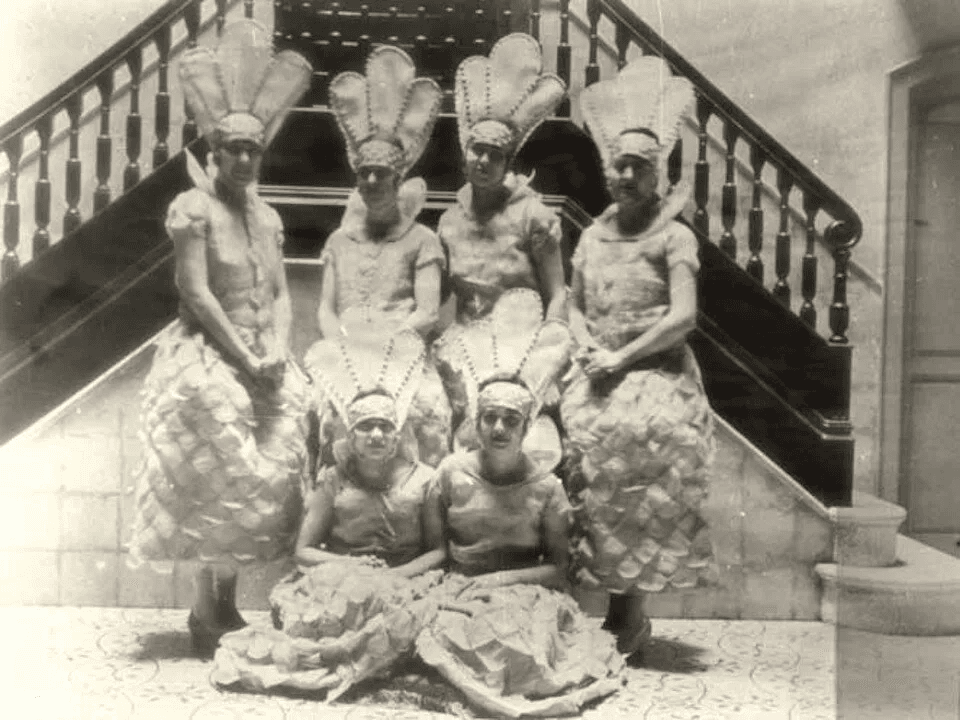
In the 16th century, several documents relate the presence of Italians in the city and their passion for masked dances.
After the years it was banned during Franco's regime, Carnival returned to the streets in 1976. A few months after Franco's death, a neighbor from La Isleta, Manolo García, requested permission from the civil governor to bring back the festival, and the neighborhood became the driving force behind its revival.
Today, the Carnival of Las Palmas de Gran Canaria is one of the major festivities of the archipelago, famous for its murgas, comparsas, and its Drag Queen Gala. If you want to catch a glimpse of the city's atmosphere, you can do so live with our webcams of Las Palmas de Gran Canaria.
Santa Catalina Park, the heart of the festival
The Carnival of Las Palmas de Gran Canaria is held every year in February or March, depending on the date of Lent, and each edition has a different theme that inspires the costumes and the stage. The center of the celebration is Santa Catalina Park, where galas, murga and comparsa contests, and dances take place until dawn.
Since 1998, the Drag Queen Gala has been one of its most famous events: contestants have a few minutes on stage to win over the audience and the jury, and the gala is broadcast live to many countries.
The Great Parade and the Burial of the Sardine
The Great Parade is the main event: it covers about six kilometers through the city streets and gathers around 200,000 people each year. The celebration ends with the Burial of the Sardine, a humorous funeral procession that accompanies a large sardine to the sea, where it is burned amid fireworks.