

The origin of the word 'Guagua'
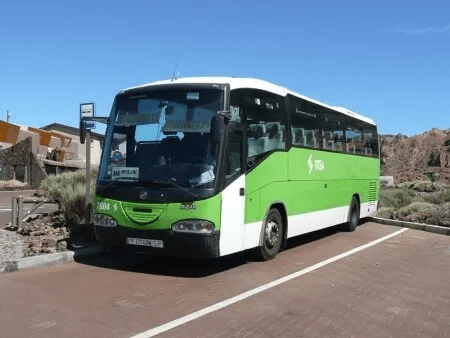
The origin of the word guagua: does it come from Cuba?
Have you ever wondered why in the Canary Islands, Cuba, Puerto Rico, or the Dominican Republic, a bus is called guagua? This word has an interesting history that mixes languages, migrations, and cultural influences.
In the 19th century, the expression “de guagua” was already used, meaning ‘free’. It was the Cuban Esteban Pichardo who documented this form for the first time in 1836. According to the Spanish philologist Corominas, although there is no clear document of the use of “guagua” as a bus, it is believed to come from the English word «waggon», which was how military or public transport vehicles were called in the U.S.
After the war of 1898, the United States had a significant influence on the island. It is likely that the term “guagua” began to be used to refer to these public vehicles there. But how did it come to the Canary Islands?
In the Canary Islands, the term is not recorded as a noun until the mid-20th century. In Tenerife, for example, the word 'jardinera' was used to describe those collective vehicles. However, from Las Palmas, the use of 'guagua' gradually spread.
Researchers Luis and Agustín Millares included the word in their studies from 1924 and 1932, noting that the origin was American. Therefore, today it is believed that the origin of the word guagua comes from Cuba, possibly brought by emigrants who returned to the Islands.
Another theory: the company Wa & Wa
There is also a widely repeated popular explanation: according to it, "guagua" would come from the name of an American transportation company, Wa & Wa Co. Inc., which supposedly operated in Cuba. It's an interesting story, but there are no documents to confirm it, and scholars lean towards a connection with "waggon."
Other Canary Islands words that came from English
The guagua is not an isolated case. Trade with British ships left many English-origin words in Canary speech. The "queque," cake, comes from "cake"; the "naife," the traditional knife of farmers, comes from "knife"; and the "fonil," funnel, comes from "funnel."
Others have a more curious origin. "Cambullón," the trade with foreign ships that stopped at the port, is usually explained from the expression "can buy on," and "bisne," a business or deal, comes from "business." These are words still heard in the islands that tell, in their own way, the story of the Canary ports.