
Milk tide: mystery in the calm sea
A moonless night in front of La Restinga is enough for the Atlantic to change its script. The sound of the waves seems the same as always, the breeze smells of salt and old lava, but with the slightest impact of the water against the breakwater, something ignites: electric blue, a flash that extinguishes in a sigh, another further away, a white trail that seems to float beneath our feet. The people of El Hierro call it the milk tide or, in an even more precise twist, the bright gentle waters. It is pure science and, at the same time, a small nocturnal wonder.
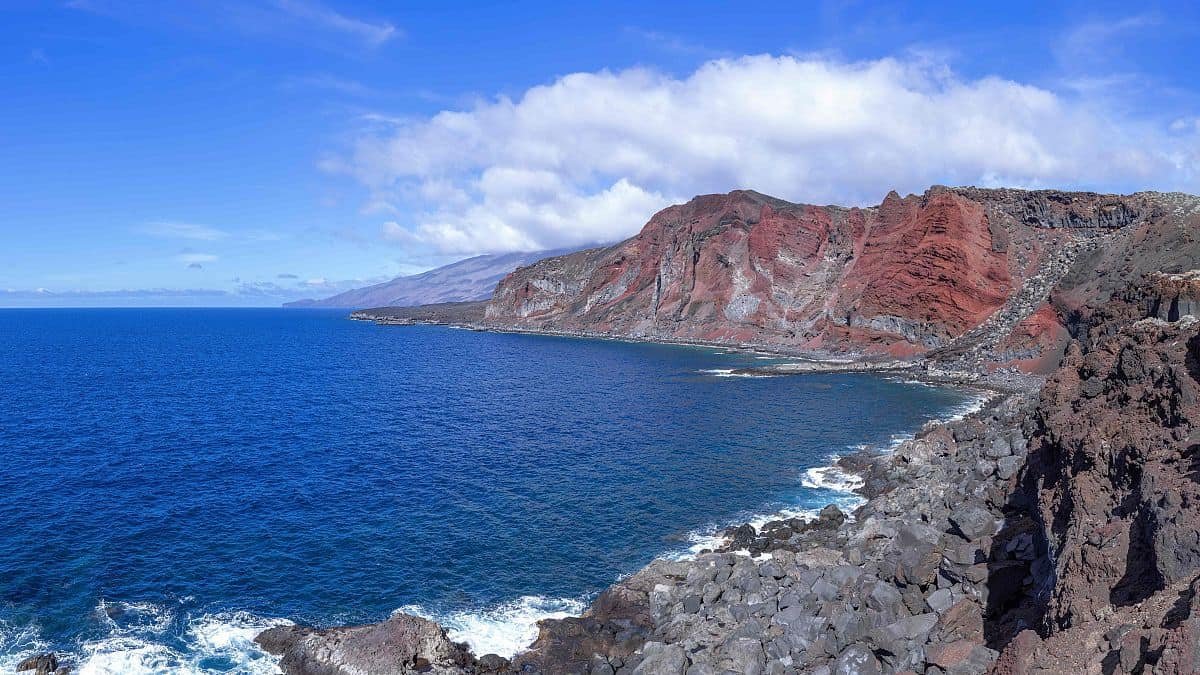
This corner of the southwest of El Hierro, the Sea of Calm, is famous for being a safe haven. Protected from the trade winds and blessed with clear and warm waters, it offers an unusual underwater visibility in the Canary Islands. This almost perpetual calm is an accomplice to the spectacle: it concentrates microscopic organisms capable of producing light and, above all, allows us to see them without interferences.
The island at the zero meridian possesses another rare virtue: true darkness. Here, the night is night, without invasive streetlights, without neon lights that whiten the horizon. Everything favors the biological spark, enhancing marine biodiversity and allowing this natural phenomenon to develop without interferences.
Where it occurs and why the night shines here
La Restinga is the closest door to the scene. From its port and along the coastline of Sea of Calm, bioluminescence frequently emerges in summer and early autumn, when the water column is more stratified, and the waves caress rather than hit the coast. There is no mystical secret: there are unique oceanographic conditions.
- Clear, highly saline, and warm waters
- Absence of large cold upwellings
- Dominant winds contained by the orography
During the day, if the bloom is intense, the water can appear with a milky or pink veil. At night, with total darkness, each wave transforms into a brush of light.
What shines: from plankton to bacteria
The protagonists are millions of microorganisms. Among them stands out Noctiluca scintillans, a large dinoflagellate for its microscopic scale, almost a tiny gelatinous ball that, when agitated, releases a blue glow. Other dinoflagellates and cyanobacteria, as well as marine bacteria like Vibrio and Photobacterium.
On nights with very dense patches, the sum of individual flashes from Noctiluca is perceived as a luminous sheet that runs with the wave. In El Hierro, the most intense signal is almost always associated with dinoflagellates.
The science behind the spell
The scientific explanation fits into three ideas: food, stillness, and darkness.
Food arrives in pulses of nutrients that support large plankton populations. Stillness is provided by the Sea of Calm. Darkness is gifted by the island. Physics assists: high ocean salinity promotes both the growth of Noctiluca and the intensity of its glow per cell.
| Environmental factor | Typical condition in the Sea of Calm | Effect on visible brightness | Relevant detail |
|---|---|---|---|
| Surface temperature | 19 to 26 °C | Favors proliferation; excessive heat reduces brightness per cell | Noctiluca emits more per cell in colder waters, but grows well in temperate ones |
| Salinity | 35 to 36 PSU | Increases light intensity per cell | Ocean salt optimizes the light machinery |
| Darkness | Very high, Starlight sky | Improves perception and prevents inhibition | Intense artificial light can suppress the flash |
| Stratification | High in calm summers | Accumulates dense patches near the surface | Small waves activate continuous flashes |
| Nutrients | Seasonal pulses | Trigger massive blooms | Rains, mixing, and specific organic inputs |
The dominant role of Noctiluca
Noctiluca scintillans is not a photosynthetic 'alga'. It is a heterotrophic dinoflagellate that feeds on other microorganisms. It can reach 200–400 microns. Inside the cell, there are vesicles called scintilletas, loaded with luciferin and luciferase. A strike activates the reaction. The flash lasts fractions of a second… but in a dense bank, repetition creates the sensation of continuous glow.
When to look, how to do it right
The best episodes usually occur in late summer and early autumn. To increase your chances:
- Lunar phase: new moon or waning quarter
- Wind: weak or calm
- Tide: little swell, short and low waves
- Lighting: no white flashlights; use soft red light
- Observation point: La Restinga pier, quiet rocky shores
- Attitude: patience and silence (the eyes adapt in 15 minutes)
It also helps to be prepared and respectful of the environment:
- Water and light shelter
- Footwear with non-slip soles
- Bag to avoid leaving waste
If you decide to enter the water, do so with maximum caution, never alone and adhering to the reserve regulations. Better yet: stay onshore and enjoy without disturbing.
Ecosystem and consequences of the milk tide
A bloom of Noctiluca is a powerful ecological event. It preys on other microplankton, zooplankton eggs, and dinoflagellates. But it also contributes biomass that benefits fish and jellyfish. During the day, the water can turn to pink or brown tones ('red tide'), which is usually not problematic, although it is recommended to avoid shellfish harvesting during intense episodes.
Darkness as an ally: El Hierro and the value of looking
That bioluminescence is so visible here is not just a matter of plankton. The island carefully protects the night. Skies certified for their darkness, low population density, and careful streetlights make El Hierro a privileged natural observatory.
A name with ancient echoes
'Milk' and 'Iron' have brushed against each other for centuries on the island. In recent memory, fishermen and locals have interpreted the shining sea with a mix of respect and curiosity. Today, night photography and discreet outings to see the glow coexist with tales from grandparents by the pier.
Questions that always arise
Is it dangerous? Not for occasional bathing, although it's best to avoid entering the water at night. Be careful with shellfish during daytime red tides.
Can you 'provoke' the flash? Yes, by gently stirring the water. A stick or your hand, from the pier, is usually enough.
Does it occur every summer? There are better and worse seasons. Warm and very calm years tend to produce more luminous nights.
A moment by the boardwalk
The final scene of any ideal visit doesn't require grand words. You sit on the stone edge, turn off your phone, and wait. A small fish cuts through the surface and its tail ignites. The wave climbs the step and the foam colors. You stand up, swirl the water with your toes: a blue crescent is drawn that dissolves instantly.
The tide, for a moment, appears milky. And the night in El Hierro, darker and brighter than anywhere else, reminds us of the importance of projects that study these natural phenomena and their impact on the health and biodiversity of our seas.