
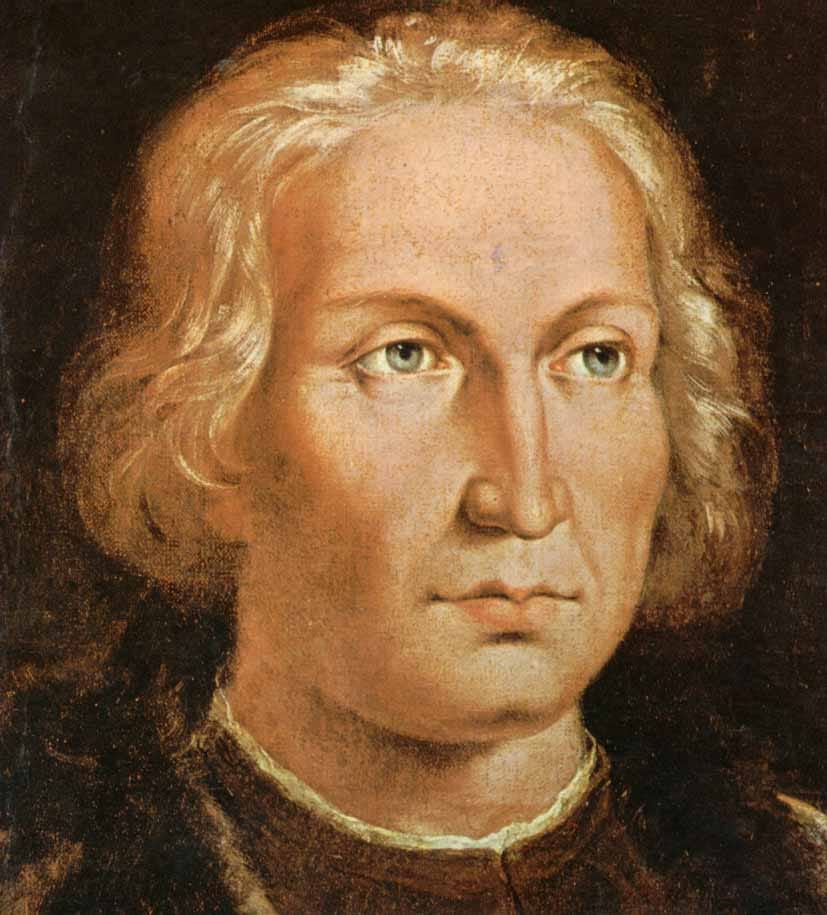
Christopher Columbus and the Canary Islands
Christopher Columbus and the Canary Islands: A Key Point in History
When you visit the Canary Islands, you will feel their revitalizing power and understand why Christopher Columbus made them the refueling stop for the most important journey in history.
Few are aware of the close bond that links the Canaries with the great Genoese navigator, as they played a fundamental role in Christopher Columbus's journey towards the discovery of the New World.
In addition to his previous stay in La Gomera, where he studied the flow of currents and trade winds in the Atlantic Ocean, the fact that it was the last European port from which the caravels departed for the definitive leap also made it the last supply point.
In every sense, in fact, the natural wealth of the islands, the quality of drinking water, and the warm welcome of its inhabitants led the expedition to stop in Gran Canaria for several weeks to refuel, make necessary repairs, and regain energy before embarking on the long journey.
The First Voyage of Christopher Columbus: Departure and Preparation in the Canaries
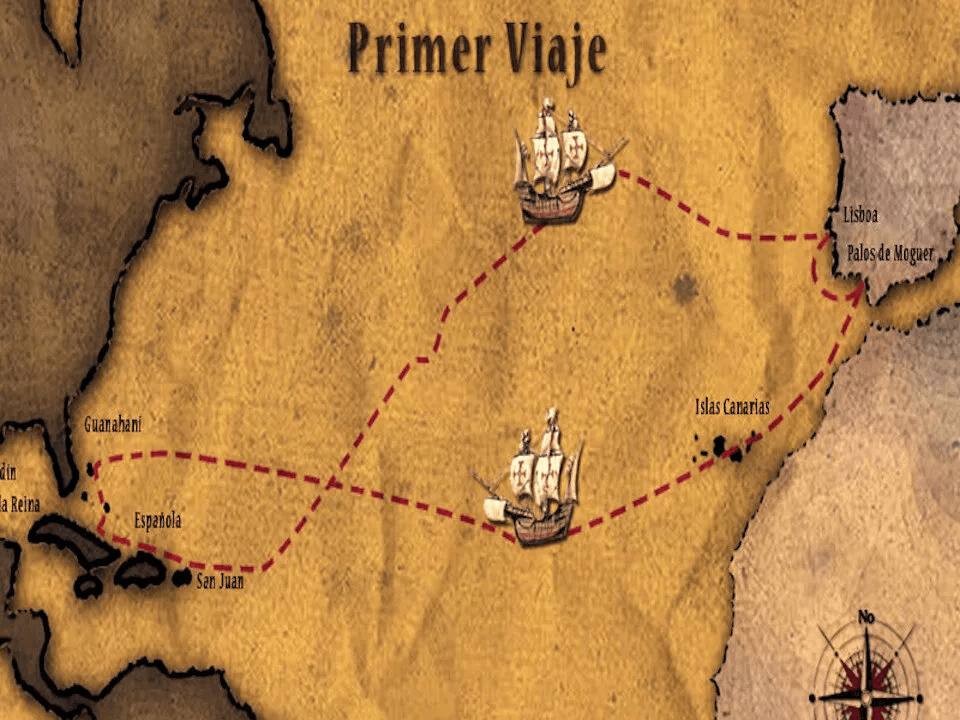
On August 3, 1492, La Niña, La Pinta, and Santa María set sail from Palos de la Frontera towards the Canaries, the last port before embarking on a search for an alternative route to the Indies. They disembarked on the islands on August 9 and took the opportunity to finalize the preparation of the caravels for the journey and recruit some local sailors known for their skill and knowledge of the sea.
Finally, on September 6, the expedition of Christopher Columbus set off towards the eastern coasts of Asia. No one could have predicted what would happen. After several weeks of travel, tension among the crew began to rise, and there were some attempts at mutiny.
On October 12, 1492, after 36 days of travel, the sailor Rodrigo de Triana, from the top of La Pinta, shouted the long-awaited call of 'Land in sight!'. Thus, Christopher Columbus changed the course of history so drastically that this date is unanimously used to mark the end of the Middle Ages and the beginning of the modern era.
Why Were the Canaries an Essential Stop?
Two circumstances determined the role of the Canaries as a mandatory stop on the route to the New World: being at the center of the trade winds and being the last western bastion of Europe in the ocean. These two characteristics, the history of the Canaries and that of America, became closely intertwined.
From the islands, the first seeds of sugar cane and banana were brought to the Indies. The same happened with pigs, goats, dogs, and sheep, which soon spread to the Antilles. In contrast, the American potato was imported to the Canary Islands, where it acclimatized quickly before being exported to the rest of Europe.
Additionally, many inhabitants of the archipelago embarked on journeys that would culminate in the founding of cities like Buenos Aires in 1535, but also Santa Marta, Caracas, Montevideo, and Havana, where their influence is still palpable today.
Gran Canaria and the Repair of La Pinta
In Gran Canaria, Christopher Columbus asked the governor for help to repair La Pinta from the damage suffered during the crossing from the peninsula. The governor's house retains original parts from the 16th century and is considered of great historical value.
You just have to enter to feel transported to the historical era of discovery. As you visit, you will be able to discover, in an educational way, everything that happened on that first trip to America, as well as the influence that the Canary Islands had on that event.
La Gomera: A Decisive Encounter
The Colón House in La Gomera is the perfect place to understand the reasons why the Genoese navigator had a fondness for this island. The abundant archaeological and historical material offers a tour of La Gomera of that time and the fundamental role of its inhabitants in the discovery of the New World.
It is said that Christopher Columbus was fascinated from the very moment he set foot on the island of La Gomera, and there is also a legend that recounts how the navigator lived his great love story with the lady of the island, Beatriz de Bobadilla, in the city of San Sebastián.
This itinerary could only begin at the Tower of the Count, where, according to islanders' stories, the two lovers met clandestinely.
A few meters away is the House of Water, the first home of the lords of the island. It is said that Columbus drew water for his first voyage from its well.
Beatriz de Bobadilla: Love, Power, and Myth
It is unclear whether Columbus had a romance with Beatriz de Bobadilla, the lady of La Gomera, whom he met on the island because he liked to stay in La Gomera, as he always did during his second and third voyages. This assumption seems likely.
Beatriz de Bobadilla was one of the most beautiful and cruel women in Castile. Her aunt was also named Beatriz de Bobadilla and enjoyed the queen Isabel's trust, both as a lady-in-waiting and a counselor in government affairs. For this reason, she was admitted to the court.
Queen Isabel, realizing the danger, thought of finding her a distant husband, to literally get her out of the way. This is how she married don Hernán Peraza, governor of the island of La Gomera. He had a despotic and violent character and was hated by everyone on the island, so he ended up murdered, leaving Beatriz a widow at only 22 years old.
Thanks to her great beauty, Beatriz sought to become the mistress of Alonso Fernández de Lugo, who was the governor of the island of Tenerife and the most powerful man in the archipelago. This caused a scandal, but Beatriz was not intimidated and eventually married Alonso, becoming the de facto owner of the islands. This allowed her to take revenge on all her enemies, whom she regularly ordered to be killed. She firmly maintained order and was responsible for several massacres of natives.
Accused of many crimes, she was summoned to Madrid for trial, but was found dead in Medina del Campo. Moreover, another source that connects her with Columbus is Michele da Cuneo of Savona, a well-known lover of spicy stories who participated in the second Atlantic crossing. Speaking of a stop of the expedition in Gomera, he says: “It would be too much time to tell you how many celebrations, blank spaces, and ceremonies we held in that place, and all was in honor of the lady of that place, for whom in the past our Admiral was taken by love.”