
Mogán Beach Live
live Puerto Mogán beach, a small Venice, beautiful and tranquil

This is what life tastes like in the Puerto Mogan Beach today
👉 What feeling does it give you right now?
The Pulse reflects how this place is perceived right now.

Perfect day

Strong wind

Rough sea

Very quiet

Ideal Promenade

Variable day
Mogán Beach and Puerto de Mogán: the Canarian little Venice
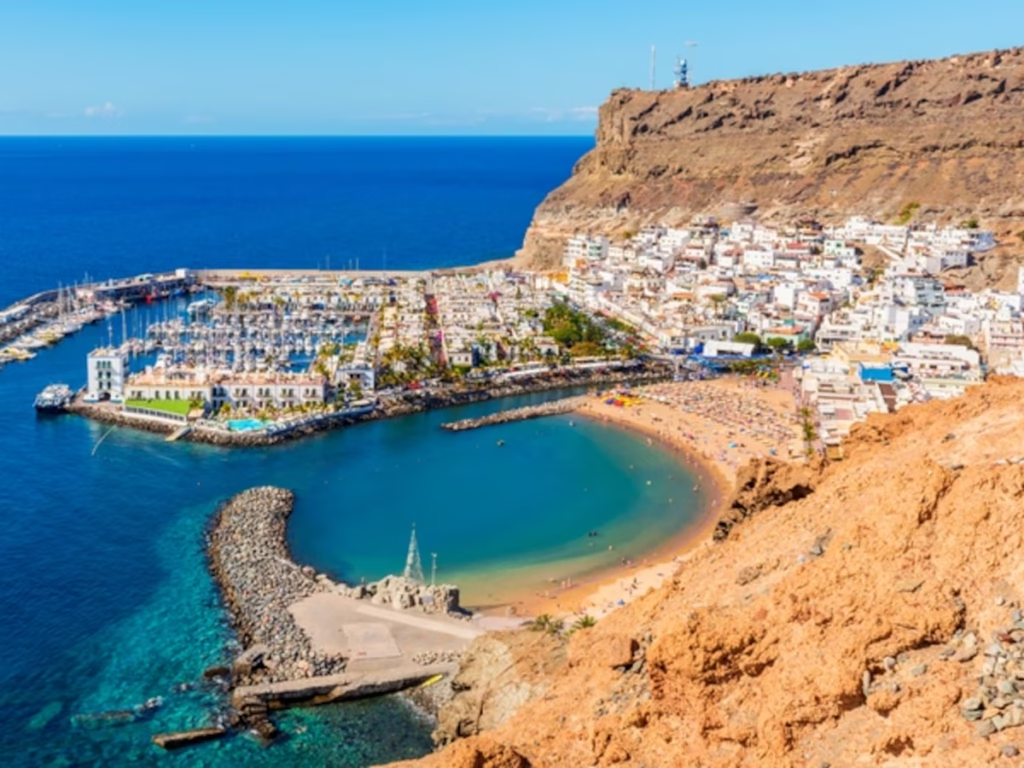
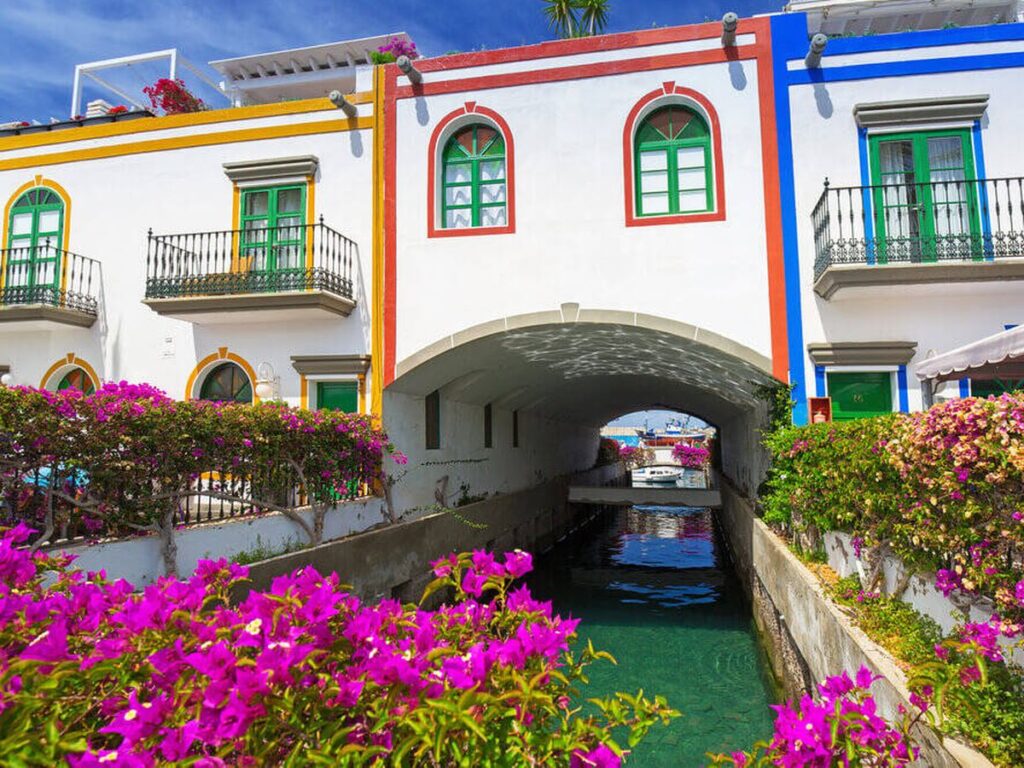
Mogán, with its beach, is one of the most photographed corners of the southwest of Gran Canaria. The fishing village of Puerto de Mogán, nicknamed the Canarian little Venice, combines canals, bridges, whitewashed houses with bougainvillea, and a golden sand beach protected by breakwaters. The result is a serene and very photogenic atmosphere that invites you to stay longer than planned.
The beach, sheltered from the waves, usually has calm waters. This is why it is one of the favorites for families with small children, both for the safety of swimming and the convenience of having services nearby: lifeguards, sunbeds, umbrellas, showers, and accessible pathways. Below the surface, the seagrass meadows and the rocks of the breakwater are home to bream, salemas, wrasse, and schools of fry, accessible with just a simple pair of snorkel goggles.
Why Mogán beach enchants all year round
The municipality of Mogán enjoys a stable microclimate: scarce rainfall, moderate winds, and pleasant temperatures at any time of the year. This allows for calm visit planning, as the chances of finding a sunny day are very high during any month of the year.
From the alleys of the village, smelling of salt and jasmine, to the dock with its colorful boats, every corner of Puerto de Mogán has a human and unhurried scale. On Fridays, the market fills the promenade and the squares of the port with life, a good time to immerse yourself in the local ambiance before looking for a quiet cove just a few minutes' drive away.
Mogán beaches: nineteen sandy spots with different personalities
The municipality of Mogán treasures nineteen sandy areas, from urban beaches with all services to hidden coves in ravines. The most equipped and frequented are those of Puerto de Mogán, Amadores, Puerto Rico, Anfi del Mar, Taurito y Patalavaca. The quietest and wildest, like Tiritaña, Medio Almud, and Veneguera, require more travel but offer an unbuilt environment and a solitude hard to find in the south of the island.
For snorkeling, the best spots in the municipality are the Puerto de Mogán breakwater, the northern side of Amadores, and the breakwater of Taurito, where water visibility is usually good and the most common species are wrasse, parrotfish, damselfish, and bream.
Gastronomy and ambiance in Puerto de Mogán
The gastronomy of the promenade pays homage to the Atlantic. Grilled wrasse, onion-dressed cherne, limpets with green mojo, and wrinkled potatoes are reliable references. To accompany, the volcanic soil wines of Gran Canaria. For dessert, in season, the mangoes and papayas grown in the southwest of the island are a local delicacy. To finish, a cortado 'leche y leche' or one of the Canarian rums.
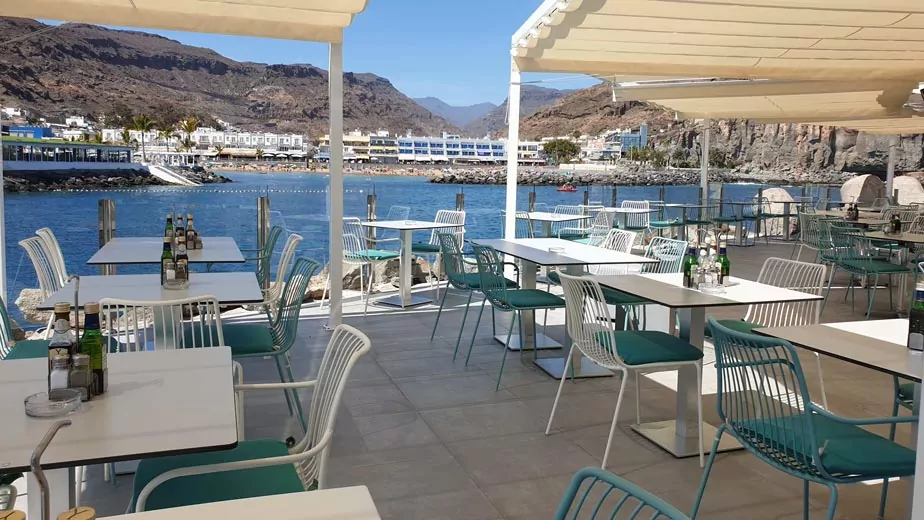
The restaurants at the dock have terraces with views of the boats and the canal. It's advisable to reserve a table if you want to dine with the sunset in the background, as the best spots fill up quickly during high season.
How to get to and move around the beaches of Mogán
The GC-1 highway directly connects Mogán with Gran Canaria airport and Las Palmas, offering easy and well-signposted driving. Global buses cover regular routes between Puerto de Mogán, Maspalomas, the airport, and the capital, and intercity services allow hopping from one beach to another without a car. By sea, line boats connect several coastal towns and offer a unique perspective of the cliffs and inaccessible coves by land.
For those traveling by car, it is advisable to arrive early during high season, especially at Amadores and Puerto Rico, which have ample parking but fill up by mid-morning.
Everything you need to know about Mogán beach
Is Mogán beach safe for children?
Yes. The dikes reduce wave action and currents, the slope is gentle, and lifeguard services are available during peak season and on weekends. There are also accessible paths and wooden walkways.
Can you go snorkeling in Puerto de Mogán?
Yes. The pier and the nearby rocks have good visibility and accessible marine life from the shore. Several diving schools in the area also offer baptisms and guided dives for all levels.
What is the small Venetian Canary Islands?
It is the nickname by which Puerto de Mogán is known for its canals, bridges, and houses decorated with bougainvillea. It is one of the most photogenic villages in the south of Gran Canaria.
When is the best time to visit Mogán beach?
At any time of the year thanks to the stable microclimate of the municipality. Weekday mornings in spring and autumn offer the calmest conditions for swimming and strolling.
How to get to Puerto de Mogán from the airport?
On the GC-1 heading southwest, the journey takes between 35 and 45 minutes. There are also Global buses with direct connections from the airport and from Las Palmas de Gran Canaria.
What else is near Mogán beach?
A few minutes by car, you can find Amadores, Puerto Rico, and Anfi del Mar. For those who prefer nature, the Mogán ravine and the viewpoints inland offer panoramic views over the entire southwestern coast of the island.