
Teide Volcano – Giant in Real Time
the highest peak in Spain at 3,715 meters



This is what it feels like today at Mount Teide
👉 What feeling does it give you right now?
The Pulse reflects how this place is perceived right now.

Perfect day

Strong wind
Rough sea

Very quiet
Ideal Promenade

Variable day
Teide National Park: the highest volcano in Spain
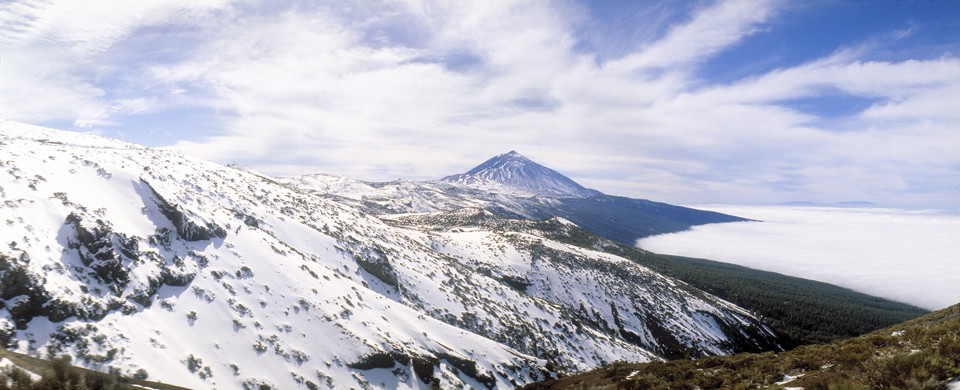
The Teide National Park is one of the most visited destinations in Europe and the most iconic natural space in Tenerife. With its height of 3,715 meters, the Teide volcano is the highest peak in Spain and a UNESCO World Heritage site, whose landscape of volcanic rock, changing light, and extraordinary skies is unparalleled. The webcam installed in the park allows you to see in real time the weather conditions, the presence of snow at the summit, and visibility before planning your visit.
Teide Tenerife: a living volcano at the heart of the island
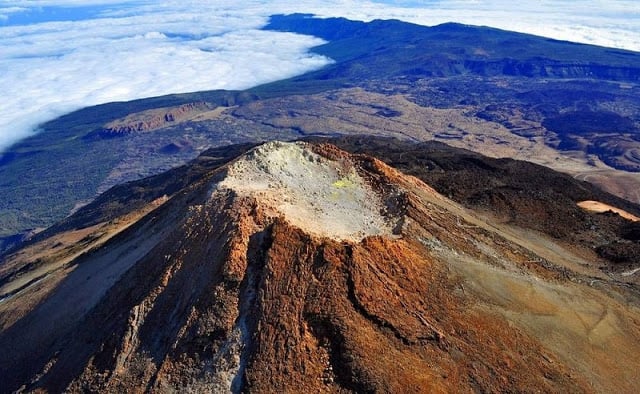
The Teide Tenerife is not just a mountain: it is the geological axis of the entire island. Specifically, the volcano was formed over an older caldera and its successive eruptions have shaped the landscape we see today. Although it is currently dormant, the sulfur vapors that escape near the crater remind us that energy remains active beneath the surface. For this reason, every trail traversed in the Cañadas del Teide National Park is a live lesson on how the Canary Islands were formed.
Additionally, the altitude creates unique conditions: in just a few hours of walking, one can transition from the beach to Canary pines, from broom scrub to the lunar landscape of the summit. On the other hand, in winter the snow completely transforms the color of the rocks, while in summer the night sky offers one of the most spectacular star views in the Northern Hemisphere.
Teide National Park: areas, routes, and access
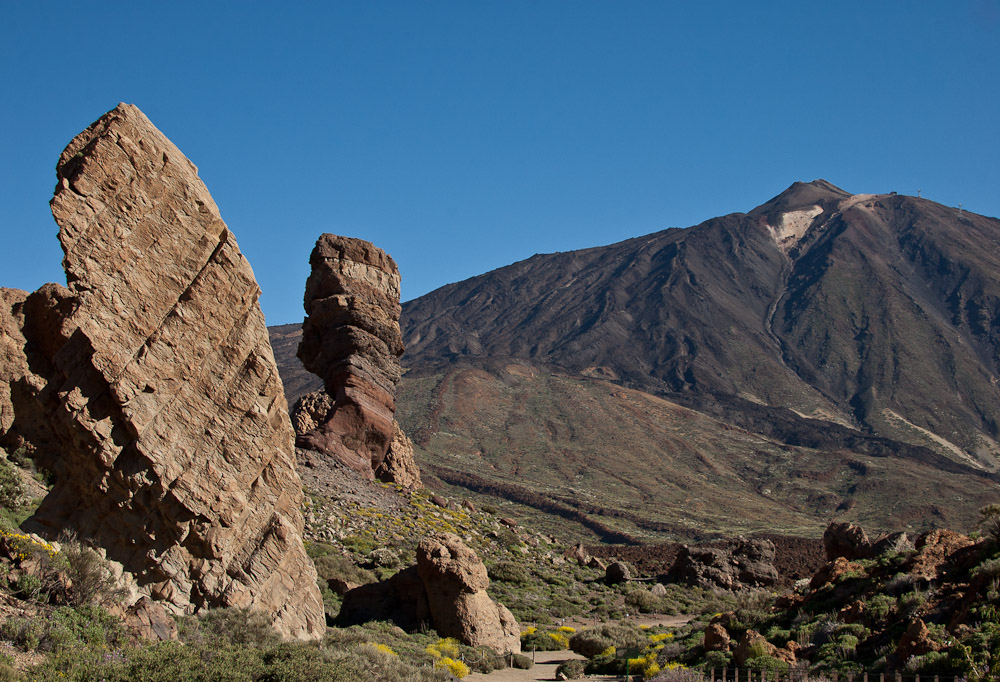
The Teide National Park is organized into different zones with very different characteristics. The Roques de García, accessible via an easy trail, offer the most photographed views of the park with rock formations in the foreground and the Teide mountain in the background. The cable car ascends to 3,555 meters in a few minutes, from where one can see a horizon that on clear days reaches the neighboring islands. To reach the summit, it is necessary to obtain a free permit in advance.
To check the conditions before heading out, the webcam of Teide National Park and the live cameras in Tenerife are very useful tools. Similarly, you can combine your visit with a trip to La Orotava or towards the coast of Los Gigantes to complete the day.
Fauna and flora of Teide National Park
Life in the Teide National Park adapts to extreme conditions of altitude, cold, and drought. Specifically, the red tajinaste — an endemic plant that only grows on these slopes — is one of the most impressive natural spectacles in the Canaries, especially in spring when it blooms between May and June. Likewise, the Teide broom covers wide areas with white and yellow flowers, and the Teide violet survives even near the crater. Among the fauna, the fire salamander, Teide blue finch, and common kestrel stand out, all adapted to this unique volcanic environment.
Practical tips for visiting Teide Spain
Visit the Teide Spain it requires basic preparation that makes a difference between a comfortable experience and a complicated journey. Specifically, although it may be hot on the coast, temperatures can drop below zero at the summit, and wind is frequent. For this reason, it is advisable to always wear layered clothing, comfortable footwear, high sun protection, and sufficient water. In addition, if you wish to hike to the crater via the Montaña Blanca trail, the free permit must be requested weeks in advance on the website of the Autonomous Organization of National Parks.
For those who prefer a visit without physical effort, the cable car offers spectacular views from 3,555 meters. The Roques de García are the most accessible option, with an easy circular trail suitable for the whole family.
Everything you need to know about Teide National Park
What can be seen on the Teide National Park webcam?
The camera shows the real-time weather conditions in the Cañadas, the presence of snow at the summit, and the general visibility. It is very useful to decide if the conditions are suitable for going up before leaving home.
Is a permit required to ascend Mount Teide?
To hike to the crater, a free permit is indeed necessary, which must be requested in advance on the Ministry of the Environment website. To use the cable car, no permit is needed, but a prior reservation is required especially during high season.
When is the best time to visit Teide National Park?
Spring is the ideal time to see the red tajinaste in bloom. Summer offers the best conditions for the summit. In winter, snow transforms the landscape but may close the cable car and some access points. The webcam allows you to check conditions in real time.
How to get to Teide National Park?
Via the TF-21 roads from La Orotava or Vilaflor, and TF-38 from Adeje. There are also bus services from Puerto de la Cruz and Playa de Las Américas. It is recommended to arrive early to avoid the higher influx and find parking.
Can you see Teide from the sea?
Yes, the Teide volcano it is visible from almost the entire island and also from neighboring islands on clear days. From the southern beaches such as Playa Paraíso or from Los Gigantes, the views are especially spectacular.