
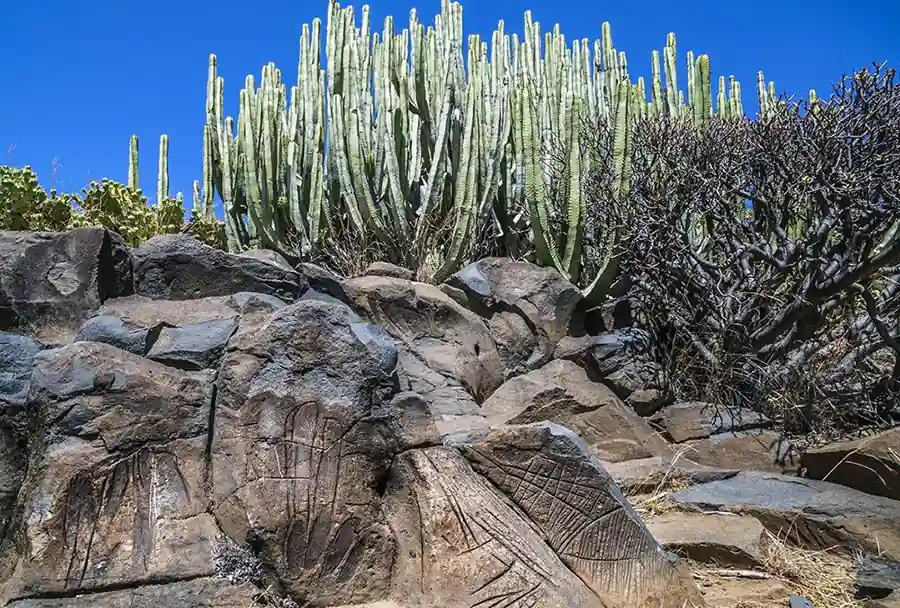
A petroglyph links the ancient Canarians with Numidia.
A rock engraving
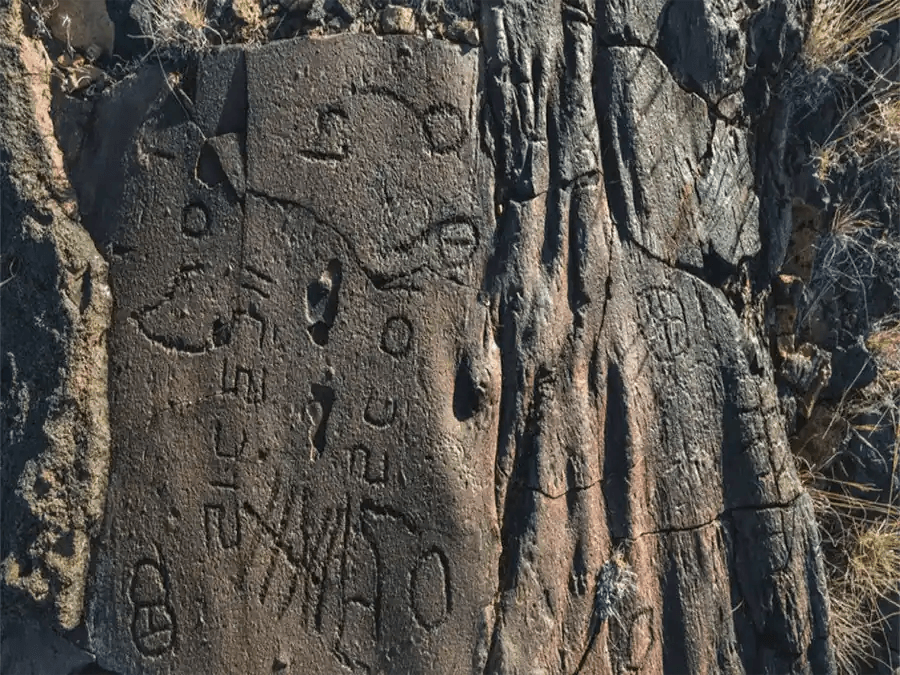
What links the ancient Canarians with Numidia?
A recent archaeological discovery reveals how the ancient inhabitants of Fuerteventura and Lanzarote had contact with cultures from North Africa, specifically with the ethnic groups from the territory of Numidia.
The petroglyph that confirms the historical connection
The finding consists of a rock engraving that mentions a son or member of the Cemidán clan. This text is written in an ancient Libyco-Latin alphabet, indicating that the first inhabitants of these islands used a language related to the Numidian communities.
This inscription was reinterpreted by the archaeologist José Juan Jiménez, a doctor in Prehistory from the University of La Laguna (ULL). According to his research, this use of the alphabet suggests that the same tribal group colonized both islands at the beginning of our era, dividing after arriving at each one.
Two scripts in the Canary Archipelago
The rock records show that the ancient Canarians handled two writing systems: the Libyco-Latin and the Libyco-Berber. Although both were used during the early centuries of our era, the geographical use of one or the other varied according to the island.
Whereas the Libyco-Latin alphabet is only found in Fuerteventura and Lanzarote, the Libyco-Berber system appears distributed across all the islands, with local adaptations specific to each region.
Parallels with North African inscriptions
The most surprising thing is that there are similar texts in North Africa, especially in what is now northeastern Algeria, Tunisia, and northwestern Libya. These coincidences allowed for the translation of stelae and epitaphs that mention names of tribes, lineages, titles, and personal names using two different scripts.
This finding not only reinforces the linguistic and cultural ties between the peoples of North Africa and the Canary Islands, but also opens new avenues for research on pre-Hispanic migratory routes.