
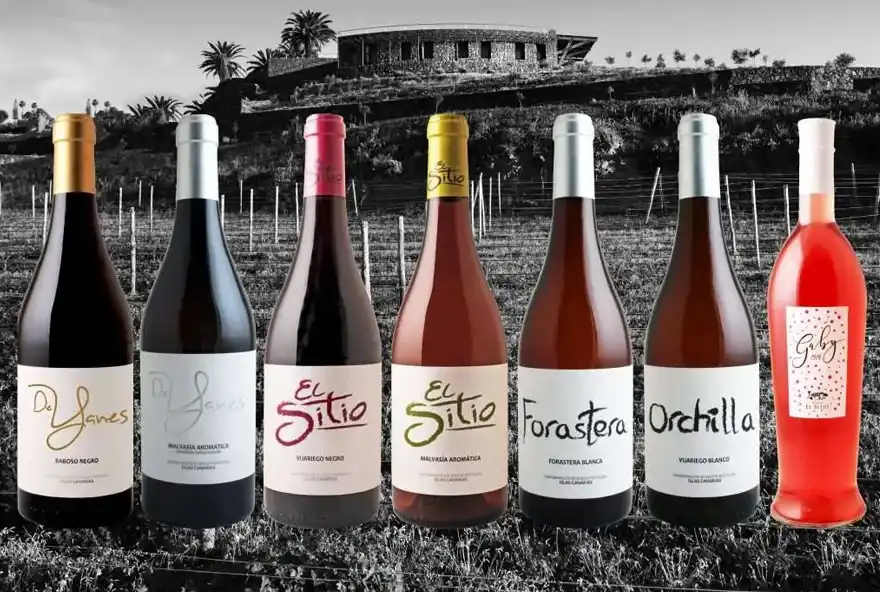
The cultivation of the vine in La Gomera dates back to the 15th century
Wine tourism, La Gomera
With the arrival of the conquerors from the continent, these settlers began to bring grapevines of the wine species from all over Europe, not only because wine represented a food source, but also due to its importance during the liturgy.
In 1531, Hermigua was the largest center for wine production (46% of the entire island), and the nearby Santa Catalina beach was also known for the presence of eleven wineries. The wine produced on the island was not exported (as was the case with production from Tenerife), but was used for self-consumption or for the production of grappa. By the mid-17th century, following the collapse of sugarcane cultivation, vine cultivation in La Gomera gained significant importance for the island's economy.
Varieties
The geographical isolation of the archipelago and the absence of phylloxera have contributed to maintaining the wine heritage, for which the following varieties are present: Listán Blanco, Listán Negro, Marmajuelo, Aromatic Malvasía, Pedro Jiménez, Muscatel, Negramoll, Tintilla, Castellana, and Forastera Blanca (or Forastera Gomera).
Forastera Blanca is the gem of La Gomera. It is a white grape variety exclusive to this island for the last 500 years (versus 150 years for European vines).
Its uniqueness is due to the slow but constant evolution that has led to its genetic particularity. It has good production capacity and excellent resistance to diseases and pests. It adapts well to high areas, offering good acidity, low pH, and high alcohol content. The best conditions for its cultivation are found at altitudes above 1,000 m, with the vineyard facing southwest. The wines that feature Forastera Blanca represent 90% of the island's wine production and 80% of the island's viticulture.
Viticulture
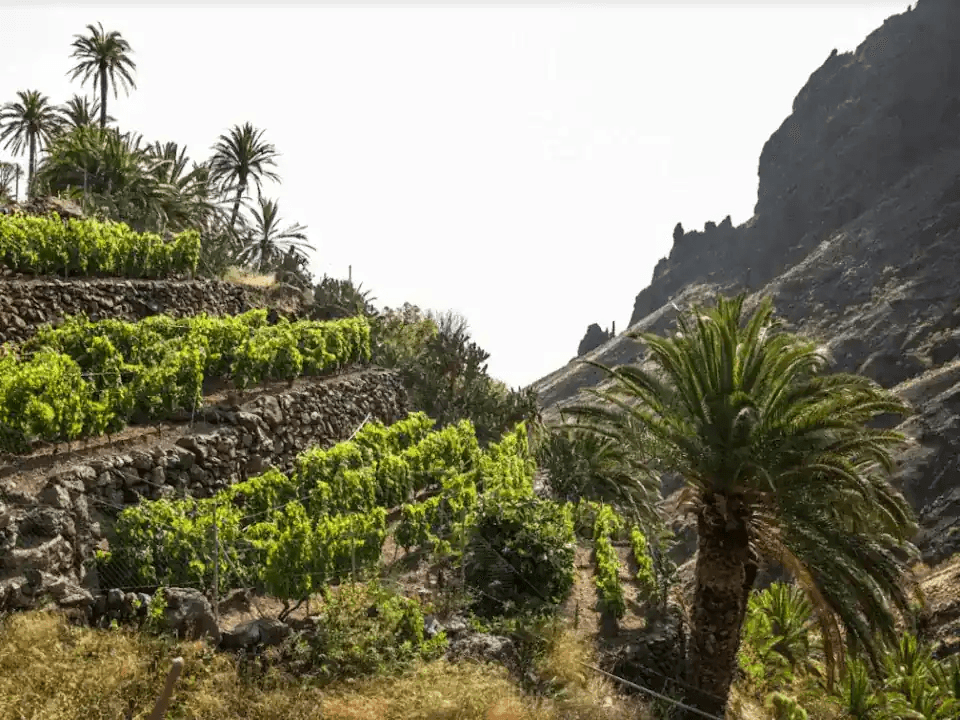
The viticulture of La Gomera is defined as 'heroic viticulture' because cultivation is done on slopes of 30-45%, which require terrace farming. Labor is difficult to mechanize, there are high production costs for the grapes, and the location of the vineyards makes access challenging.
Walking along the island's paths, you will notice pulley systems (called 'Guinche') at the edge of the paths that allow grapes to be transported from the lower vineyards. The most common vine cultivation system is the traditional creeping support, which follows the pergola in the Hermigua area and the trellis in flatter lands.
D.O. La Gomera
The Denomination of Origin La Gomera was promoted in 2003 by the Association of Winegrowers and Wineries of La Gomera, with the aim of boosting the island's wine sector and regulating its wines. This Regulatory Council, currently headed by Nancy Melo Herrera, has 230 registered winegrowers and 20 wineries. Among the market brands are: Bodega Insular, Alisios, Niray, Montoro, Altos de Chipude, Cinco Varas, etc.