
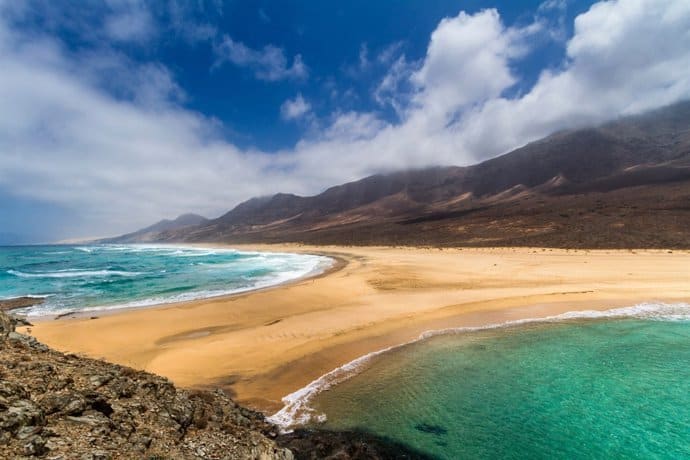
Pristine beaches to visit: untouched nature
The image of a beach without beach bars, with untouched sand and a sea that changes color depending on the sun, is not a distant dream. It exists, and in Spain, there is a collection of sandy shores where nature sets the pace and offers unparalleled tranquility on a completely untouched coast. These are places with easy or challenging access, almost always without services, and where the rules seek to protect the fragile. For those who appreciate the silence of the wind, the song of the birds, or have a passion for surfing, these coasts offer more than a swim: they offer time, space, and a special connection with the natural essence.
Talking about pristine beaches means talking about limits. Not everything goes. Often there are access quotas, unpaved paths, sections on foot, and zero buildings on the front line. Precisely for this reason, they preserve their character and allow for a different experience. Here is an ambitious and practical guide to choosing, preparing, and enjoying these gems, while also remembering that in Spain there are secluded corners as remote as Bolonia beach in Cádiz or Tarifa, famous also for its surf culture and its unmistakable Andalusian identity.
What do we understand by "pristine beaches"
The term is used loosely, but in a strict sense, it combines environmental factors, legalities, and human use.
- There is no urbanization close to the sand or permanent facilities.
- Access is limited to paths, dirt tracks, or boats; regulated traffic in many cases.
- Protection figures: natural parks, marine reserves, Red Natura 200.
- Low-impact activities: walking, responsible bathing, snorkeling, wildlife observation, and photography.
- Capacity management, prohibition of camping outside designated areas, control of moorings and fishing.
It is a pact: fewer comforts, more authenticity. And it is interesting to note how places like Genoveses beach have become symbols of this commitment to nature.
Seven Spanish beaches where the coast remains untouched
The biogeographical variety of the country gifts us volcanic beaches, shifting dunes, posidonia meadows, and Jurassic cliffs. The following table gathers seven classics for an initial big list. The pattern repeats: robust protection, regulated access, unadulterated beauty.
| Beach (region) | Protection | Access and infra | Activities and notes |
|---|---|---|---|
| Los Genoveses (Níjar, Almería) | Cabo de Gata-Níjar Natural Park; protected dunes | Road to nearby areas; in summer capacity with shuttle buses; no buildings | Bathing, snorkel and strolls through pitahaya and agave dunes; frequented by nudists and surfing enthusiasts |
| Mónsul Cove (Níjar, Almería) | Natural Park; iconic volcanic rock formation | Asphalt to the area; summer capacity; no services at the beach | Photography, surface diving; unique volcanic geology |
| Cala Rajá (Cabo de Gata, Almería) | Adjacent protected marine areas (ZEPIM, ZEC) | Dirt track and final section on foot with incline; no services | Small and crystal-clear cove; nearby posidonia ideal for snorkeling; sometimes red flag |
| La Marquesa Beach (Deltebre, Tarragona) | Ebro Delta Natural Park (LIC/ZEC) | Rural paths and a short walk; no hotels or beach bars | Shallow waters, dunes, and wetlands with migratory birds; total calm |
| Covachos Beach (Cantabria) | Natural Monument Costa Quebrada; UNESCO Geopark | Steep cobbled path; no facilities | Half-moon between cliffs; difficult access; audience of hikers and naturists |
| Cala Pregonda (Menorca) | Natura 2000 Network; Biosphere Reserve | Path from Binimel·la (30 min); no restrooms or beach bars | Reddish sand, white rocks that calm the waves; excellent snorkeling |
| Cofete (Fuerteventura) | Jandía Natural Park; Biosphere Reserve | Long track (better with 4×4); 12 km of beach; no facilities | Feeling of vastness; strong currents, swimming with great caution |
Each one has its own personality. In Los Genoveses, the wind shapes dunes; in Mónsul, volcanic combs are visible; Covachos drops into the sea among limestone; Pregonda stains feet copper, Cofete and reminds us how small humans are in front of the Atlantic. Likewise, the mythical Rodas beach, located in the Cíes archipelago, offers a unique landscape that adds to the repertoire of exclusive Spanish beaches. In Huelva, for example, there are lesser-known beaches that, like the aforementioned, preserve an atmosphere of absolute purity.
La Graciosa: the Atlantic surprise
There is a place where all the boxes of 'virgin beach' are marked with a marker. La Graciosa, facing the northern coast of Lanzarote, was recognized in 2018 as the eighth inhabited island of the Canary Islands. Since then, it has been listed as the most recently inhabited island in Spain in administrative terms. Minimum population, 29 km², sandy streets, zero paved roads, and a natural park and marine reserve that embrace each cove.
There is no own council; it depends on the municipality of Teguise, and this institutional fit has contributed to contained infrastructure. The result: an open-air laboratory of slow tourism in a first-rate volcanic and marine space, reflecting the Canarian way of life and a Canarian essence that captivates those who dream of living in the Canary Islands and embracing their Canarian identity.
- Mobility without rush: on foot, by bicycle, or in 4×4 taxis authorized on sandy tracks.
- Reservations and permits: navigation, fishing, and camping are strictly regulated.
- Landscape and geology: ochre volcanic cones, lava reaching the shore, and a turquoise sea that deceives about its strength.
The beaches that make one look at the clock with a different measure
Here the sea is not contemplated, it is heard. These beaches are more than a swim.
- Playa de la Francesa (south)
- Fine white sand, over 400 meters long, and a temporary lagoon when the tide rises.
- Access from Caleta del Sebo in 35 to 45 minutes on foot or by bike along a comfortable path.
- No services: water, hat, food, and waste bag are non-negotiable.
- Snorkeling for all levels, with sandy bottoms and scattered rocks.
- Playa de la Cocina, at the foot of Montaña Amarilla (southeast)
- An intimate cove of about 100 meters, embraced by the yellowing volcano.
- Accessible only by walking; long round trip if starting from Caleta (around 6 km).
- Very calm waters and clear bottoms: ideal for floating leisurely.
- Playa de las Conchas (northwest)
- A vast and beautiful scene, with golden sand and a view of nearby islets.
- More demanding access: 45 minutes by bike or nearly two hours on foot from Caleta.
- Powerful currents and frequent red flags; a perfect place to stroll, photograph, and be awed by the waves.
- El Salado (west near Caleta)
- The closest walking from the village, just 15 minutes.
- Shallow and transparent water area, with a tranquil atmosphere.
- Historically linked to regulated camping on the island.
- Extra spot: Conchasitas, Ámbar, or the small cove of Montaña Bermeja
- Small sea entrances where you can be practically alone.
- Always accessible on foot and no services.
La Graciosa is within the Chinijo Archipelago Natural Park and a large marine reserve. This combination explains why the coastline remains vibrant. Additionally, you can directly check the ocean wave behavior through local webcams, adding an interactive experience for those who want to feel the pulse of the ocean immediately. Moorings are limited, fishing is regulated, and human pressure is moderated.
Europe also has unspoiled coastlines.
The Spanish experience is not isolated. Along the Atlantic and Mediterranean coasts, untouched beaches survive, almost always under robust legal umbrellas. Some clear references include:
- Western Algarve and Costa Vicentina (Portugal): dunes and cliffs with foot access, powerful waves, and clear skies.
- Sintra-Cascais (Portugal): wild coves like Ursa, nestled between vertical walls, with demanding descents.
- Eastern Sardinia (Italy): limestone coves like Goloritzé, protected by quotas and with regulated access by foot or boat.
- Corsica (France): sandy beaches with broad-crowned pines and crystal-clear waters, with no buildings at the beach’s edge.
- Dalmatian Coast (Croatia): parks and reserves with pebbled coves and intact posidonia meadows.
- Nordic archipelagos: cold and solitary beaches, with pebbles and gray sand, where summer colors surprise.
A quick table summarizes five names outside Spain with profiles very similar to the best peninsular and insular spots.
| Beach | Region and country | Protection | Features and management |
|---|---|---|---|
| Praia da Ursa | Sintra, Portugal | Natural Park, Natura 2000 | Access via steep path; no services; Atlantic waves |
| Cala Goloritzé | Sardinia, Italy | National park, quotas | Small cove under cliffs; entry by foot or authorized boat |
| Palombaggia | Corsica, France | Regional natural park | Long sands and pines; distant parking, protected dunes |
| Ses Illetes | Formentera, Spain | Natural Park of Ses Salines | Capacity and mobility regulated; Caribbean waters and sensitive dunes |
| Telascica (beaches of the park) | Dugi Otok, Croatia | Natural park | Pebbled coves; navigation and mooring with license |
The coincidence is evident: limited capacity, controlled access, minimum services, and nature in the foreground. And let’s not forget that in Cádiz, for example, almost mythical beaches are also preserved where tranquility and respect for the environment are essential.
Preparation: how to get there, what to bring, how to behave
A responsible visit starts before you step onto the sand. Logistics matter just as much as excitement.
- Plan and permits
- Check if there are capacity limits, quotas, or access fees (Cala Goloritzé, Illes Atlàntiques, Ses Illetes).
- Review wind and wave conditions; in the Atlantic and Canary Islands, the currents can change daily.
- Essential equipment
- Enough water and mineral salts, especially in dry islands and parks without shade.
- Sunscreen, hat, UV shirt, sunglasses, rock footwear for volcanic coves.
- Trash bag to take everything you generate.
- A small first aid kit and a light blanket if you plan to stay for hours.
- Minimum conduct
- No soap or chemicals in the sea; zero cigarette butts; food without packaging if possible.
- Respect signs, dunes, and nesting areas.
- Snorkeling: do not touch the seabeds or posidonia; observe, do not collect.
- Camping only in designated areas; no bonfires, ever.
- Safety
- Rip currents: if you get pulled out, stay calm and swim parallel to the coast.
- Cliffs and descents: a pole and shoes with grip improve safety.
- Don't trust the 'apparent' calm; in open beaches, the sea changes quickly.
When to go and how to choose your ideal coast
Each area has its optimal window. A beach in the Ebro Delta is not the same as a volcanic cove in the Canaries.
- Cabo de Gata and Levante
- Early spring and autumn: mild temperatures, fewer people, gentler winds.
- Summer with access controls: waking up early avoids lines and heat.
- Cantábrico
- Summer and early autumn: the water temperature rises a bit, and the tides put on a show.
- Clean waves and breezes; changing skies, happy photographer.
- Baleares
- Late May and September: beautiful light, manageable heat, and less pressure.
- Northern Menorca with Tramontana requires flexibility to change coves.
- Canary Islands
- All year round. In arid islands, winter is mild and summer is dry.
- In Fuerteventura and La Graciosa, the trade winds prevail: choose sheltered coves.
- Additionally, in Tarifa – an iconic destination not only for surfing but also for those seeking a unique coastal experience – tradition and modernity combine, offering visitors the possibility to check the state of the sea live through local webcams.
To decide, combine these factors:
- Travel profile: contemplative and on foot, family with children, photographer with tripod, snorkeler.
- Acceptable walking distance: 10 minutes, 30, 90… makes a big difference.
- Wind tolerance: if the trade winds pick up, better to go to the southern coast or closed coves.
- Shade needs: bring a lightweight umbrella in destinations without trees.
Routes and small tailor-made adventures
A well-planned week can give you very stimulating contrasts.
- Itinerary 1: Canary Atlantic and volcano
- Day 1: arrival at Lanzarote and boat to La Graciosa in the afternoon.
- Day 2: Playa de la Francesa and La Cocina, return at sunset via the coastal path.
- Day 3: Las Conchas early, midday at El Salado; maybe stop in Tarifa to enjoy a relaxed surf atmosphere.
- Day 4: Ferry back and flight to Fuerteventura; road to Cofete and a long walk with golden light.
- Itinerary 2: Arid Mediterranean and reddish coves
- Day 1-2: The Genovese and Mónsul with a trail between coves; night in San José.
- Day 3: Cala Rajá and Cabo de Gata lighthouse; afternoon of snorkeling.
- Day 4-5: Flight to Menorca; route of the Camí de Cavalls to Cala Pregonda during valley hours.
- Itinerary 3: Green north with cliffs
- Day 1: Costa Quebrada, stopping at viewpoints before descending to Covachos.
- Day 2: Short routes along cliffs, picnic in coastal meadows, photo session at low tide.
Cross-sectional tip: get up early. The light, the silence, and the fauna will gift you another beach.
How to photograph and leave no trace
The challenge is to capture what you see without invading what makes that beach special.
- Composition
- Use lines of foam and dunes as natural guides; desaturate a point during harsh hours.
- Include people as scale, from a safe distance.
- Equipment
- Polarizing filter to cut reflections in clear waters.
- Light carbon tripod if you're going at dawn or dusk.
- Ethics of taking photos
- Do not step on vegetation for "a cleaner angle."
- Do not share locations of nests or sensitive fauna.
A look at the logistics of La Graciosa
For those attracted to that plan of sand and silence, a useful reminder.
- Arrival: regular ferry from Órzola (Lanzarote) to Caleta del Sebo.
- Internal transport: on foot, by bike, or authorized 4×4 taxis.
- Shade and water: essential; there are no beach bars on the beaches.
- Marine reserve: if you practice fishing, inform yourself about closures and allowed methods.
- Neighborhood respect: it's a small village, with its own rhythms; noise travels fast on sandy streets.
Few combinations surpass the feeling of walking in flip-flops down an unpaved street to, in half an hour, get into turquoise water under a volcano or a petrified malpaís.
Why these beaches are addictive
Because they invite you to slow down. Because the silence is not empty; it is full of nuances: the snaps of fish eating posidonia, wind sneaking through prickly pears, birds gliding over cliffs, and that tranquility which only nature can offer. Because, after a while, the phone becomes bothersome, and the gaze adjusts to another temporal scale.
It's easy to be moved by a sunset in Cofete or a morning of snorkeling in La Francesa, or even to contemplate the grandeur of Rodas beach. The challenge comes later: to continue caring for them when we return. Choosing the right season, respecting limits, walking with reverence, taking back what we brought. That commitment is what keeps the enchantment alive.
And yes, in Europe, there are still untouched beaches. Some are two hours from home, others require a journey. Some are guarded by twisted pines, others by volcanoes or cliffs, and even in Cádiz, treasures like Bolonia beach are hidden, where nature and history intertwine. They all share a clear promise: if you treat them with care, they will return a perfect day to you.
The magic lies in every detail, in the interaction between the sea and the land, and in the possibility of experiencing this natural heritage live, whether through in-person visits or by following webcams that broadcast the evolution of the landscape live.
In short, whether exploring these coasts or discovering small paradises along the shoreline, the call to conserve and respect the untouched is a collective commitment, lived with the same passion found in the heart of the Canary Islands. This feeling, which merges the Canarian lifestyle with the essence and identity of a place, invites one to dream and to want to live in the Canaries, carrying with it tranquility and respect for the natural environment.