
a journey of more than 2,000 km.
The Water Tunnels of the Canaries
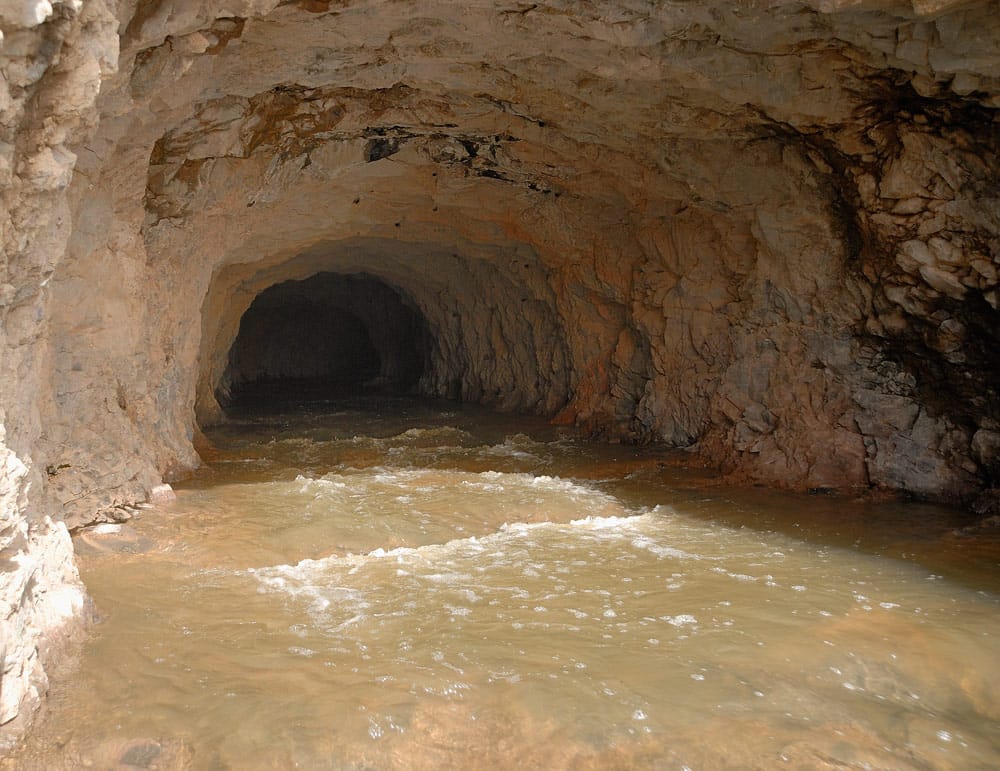
The tunnels that hold water in the Canary Islands
Did you know that there are underground tunnels in the Canary Islands that help to find water? These tunnels are very old and collect the water that is underground.
Why are they important?
In the Canary Islands, water doesn't always fall from the sky in the form of rain. Because of this, for a long time people have used wells, holes, and tunnels to search for water that is within the earth.
In some islands, up to 80% of the water we use comes from these places. The rest is obtained by desalting seawater (this is called desalination) or by buying bottled water.
How do they work?
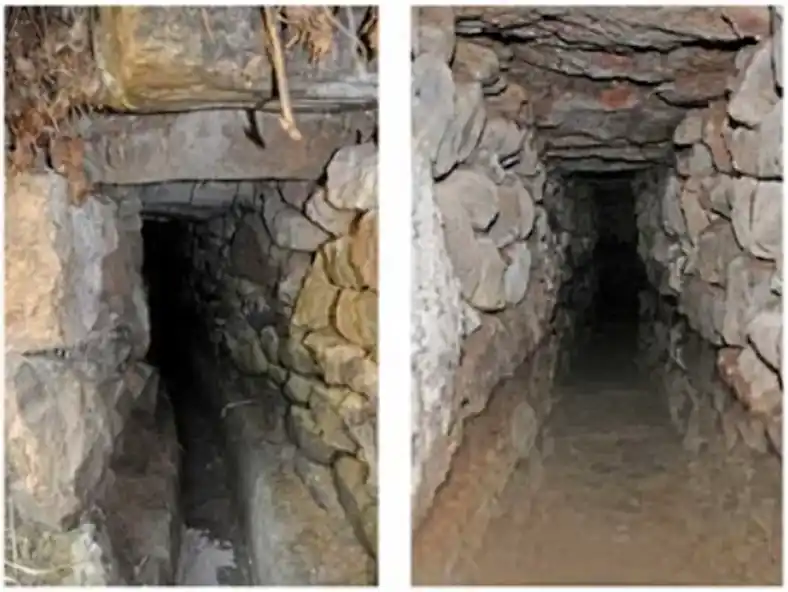
These tunnels are made to reach the water that is underground, called groundwater . Many times, water enters from one side of the tunnel and then flows out from the other, without the need for pumps, because it flows by itself thanks to the slope of the tunnel.
Some tunnels are short, only 30 meters long, but others can be very long: up to more than 1 kilometer!
An ancient idea that traveled the world
This type of tunnel is not exclusive to the Canary Islands. Thousands of years ago, they were already used in places like Iran, Egypt, Greece, Morocco, as well as in Spain and Latin America.
The Romans and Arabs brought this technique to Spain, and later it arrived in the Canary Islands with the first colonists from Andalusia and Madeira. But before them, the ancient inhabitants of the Canary Islands, called Guanches , had their own methods for obtaining water.
Where are they?
In Gran Canaria, there are more than 100 sources of groundwater, although many are forgotten. Some might also be in Tenerife, especially near the ravines.
Most are in dry areas of the island, where water is more valuable. They are small tunnels, generally between 30 and 200 meters long, although some reach up to a kilometer.
A natural and historical heritage
These tunnels not only serve to obtain water, but also form part of the heritage of the Canary Islands. They are proof of how our ancestors knew how to work with nature to live better.
Today, these systems are still used in other parts of the world, like Hawaii or Korea, although there they call them something else.