

Already known in the time of the “awaras”
"Fuente Santa" on the Island of La Palma
What is the Fuente Santa?
The Fuente Santa on the Island of La Palma is one of the most emblematic natural elements of the Canary Islands. Known since pre-Hispanic times by the “awaras” and later by Spanish colonizers, this spring holds not only historical value but also therapeutic qualities. Its fame spread throughout Europe during the 17th century due to its supposed healing properties.
History of the Fuente Santa in La Palma
Already known in the time of the “awaras” and later by the Spanish colonizers, the Fuente Santa at that time consisted of two thermal pools at the bottom of the ocean, usable only at low tide. Its golden moment was, without a doubt, the 17th century, when people flocked from Spain and all over Europe to be healed of syphilis, leprosy, ulcers, wounds, and many other skin diseases.
Among the many personalities who took advantage of the renowned properties of the spring, we remember Don Mendoza (founder of Buenos Aires), the Portuguese friar Gaspar Frutuoso (famous geographer), the Italian engineer Leonardo Torriani (prominent official at the court of Philip II), and the friar Juan de Abreu Galindo (noted chronicler of the Spanish conquest of the Canary Islands), who left us the most reliable description of the Fuente Santa. The bustle was such that the island of La Palma enjoyed a period of economic prosperity. The water healed, the water performed (without exaggeration)… miracles!
From Fuente Caliente to Fuente Santa
From Fuente Caliente (as the spring was called until then) it became known as… Fuente Santa! Imagine that the “blessed” water was transported in barrels to Cuba to then be sold throughout the American territory. But the trade, commerce, wealth, and cures suddenly vanished in the disastrous twilight of November 13, 1677, when the San Antonio volcano (in the south of the island) poured avalanches of lava over the spring, burying it under a thick blanket of about 70 meters and pushing the coast about 400 meters out to sea.
It was a real blow to the island's economy, but above all, a furious despair for the locals (who since then began to call themselves Fuencaliente), who quickly tried to dig to unearth the springs… but in vain! All subsequent generations of palmers (at least 16 have been counted) also attempted (carrying in procession who knows how many times their Virgen de las Nieves)… but it was all in vain!
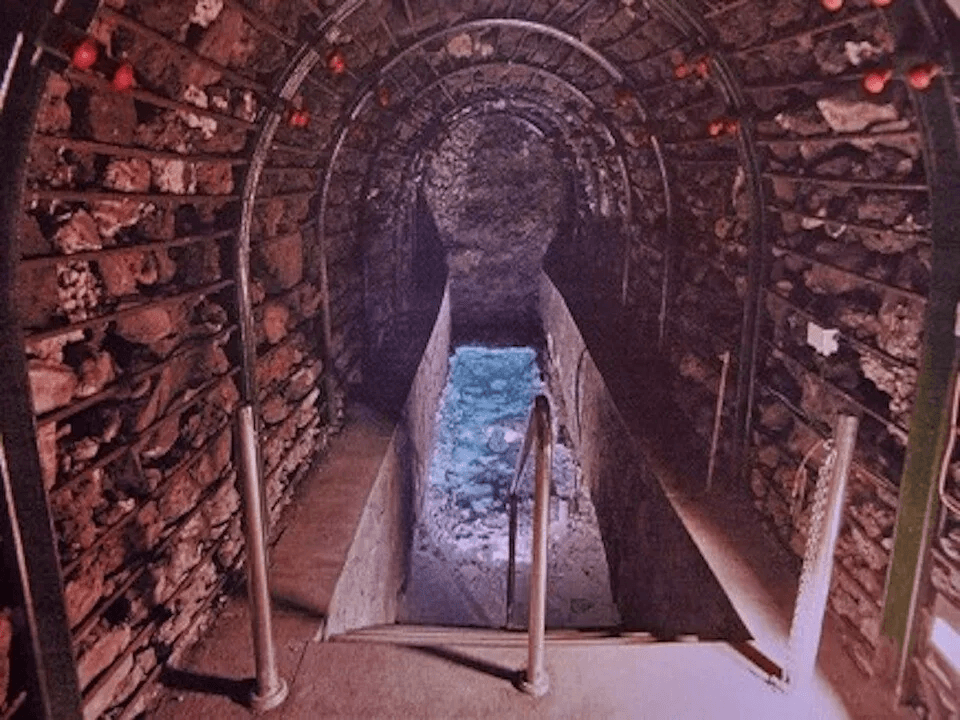
Resurrection of the Fuente Santa in 2005
The miracle that the Virgin did not make was instead accomplished in 2005 thanks to the new and more advanced solutions offered by civil engineering, hydrochemistry, volcanic geology, and historical archives research in an interdisciplinary effort carried out by a team established by the Government of the Canary Islands under the direction of Carlos Soler.
Finally, the Fuente Santa had been found, and analyses from a renowned laboratory in Barcelona confirmed the traditional therapeutic properties of the spring, whose waters (already recognized by the Royal Academy of Medicine of Spain) were found to be chlorinated, sodium, and carbonated: in short, a jewel in the field of hydrothermalism! According to experts, water like this can only be found in France (Vichy) and Germany (Frankfurt), while in Spain it would be unique!
Therapeutic properties of the waters of Fuente Santa
It would be ideal for treating diseases related to the circulatory system, peripheral artery diseases, venous flow, rheumatism, and osteoarthritis in general (with carbon dioxide baths), as well as digestive tract disorders, liver, and bile ducts (due to its salsobromoyodic content). It would also be effective in treating skin diseases such as ulcers or psoriasis, as the immunomodulatory action of sulfurous waters has been demonstrated.
Current situation of Fuente Santa
Ten years have passed since the 'resurrection' of the Fuente Santa from the lava hell in which it was buried, but it still remains unused, imprisoned at the bottom of tunnels dug with great effort! What is happening? Hypotheses and divergent interests are clashing in the political arena. But I don't like to delve into the merits of a debate about which, to be honest, I do not know all the details and, more importantly, its own protagonists.
What is certain is that the project for the future thermal complex in Fuencaliente, winner of an International Ideas Competition, is on the table.
But what is truly important at this point is not to risk having the waters, pouring into the sea (as has been happening for too long), end up healing… only the ailments of the ocean (which are not few!).
Conclusion: Promising future for Fuente Santa
The Fuente Santa of La Palma represents much more than a natural resource; it symbolizes history, health, and economic opportunity for the region. Although its therapeutic use has not yet been fully realized, its potential is undeniable. With a thermal project underway and growing interest in thermal tourism in the Canary Islands, the definitive rescue of this spring could soon become a reality.