
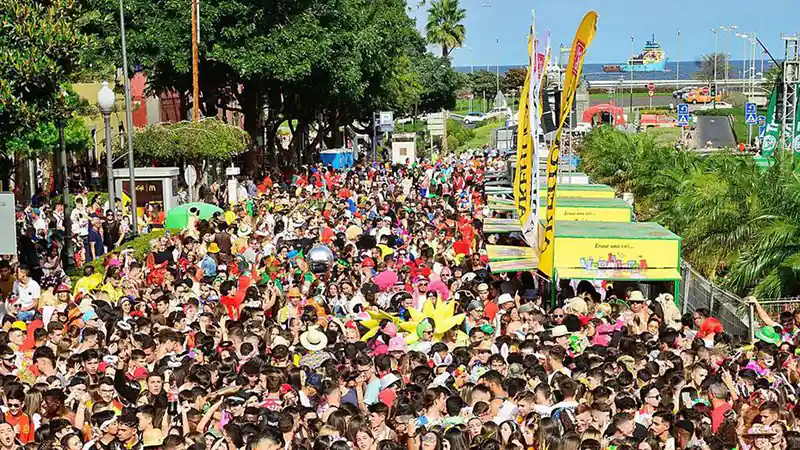
The Carnival of Las Palmas de Gran Canaria
The Carnival of Las Palmas de Gran Canaria is one of the oldest celebrations, with the most history and character of the capital of Gran Canaria.
More than five centuries of life characterize this event, with its masks, its imposture... and the meat. Its origins and its history are undoubtedly intertwined.
The capital of Gran Canaria, founded on June 24, 1478, immediately demonstrated a great capacity to welcome and assimilate cultures, given the presence of populations from different origins. The first direct reference to the Carnival is found in the 16th century, precisely in 1574, with the masked ball held at the house of canon Pedro León to celebrate the marriage of Matías Cairasco.
In History of the Canary Islands by José de Viera y Clavijo, in the passage that recounts the arrival of Captain Íñigo de Brizuela to the islands in February 1635, we read: “A great dinner was served that night, and three banquets on the days of Carnival…”.
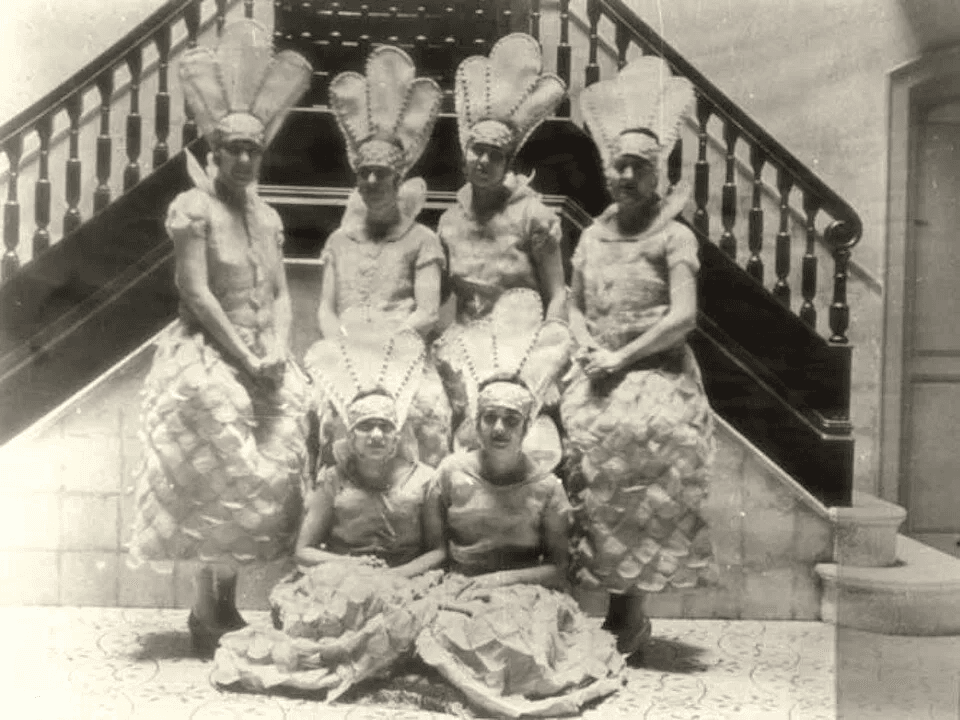
In the 16th century, several documents relate the presence of Italians in the city and their passion for masked dances.
The modern carnival in 1976 regained popularity after Franco's regime. It was celebrated again in the streets.
A few months after Franco's death, a man from La Isleta, Manolo García, called the provincial governor.
He not only managed to reactivate the celebration but also became a popular reference for the festival.
His figure, although little recognized officially, inspired an entire generation of local organizers who years later would lay the foundations of the current Carnival of Las Palmas.
The inhabitants of La Isleta formed the first Carnival Board, taking charge of the organization during the years of the revival.