

How to Start Your Life as a Self-Employed Worker in the Canary Islands
Opening a self-employment activity in the Canary Islands is not only a professional decision but also a commitment to a unique lifestyle. The archipelago offers exclusive tax advantages, a privileged environment, and a growing entrepreneurial community. However, the process requires understanding the specific procedures at both the state and regional levels to avoid mistakes that could delay your start or generate unnecessary penalties.
In this practical guide —updated to 2026— we explain step by step how to register as self-employed in the Canary Islands, making the most of the benefits of the Economic and Tax Regime (REF) and complying with all legal obligations from day one.
Advantages of Being Self-Employed in the Canary Islands
Before diving into the procedures, it is key to understand why the Canary Islands is an attractive destination for entrepreneurs:
- Reduced Personal Income Tax Rate: Application of a rate of 9% instead of the general 15% during the first years (under certain conditions).
- IGIC instead of VAT: The Canary Islands General Indirect Tax has lower rates (0%, 3%, 7%, 15% or 20%) depending on the activity.
- Additional deductions: For investment in productive assets, job creation, or activities in rural areas.
- Low Density Areas: Extra benefits if you operate outside the major tourist cities.
- Quality of life: Exceptional climate, increasing digital connectivity, and a lower cost of living than on the mainland.
These advantages are part of the Economic and Fiscal Regime (REF), a European legal framework that recognizes the outermost status of the islands.
Step 1: Define Your Activity and Modality
You must decide:
- What you are going to do: Professional services (consulting, design, translation), trade, hospitality, etc.
- Where you will work: At home, in an office, online, or mobile.
- Whether you will bill individuals or businesses (this affects IRPF and IGIC).
Important: Some activities require municipal licenses (for example, hospitality, hairdressing, or workshops). Check with your city council before registering.
Step 2: Registration with the Tax Office (Model 036/037)
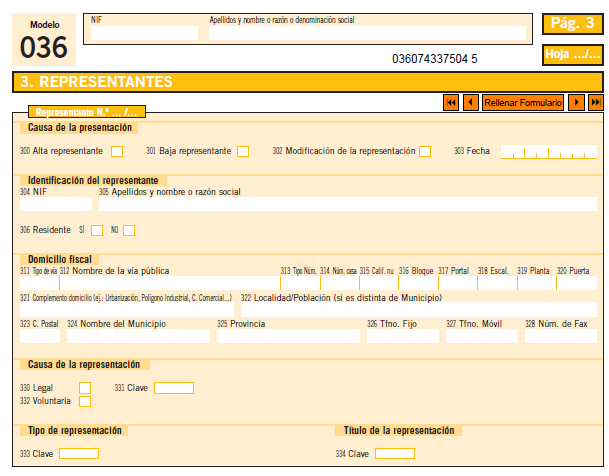
This procedure gives you your activity NIF and registers you in the census of entrepreneurs.
- Use the Model 037 if your activity is simple (most self-employed people use it).
- Choose the IAE section that best describes your work (for example, 769.9: 'Other professional activities').
- Check the box for registration in IGIC (mandatory in the Canary Islands).
- Indicate if you will apply IRPF withholding of 7% or 15% (7% only if you meet first-year requirements).
💡 Local advice: If you provide digital services to clients outside the Canary Islands (but within the EU), the IGIC may not apply. Consult with an advisor.
Step 3: Registration with Social Security
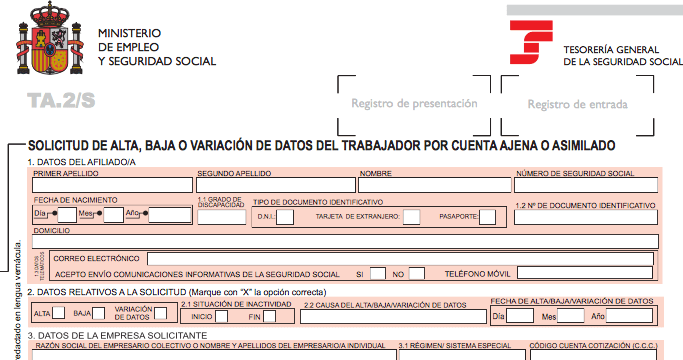
You must register in the Special Regime for Self-Employed Workers (RETA):
- Deadline: a maximum of 60 days before the actual start of the activity.
- Flat rate: 80 €/month for 12 months (extendable to 24 months if you meet requirements).
- In the Canary Islands, you can access complementary regional aid (such as a 50% discount on fees after the flat rate).
Complete the procedure online at the Electronic Headquarters of the Social Security.
Step 4: Notify the Start of Activity to the Council or Town Hall
Depending on your municipality (Santa Cruz, Arona, Las Palmas, etc.), you must submit a responsible declaration of activity opening. This is especially relevant if:
- You have a commercial premises
- You generate noise, waste, or environmental impact
- You offer services to the public in person
In many cases, this procedure is done online and has a symbolic cost (between €30 and €100).
Step 5: Billing, Accounting, and Monthly Obligations

Once registered:
- Issue legal invoices: They must include your NIF, sequential number, date, taxable base, applicable IGIC, and, if applicable, IRPF retention.
- Keep a book of income and expenses: You can use apps like Quipu, Holded o Contasimple (compatible with IGIC).
- Submit quarterly declarations: Model 303 (IGIC) and, if you apply retention, Model 130 (IRPF).
- Contribute monthly to the Social Security (before the 25th).
⚠️ Common mistake: Forgetting that IGIC is not VAT. You cannot deduct it in the same way or use the same models. Always use the forms from the Canary Tax Agency.
Aid and Local Resources for Self-Employed in 2026

The Government of the Canary Islands and the councils offer active programs:
- Program +Self-Employed: Discounts on contributions of up to 80% for those under 35 or long-term unemployed.
- Subsidized coworking spaces: In Tenerife (La Laguna, Santa Cruz) and Gran Canaria (Las Palmas).
- Free advice: Through CAE (Entrepreneur Attention Centers) in all islands.
Check at www.gobiernodecanarias.org/empleo.
Errors You Should Avoid
- Not registering on time: The Social Security can demand retroactive contributions.
- Confusing VAT with IGIC: Fines for billing errors.
- Ignoring municipal obligations: Penalties for operating without a license.
- Not separating personal and professional accounts: Complicates accounting and tax declaration.
Frequently Asked Questions (FAQ)
Can I register as self-employed if I am a foreigner?
Yes. If you are a citizen of the EU, you only need NIE and to fulfill the same procedures. If you come from outside the EU, you must have residence and self-employment work authorization.
Is it mandatory to have a commercial premises to be self-employed in the Canary Islands?
No. You can work from home, as long as your activity does not cause disturbances (noise, traffic, odors). Some categories (like private classes or programming) are 100% compatible with a personal home.
How much does it cost to register as self-employed in the Canary Islands?
The procedures at the Tax Office and Social Security are free. The usual expenses are:
- Monthly self-employed fee (from €80 with flat rate)
- Municipal license (€30–150, depending on activity)
- Advisory services (optional, from €30/month)
Can I receive the cessation of activity benefit if I open my business in the Canary Islands?
Yes, if you have contributed for at least 12 months and meet the requirements. Additionally, the Canary Islands allows you to combine part of the benefit with the initial income of the self-employed (up to a certain limit).
Is the IGIC declared the same as the VAT?
No. Although the process is similar, you use different forms (Canary 303) and the tax rates vary. Furthermore, some operations are exempt (such as exports to the Peninsula).