
The Tajuya Cave and its Ancestral Spiritual Connection in La Palma
The sun slowly sets over the hills of San Juan. The light stretches between the pines and breaks on the basalt, while the breeze brings an ancient scent, as if the earth breathed stories. Halfway down that slope, a dark mouth invites silence: the natural cave of Tajuya. It doesn't take much imagination to understand why this place ignited symbols, rituals, and tales, becoming a destination for cultural and adventure tourism for those seeking an intimate connection with the landscape of La Palma.
A site on the slope of San Juan
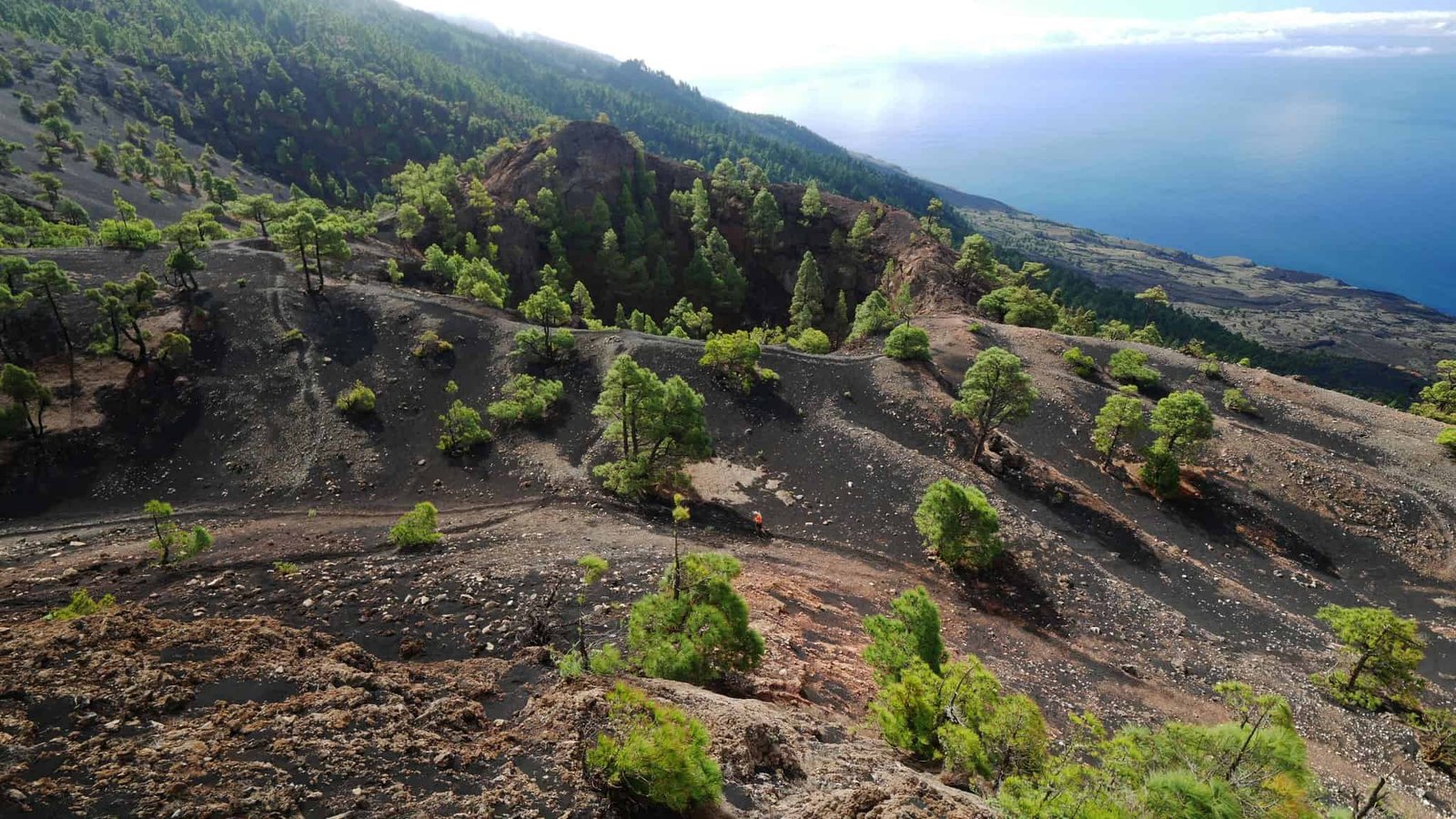
Tajuya opens on the western slope of La Palma, where ancient lava flows formed natural terraces and volcanic tubes created livable spaces. The San Juan volcano, remembered for its eruption in 1949, marked the landscape of this area with its energy. Years later, with the eruption of Cumbre Vieja, interest in these ancestral landscapes resurfaced, driving tourism that values both adventure and the cultural depth of the surroundings.
This site combines proximity to grasslands and summit paths with protection against dominant winds. It is no surprise that, centuries ago, the caves in this area served to store utensils, shelter people, and even host sacred rituals. The Benahoarite communities knew every corner of this land, where life flowed in harmony with nature.
Although the cave of Tajuya is not the only significant cavity in the area, its name has been particularly linked to a unique archaeological discovery, transforming it into a symbol of the spiritual heritage of La Palma and a point of interest for cultural and nature tourism.
The Benahoarites and their sacred caves
The caves of La Palma are witnesses to daily life and the sacred. Some housed homes, others served as burial sites, and several contain engraved rock art with spirals, lines, and basins. This network of spaces organized the existence of pre-Hispanic communities and has survived over time thanks to the preservation of the volcanic environment.
In Benahoarite culture, ceramics expressed identity. Vessels, figurines, and pieces with appendages often transcended the functional to acquire symbolic value. It is in this context that the small idol found in Tajuya fits, a piece that has inspired stories, studies, and cultural tourism routes that invite exploration of the island's ancestral spirituality.
Archaeologists rigorously analyze this evidence, combining stratigraphy, context, and inter-island comparisons. In Tajuya, as in other sites, certainties coexist with reasonable hypotheses, opening space for debate and reflection.
The discovery of the "Soul of Everything"
The figure associated with the cave of Tajuya is small, made of fired clay, with a humanized face, large eyes, and a distinctive headdress. Molded with minimal resources, it conveys an intense presence. Some link it to the famous "Idol of Tara," found on other Canary Islands, while others consider it a unique expression of La Palma's symbolic repertoire.
The name "Soul of Everything" reflects an animistic view of the world: the belief in a life that permeates caves, rocks, animals, and clouds. This perspective continues to inspire those seeking authentic cultural tourism experiences and a connection with the palm nature.
| Feature | Description | Possible reading |
|---|---|---|
| Size | Small, manageable with one hand | Portable, intended for home or personal use |
| Material | Baked clay, local ceramic paste | Made with resources from the immediate environment |
| Face | Large eyes, schematic features | Protective gaze, watchful presence |
| Headpiece | Highlighted upper element | Symbolic hierarchy or feminine/ritual identity |
| Surface | Simple finish, without excessive detail | Practical ritual piece, not decorative |
| Context | Cave on a volcanic slope | Intimate ritual space, improvised shelter or altar |
Idol, amulet, or clay memory
The value of this figure does not lie in its aesthetics, but in its symbolic function. Although we will never know for sure its purpose, archaeology and comparative ethnography offer plausible interpretations:
- Fertility: invoking life cycles, childbirth, and harvests.
- Mother goddess: representation of the womb that nurtures and protects.
- Protective amulet: object that safeguards individuals or groups.
- Place marker: symbolic marker of a ritual refuge.
- Mediator: bridge between the visible and the invisible.
A symbol with many layers
The name "Soul of Everything" reveals a worldview in which even seemingly inert things possess life. In this view, the cave is not just hollow stone, but an organism with a mouth, lungs, and memory. The clay figure concentrates that vision: small yet capable of transforming darkness into living matter, ideal for those seeking a deep tourism experience in La Palma.
Voices and stories about Tajuya
Places with history generate stories that are passed down orally. Shepherds, walkers, and neighbors have woven versions about rituals, promises, and moonlit nights in Tajuya. These narratives complement the archaeological record, adding emotional and social nuances that objects alone cannot convey.
- Whispers of shepherds in winter
- Veiled during storms
- Minimal offerings kept from the wind
- Whistles that go in and out with the breeze
What archaeology tells us about La Palma
Scientific work in caves like Tajuya combines careful excavation, ceramic analysis, and carbon dating. Each fragment reveals uses, chronologies, and exchange networks. However, context is key: an isolated piece loses much of its meaning.
That is why legal protection of sites in La Palma is essential. Institutions like the Benahoarita Archaeological Museum in Los Llanos de Aridane safeguard, research, and share this heritage, becoming benchmarks of responsible cultural tourism.
How to view, today, an ancient cave
Visiting Tajuya requires respect and attention. If internal access is not permitted, the nearby viewpoints and interpretive centers offer safe ways to learn without altering the site.
A conscious visit includes:
- Maintaining silence
- Not leaving waste
- Respecting paths and closures
- Do not extract anything from the environment
- Share what you've learned responsibly
Combining the walk with a stop at the museum, a conversation with local guides, or reading archaeological studies enriches the experience, allowing for an authentic connection with the history and nature of La Palma.
Tajuya and the network of sacred caves
Tajuya is part of a constellation of spiritual places in La Palma: hollows in ravines, shelters in malpaís, cavities with petroglyphs. Each one is a testament to the symbolic relationship between the benahoaritas and their environment, turning the island into an exceptional destination for cultural tourism and respectful adventure.
The 'Soul of Everything' acts as a gateway to this world. It does not exhaust the narrative, but invites exploration with humility, curiosity, and commitment to the conservation of the natural and cultural heritage of the Canary Islands.
Layers of time in a small figure
Let’s imagine their hands shaping the clay, drying the piece in a shelter, cooking it in a hearth. Perhaps they used it for years, or kept it in a niche for sacred moments. Today, that figure continues to gaze —attentive, sufficient— inviting those who behold it to approach with respect and listen to what the landscape has to say.