
4 magical seasons in a unique destination: Gran Canaria
The best thing about Gran Canaria is that it forces you to look at the clock with new eyes. It is a quality tourist destination where every minute is lived with intensity. The dawn on the coast brings the scent of salt, by mid-morning you feel the cold humidity covering everything in the midlands, at noon the southern sand reminds you of an endless summer, and as evening falls, the sharp air of the summit invites you to zip up your jacket. In just 50 kilometers, the colors, the light, and the skin change; it's as if you experienced the four seasons in a single day. Many are already referring to this phenomenon as 'Gran Canaria: 4 seasons', an experience that stands out for its diversity and the adaptation of tourism to each unique microclimate that the island offers.
An island that Rome never conquered
It surprises, both for its history and its climate. The Roman Empire, contrary to what is commonly believed, did not subjugate Gran Canaria. In fact, current studies suggest that the Roman Empire did not formally conquer any island of the archipelago. Ancient chronicles vaguely mention the Fortunate Islands and there are reports of scientific expeditions with curious eyes, not with legions.
What has been confirmed in archaeology is a sporadic Roman presence linked to commercial activities in specific points of the eastern islands. The classical example is the purple dye factory on the nearby Lobos Island, opposite Fuerteventura, dated around the turn of the era. Meanwhile, in Gran Canaria, no archaeological sites have been found that indicate prolonged occupation. No camps, no villas, no amphorae in quantities that evidence a military or administrative presence. There were no campaigns, no garrisons, or pacts of subjugation.
Why? Several reasons combine. For the Roman Empire, dominating the Mediterranean was profitable and relatively safe. The Atlantic, with its less predictable winds and currents, inspired respect. The Canary Islands, far from the main trade routes of the Empire and lacking immediately interesting mining resources, were not a priority.
Geography that commands respect
Gran Canaria rises like a mountainous cone that reaches almost 2,000 meters, with deep ravines, steep slopes, and coastlines continuously shaped by the Atlantic. Those who sail, even today, know that the trade winds from the northeast dominate and that the sea can change in minutes. This difficult topography, combined with the scarcity of suitable natural shelters for large ancient fleets, explains why the eastern islands, with better access from the African coast, gathered remains of navigators. Gran Canaria, more exposed to the trade winds, lacking wide natural ports and without a clear economic appeal for the Roman Empire, was left on the sidelines.
High societies: the ancient Canarii
Before the arrival of Castilla in the 15th century, the island was inhabited by communities of North African origin. They lived in cantons governed by guanartemes, with fortified granaries on cliffs and a network of settlements adapted to the terrain. The Cenobio de Valerón, carved into the rock, amazes with its scale, collective intelligence, and its contribution to the cultural heritage of the island. Risco Caído, now a World Heritage site, testifies to their attention to the sky and the calendar, and reinforces the island identity that distinguished these ancient peoples.
There are no accounts of wars against Rome because Rome did not come to wage war. What that society did demonstrate, centuries later, is that they knew their land and how to defend it. The resistance to the Castilian conquest was long and tenacious. That past can be read today in museums, archaeological sites, and in the toponymy of ravines and peaks.
gran canaria: 4 seasons in one day
The climate of Gran Canaria cannot be understood without the mountains and the trade winds. The island divides, condenses, and surprises, allowing one to experience sensations typical of all four seasons in just a few hours:
- Northeast trade wind: fresh, humid, and green. The sea of clouds dissolves into drops upon touching the slope, a tactile experience that connects the walker with nature.
- Midlands: mild, with crops and villages that smell of warm bread and almond blossoms.
- Summit: pine forests, cold, clear horizons, and even snow in winter.
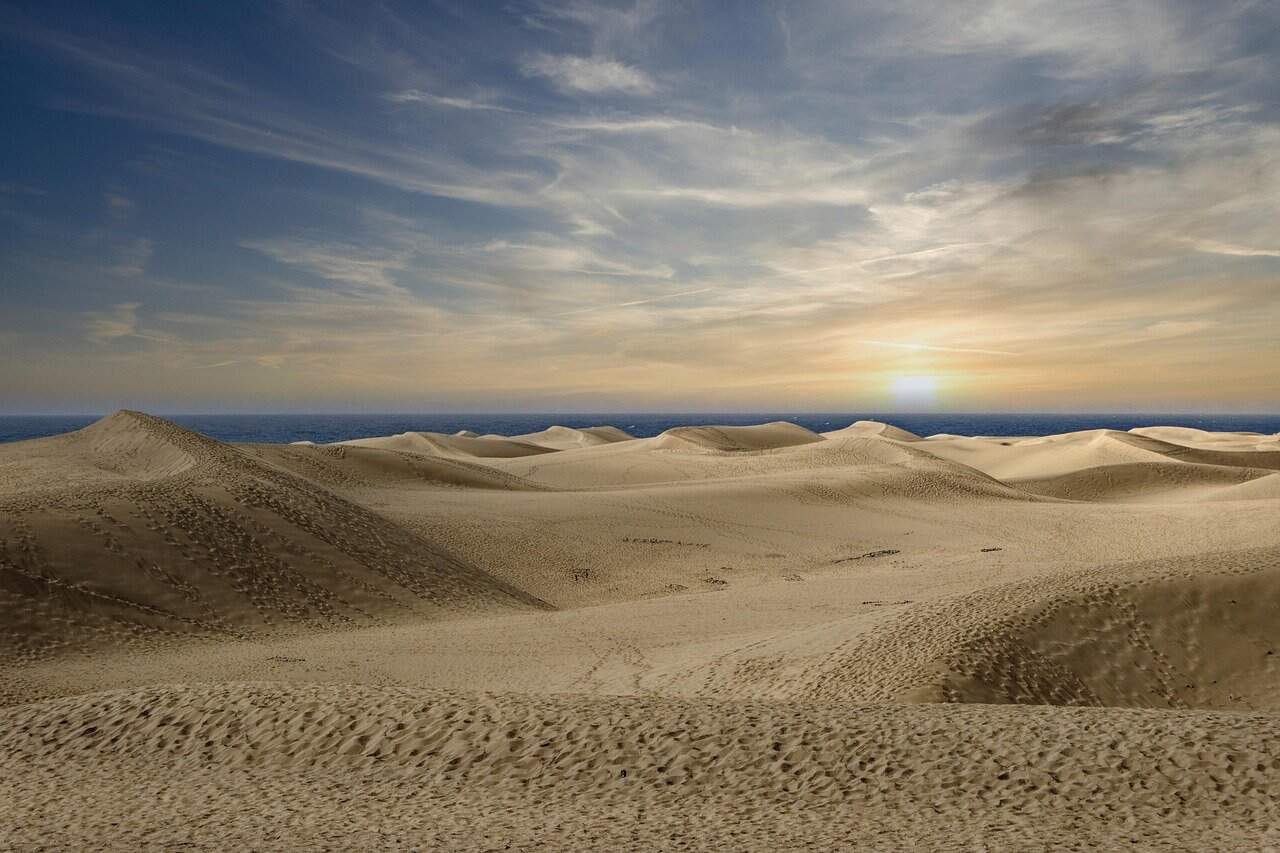
- Southeast trade wind: dry, warm, and bright, with dunes, beaches, and tranquil coves.
This plasticity of the climate, a result of the formation of microclimates specific to each area, is not a drawback but rather the magic that allows visitors to enjoy such varied landscapes in a single day. This is why it's often recommended to use a travel checklist that includes everything from sunglasses to thermal layers, to not miss out on the details or the tactile experience that each atmospheric change offers.
Any given day may begin with a gentle "spring" in front of the Las Canteras beach, continue with a damp "autumn" walking through a ravine in the north, immerse oneself in the radiant "summer" of Maspalomas, and finish with the clear "winter" of Pico de las Nieves. Even in the evening, the sunset light can invite one to enjoy a candlelight atmosphere where perhaps a small outdoor concert is organized to celebrate the day.
Itinerary to savor the four seasons
| Time slot | Suggested place | Season that is felt | Plan | Clothing and equipment | Useful webcam |
|---|---|---|---|---|---|
| Dawn | Las Canteras, Las Palmas de Gran Canaria | Gentle spring | Stroll and coffee looking at the bar | T-shirt, light jacket | Las Canteras on CanariasLife.com |
| Mid-morning | Laurisilva of the north (Azuaje, Los Tilos) | Damp autumn | Short path among ferns | Thin lining, shoes with good grip | Northern zone on CanariasLife.com |
| Noon | Dunes of Maspalomas | Dry summer | Bathroom and stroll through the Reserve | Hat, sunscreen, water | Maspalomas on CanariasLife.com |
| Sunset | Pico de las Nieves or Roque Nublo | Clear winter | Viewpoint and photos with the sea of clouds. Ideal for enjoying an intimate concert or relaxing with a candlelight dinner. | Thermal layer, windbreaker | Peak on CanariasLife.com |
Small changes in altitude modify the experience. Climbing 800 meters usually takes away 5 to 7 degrees, and the trade winds can add humidity or mist within minutes. This variation enhances the tactile experience, connecting the traveler with the living essence of the island. The plasticity of the climate is, in fact, the magic that allows fitting four emotional landscapes into a single day and highlights the diversity of environments that make Gran Canaria a unique destination.
Quick checklist for that changing day:
- Sunglasses and cap
- Windbreaker and a thermal layer
- Water and fruit
- Comfortable footwear
- Sunscreen, even if it's cloudy
Routes that justify a detour
- Green north in 6 hours: Las Palmas de Gran Canaria – Arucas – Firgas – Barranco de Azuaje – Agaete. Historical architecture, banana plantations, running water, and viewpoints to the Atlantic.
- Golden south in 5 hours: Fataga – Mirador de la Degollada de las Yeguas – Maspalomas – Meloneras – Puerto de Mogán. Gorges, dunes, and the eternal shine of the south.
- Volcanic summit in 4 hours: Tejeda – Roque Nublo – Pico de las Nieves – San Mateo. Inland villages, potato bread, and horizons that compete with the majestic Teide.
A detail that improves the day: alternating short drives with walks of 30 to 60 minutes. The body adapts better to temperature changes and the trip becomes more of a tactile and enriching experience.
Heritage that tells stories
The island is also a cultural laboratory, where cultural heritage is present in every corner. In Las Palmas, the Canary Museum gathers pieces that explain pre-Hispanic life and its evolution, while in Gáldar, the Painted Cave preserves a mural with red and black geometries that continue to question archaeologists. Guayadeque, with its cave-houses and hermitages embedded in the rock, connects the present with ancestral ways of inhabiting.
In Vegueta, the cobbled streets converse with the Atlantic light. The Casa de Colón, the surroundings of the Cathedral of Santa Ana, the interior courtyards, and the stone façades speak of a city open to maritime routes and cultural exchanges. Eating a fish soup at the end of the walk is part of learning about the island's identity that has been forged over the centuries.
Gastronomy is no exception. Flower cheese in the middlands, gofio mixed with honey and almonds in Tejeda, wrinkled potatoes with mojo on any honest table in the south; flavors that travel and reflect the essence of insular tourism.
Nature for all rhythms
- Hiking: Rural Park of Nublo, Tamadaba, Pilancones. Pine forests, red sands, and ancient rocks.
- Wind sports: Pozo Izquierdo and Vargas beach are world-famous. The trade winds and the sea prepare champions every day.
- Wildlife observation: cetaceans and birds of prey in interior ravines, lizards basking in the sun on the lava flows; an opportunity to admire the wildlife (cetaceans included) of this paradise.
- Urban beaches: Las Canteras is a school of life, where surfing or snorkeling over a natural reef is experienced in direct contact with the environment.
Each activity takes place in its own microclimate that does justice to the rich diversity of the island. The experience of each journey is an invitation to explore and engage in a sustainable and respectful tourism experience.
An island that is cared for to last
Gran Canaria has been directing its tourism model towards environmental and social quality for years. Almost half of the territory is protected, and the declaration of a Biosphere Reserve is a real commitment that translates into marked trails, the restoration of laurisilva, and environmental protection measures. Hotels, rural houses, and sustainable accommodations incorporate measurable practices, from energy savings to waste management or local employment. This philosophy does not limit the traveler's experience; on the contrary, it multiplies it: more living nature, more authenticity, and a reduced footprint.
Small gestures during the trip make a difference:
- Choose accommodations with environmental certifications that promote sustainable lodging.
- Respect trails and do not stray from the dune areas.
- Consume local products at markets and restaurants.
- Bring a water bottle to avoid single-use plastics.
Gran Canaria live, without leaving your sofa
The climate changes, and anyone who has had to adapt their plans on the fly knows this. Here, the webcams from CanariasLife.com provide something valuable: a reliable window into what is happening in different parts of the island.
Watching Las Canteras beach in real-time will help you decide whether to bring your swimsuit or a light jacket, while checking the cloud cover at the summit or seeing if strong winds are forecasted in Pozo Izquierdo allows you to make informed decisions.
Some cameras to save in favorites:
- Las Canteras: to see wave action, visibility, and capture the tactile experience of the environment.
- Maspalomas and Meloneras: to observe light, presence of dust, and the condition of the dunes.
- Summit: to follow cloud movement and the clarity of the horizon.
- Agaete and Puerto de las Nieves: to contemplate the sea beyond in the north.
- Pozo Izquierdo: to stay updated on wind gusts and direction.
Experience does not replace the journey, but it prepares and encourages exploration, allowing adjustments to itineraries and even enjoying an impromptu concert or a candlelit dinner before buying the ticket.
History without myths, climate without tricks
Let's return to the two threads that run through this island. One is historical. The Romans, during their brief contact, came to know these lands, possibly ventured down to some coves of the islands closest to Africa and established small workshops, but they never made Gran Canaria a territory of the Roman Empire. There is no archaeological evidence to support a prolonged occupation. The island continued on its path, with insular cultures that intimately dialogued with the volcano, the sky, and the sea.
The other thread is meteorological. The mountain breaks the trade winds, creates clouds and shadows, separating arid zones from humid zones. This creates microclimates that allow experiencing, in a single day, a very marked sequence of seasons. This phenomenon of the four seasons, inherited from its unmatched geographical diversity, results from the interaction between volcanic relief and the atmosphere.
Practical tips for a day of four seasons
- Plan with margins. Transfers are short, but the viewpoints invite you to stop and enjoy every moment.
- Reserve the summit for the last hours; the slanting light enhances the rock formations and the sea of clouds is usually better defined.
- Avoid stepping on the embryonic dune in Maspalomas, a sensitive area that maintains environmental balance.
- If you drive, use engine braking on long descents: the ravines are beautiful and there are many curves.
- Carry cash for small stalls in midland villages. The best cheese or bienmesabe does not always accept cards.
Every piece of advice is a show of respect for nature and insular identity, which has been forged over centuries of history.
Where to learn and where to savor it
- Museums and centers: Museo Canario, Cueva Pintada, Casa de Colón, Interpretation Center of Roque Nublo.
- Villages with character: Teror, Tejeda, Agaete, Aguimes, Santa Lucía de Tirajana.
- Markets that inspire: Vegueta, Gáldar, San Mateo. Cheeses, seasonal fruits, and artisanal breads highlight the island's identity.
- Tables that embody the homeland: daily stews, northern fish, black pork, and volcanic Malvasía wines; experiences that invite authentic quality tourism.
The island is not just a backdrop; it is a living culture, a melting pot of history and nature recognized in flavors, rites, and traditions.
Start by looking at today’s sky. If you are far away, open CanariasLife.com and explore the island with your eyes. If you are nearby, use the cameras to decide whether today your feet seek the shade of a pine grove, the brightness of a shore, or the coolness of a ravine filled with water. Gran Canaria rewards those who let themselves be carried away by its charm, adapting to the proposal of each hour and every microclimate. Discover the magic, diversity, and island identity in a place where every moment is a concert of sensations, sometimes illuminated by the subtle candlelight!