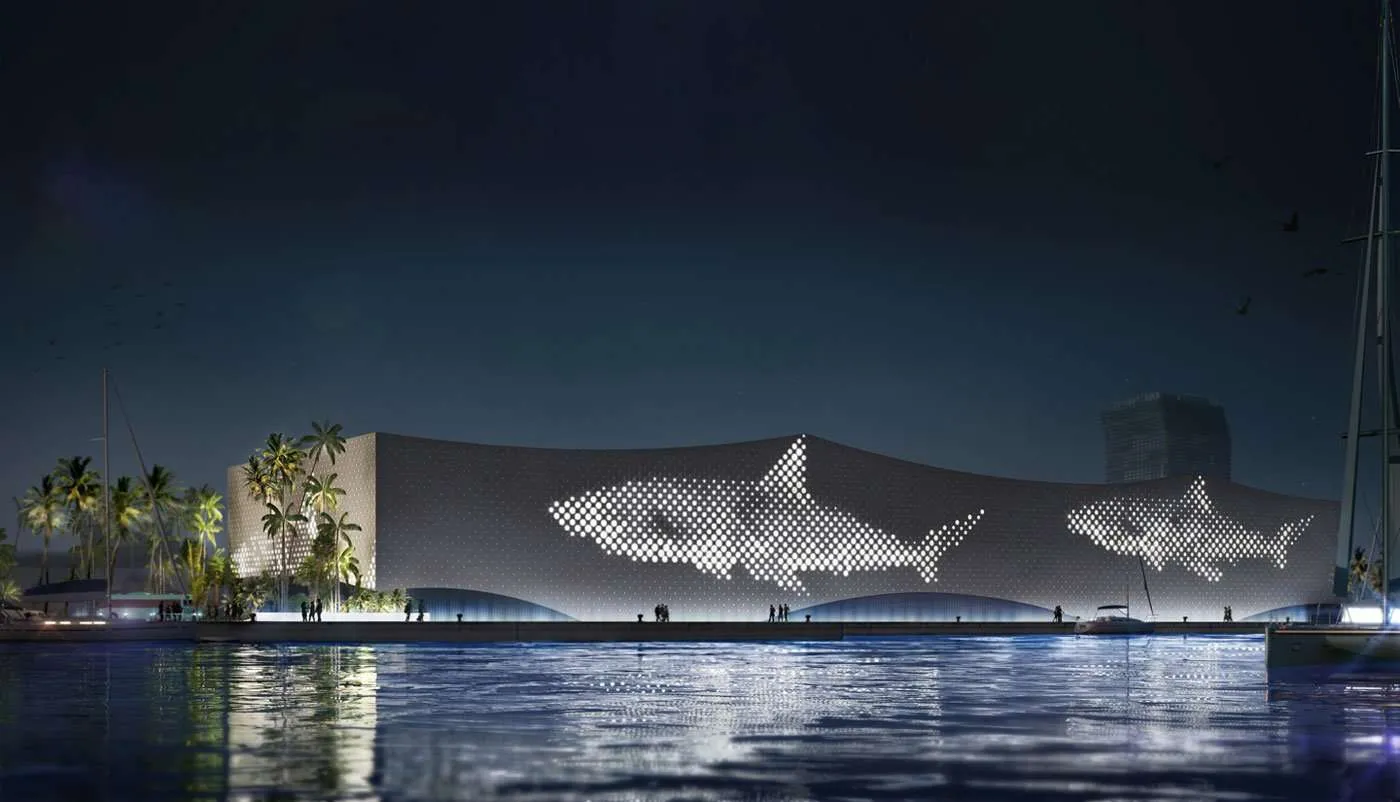
Entering a large aquarium is like turning on a flashlight in the middle of the ocean. The sound of water, the sway of shadows, the hypnotic gaze of a shark that cuts through the gloom, and the movement of each fish remind you of the passion for aquarium keeping. Poem of the Sea, in Las Palmas de Gran Canaria, turns that feeling into a journey that combines science, aesthetics, decoration, and emotion, demonstrating a clear commitment to marine conservation. Furthermore, if you can't visit in person, the live broadcast through webcalls brings that marine heartbeat to any screen, offering a real-time view of the aquarium. Ultimately, it is a serene, close, and very real spectacle.
Poem of the Sea does not intend to be an isolated showcase of the sea. On the contrary, it is designed as an extension of the nearby coast, a narrative of what the Atlantic holds just a few meters from the sand, and a clear example of the integration between nature and technology. From the entrance, the lighting, informative panels, and changes in temperature and sound—combined with an advanced filtration system that guarantees water quality—create an immersive experience designed both to understand the characteristics of this ecosystem and to admire it.
The aquarium is organized into large thematic areas that simulate transitions from freshwater to coastal and open ocean. First, rivers and mangroves give way to reefs, and finally, to a deep ocean panel that impresses with its dimensions and the behavior of animals in the water column. This natural choreography changes with each visit, reflecting the constant evolution of nature. Moreover, this experience connects with other aquariums in the region, which, in comparison, highlight the high quality of animal welfare and environmental care.
Those who traverse its walkways understand why Gran Canaria, and more broadly, the Canary Islands, are a natural laboratory. Here, currents intersect, species mix, and stories of adaptation unfold, ranging from millimeters to a meter and a half in size, with every detail as a testament to the complexity of life.
The experience doesn't end at the glass. CanariasLife broadcasts live from the Poema del Mar aquarium, including a fascinating underwater webcam located in the heart of the ocean tank, considered the crown jewel of the venue. From this unique perspective, one can admire the majesty of sharks and rays gliding gracefully over shoals of silver fish, while the patterns of natural light filtered through the water create a hypnotic display that changes with each hour of the day.
These resources allow for observing the current weather conditions in the Canary Islands and offer real-time views, even capturing panoramas that show the movement of the waters and their effects on the coastline. On the other hand, the tourist webcams and live cameras facilitate checking the weather in Gran Canaria, serving as a useful tool for visitors.
At first glance, these images may seem like just pretty views, but if observed closely, patterns can be appreciated: tides, shoals of fish swimming near jetties, coastal birds following fishing boats, surfers choosing peaks based on wind intensity, and samples of ever-changing marine life. In summary, this mix of leisure and citizen science is part of the charm.
Biodiversity that amazes and educates
The fauna displayed at Poema del Mar is not an exotic catalog disconnected from the island. In fact, much of it comes from Atlantic waters and tropical environments with which the Canary Islands share affinities. The selection reinforces key concepts: food chains, symbiosis, camouflage, and migrations, clearly demonstrating the unique characteristics of each ecosystem. Among the species, besides notable specimens of fish, stand out:
- Sharks and rays: with special attention to Atlantic coastal species. Seeing them swim in relaxed groups conveys respect for marine life, distorting the usual image of dangerous predators.
- Large rockfish: groupers, breams, and snappers, patrolling their territory with vigilant calm.
- Parrotfish and wrasses: bright colors and dentary beaks that shape the substrate, essential for reef health.
- Morays and congers: masters of hide-and-seek, key pieces of the predatory puzzle.
- Seahorses and needlefish: models of delicacy, ideal to illustrate the importance of camouflage and the strength of bony structures.
- Snails, octopuses, crabs, and starfish: invertebrates that tell stories of ingenuity, regeneration, and metamorphosis.
Each tank, or even each aquarium in some venues, links together small discoveries. As a result, the visitor, with their curiosity ignited, leaves feeling they have understood why and how ecosystems function like precise clocks.
Three environments, three rhythms
- Freshwater zone: rivers and wetlands where vegetation sets the pulse. The leaves filter the light, fish swim upstream, and frogs keep the beat, creating a unique natural atmosphere.
- Reefs and coast: an explosion of colors and synergies; here one learns concepts like mutualistic cleaning and nest defense at almost sculptural detail levels, showcasing the perfect harmony of the environment.
- Deep ocean: a space where time dilates, allowing for contemplation of elegant volumes. In these vast panels, sharks and rays glide by, schools of fish morph shape according to danger, and at times, the visitor forgets to breathe, feeling the immensity of the ocean.
Changing rooms is like changing a heartbeat, where each section marks a natural transition, while architecture and decor accompany the journey through walkways and shadows that enhance every silhouette.
Science, conservation, and animal welfare
The exhibition discourse is supported by outreach programs and collaborative conservation projects. The priority is twofold: caring for the animals under their roof and contributing to the health of the ocean surrounding it. Everything begins with welfare: formulated diets, cognitive enrichment, constant veterinary checks, and meticulous habitat design that allows for natural behaviors, reflecting an ecological balance.
Additionally, crucial messages are conveyed:
- Zero waste and reduction of single-use plastics.
- Responsible seafood purchasing, avoiding overexploited species.
- Respect for seagrass meadows and breeding areas, vital for juvenile development.
- The importance of local science and marine protected areas, a vital element in the fight against environmental degradation.
In conclusion, the visitor leaves equipped with practical tools and a permanent invitation to take action for the environment.
Sensory itinerary for a perfect day
Imagine this sequence:
- Morning at Las Canteras, strolling along the shore and enjoying the water, where the Canarian climate seems to pause.
- Visit to Poema del Mar mid-morning, avoiding peak hours. No rush, letting the aquarium set the pace and inviting calm with every detail in its design.
- Lunch at the Mercado del Puerto, a short walk away, with a serving of wrinkled potatoes, a good catch of the day, and a glass of local wine.
- Cultural afternoon: Vegueta, Plaza de Santa Ana, the Cathedral, and a stop at the Atlantic Center for Modern Art.
- Sunset back at the beach, checking live cameras to assess current conditions and deciding whether to grab a board depending on the wind.
There's no need to fit everything in; what's important is that the day has its own rhythm and each step represents enjoyment and connection with the surroundings.
Live weather and smart planning
Live broadcasts from the aquarium have become a simple resource to adjust schedules and make the most of the coastal experience. The wind rolls, the tide rises, and the sea changes its face, offering panoramas that serve as an indicator of the ocean's dynamics. A quick check saves surprises and keeps you informed about the weather in Las Palmas and, in general, the climate in the Canary Islands.
| Live point | What to observe | Best time slot | Recommended nearby plan |
|---|
| Las Canteras Beach, Grande Beach | Tide state, water clarity, occupancy. Natural indicator to detect changes and enjoy views in real time. | Clear mornings or late hours | Snorkeling by La Barra and a walk along the boardwalk |
| La Cicer, Las Canteras | Series of waves, wind, and active peaks – ideal for surf lovers – | Medium tide onward | Surf class and coffee by the beach |
| Puerto de La Luz | Port traffic, general conditions, and details that showcase urban life | All day | Urban photography and visit to nearby areas |
| Mogán Beach | Water transparency, boat entries, and useful conditions for planning activities | Mid-morning | Kayaking, a stroll along the pier, and ice cream in the sun |
| Taurito Beach | Shelter when the trade wind blows, showing calm and stability | Calm afternoons | Relaxed swimming and reading by the beach |
Las Canteras Beach, Grande Beach
What to observe: Tide state, water clarity, occupancy. Natural indicator to detect changes and enjoy views in real time.
Best time slot: Clear mornings or late hours
Recommended nearby plan: Snorkeling by La Barra and a walk along the boardwalk
La Cicer, Las Canteras
What to observe: Series of waves, wind, and active peaks – ideal for surf lovers –
Best time slot: Medium tide onward
Recommended nearby plan: Surf class and coffee by the beach
Puerto de La Luz
What to observe: Port traffic, general conditions, and details that showcase urban life
Best time slot: All day
Recommended nearby plan: Urban photography and visit to nearby areas
Mogán Beach
What to observe: Water transparency, boat entries, and useful conditions for planning activities
Best time slot: Mid-morning
Recommended nearby plan: Kayaking, a stroll along the pier, and ice cream in the sun
Taurito Beach
What to observe: Shelter when the trade wind blows, showing calm and stability
Best time slot: Calm afternoons
Recommended nearby plan: Relaxed swimming and reading by the beach
This information, supplemented by the Poema del Mar aquarium webcam, adds to an experience akin to meteorology, as animals respond to changes in light and pressure, something visible if one stops and observes closely.
Culture that breathes among stones and waves
Las Palmas de Gran Canaria holds a heritage that surprises with its diversity. Vegueta and Triana mix colonial traces, tiled courtyards, and balconies with pedestrian streets that invite strolling without a map, leaving a lasting impression on visitors. The Plaza de Santa Ana and its Cathedral contain written and lived memories, reflecting profound cultural significance. The Canary Museum, for example, offers a glimpse into the island's prehistory, while the CAAM connects the Atlantic with Africa and America in exhibitions that engage with the city. And, of course, the colorful and rhythmic Carnival stands out on the calendar, flooding the squares and avenues.
All this happens just a few minutes from the aquarium, allowing for an experience alternating between tides and stone, saltwater, and the decor of traditional buildings.
Gastronomy two steps from the water
Eating well here is simple. The proximity of the port and the fishing culture provide fresh products and recipes full of character. A small map of flavors may include that unique touch present in each specialty:
- Grilled parrot fish with a touch of lemon.
- Lapas with green mojo and bread to savor every flavor.
- Potato salad with Canarian tuna and top-quality oil.
- Isle cheeses, from fresh to cured, accompanied by palm honey.
- Bienmesabe or powdered dessert to finish sweetly.
The Mercado del Puerto brings together stalls and open kitchens that can be enjoyed either standing while tapas tasting or sitting down to savor each sample of tradition. For those who prefer a more formal atmosphere, there are restaurants around the aquarium that carefully choose local products and stand out for their well-thought-out decoration.
Practical tips for a smooth visit
- Buy your ticket in advance to save on queues.
- Avoid peak hours if you're traveling with little ones or prefer fewer crowds, as the tour is more enjoyable at a calmer pace.
- Wear comfortable shoes and bring a light jacket, as the indoor temperature is controlled.
- It is possible to take photos, but without flash, while ensuring animal welfare.
- If you are going with a stroller or wheelchair, the route is accessible, with elevators and clear accessibility signs.
- Check the feeding times and educational talks, moments when animal behavior becomes especially educational.
- If you stay for several days, combine the visit with a morning of snorkeling in safe areas; you'll see the continuity between what you observe behind the glass and what the sea offers, showcasing the perfect synergy between both worlds.
These guidelines enhance enjoyment and allow the aquarium team to work calmly, reflecting professionalism in every detail.
Suggestions for every type of traveler
- Families: prepare a species scavenger hunt. Turn the visit into a challenge, where each animal behavior becomes a clue to discover, even simple details like how the filtration system works.
- Couples: reserve a quiet time and take the opportunity to explore the deep ocean, where silence has a special meaning, creating intimacy.
- Solo travelers: bring a notebook and jot down observations about the decoration, fish profiles, and questions about animal behavior; these notes can inspire you to delve deeper into aquarium-related topics.
- Photography lovers: work with low ISO and patience, as the best images come when the school of fish moves in unison and the light creates chiaroscuro, elements of a composition worthy of being captured.
Each experience is shaped to suit the traveler, and the aquarium presents itself as a welcoming entity that accompanies without imposing.
Education that leaves a mark
One of the less visible gems is the educational work. Clear panels and simple metaphors, along with activities for schools, create a solid foundation for learning. The idea is not to memorize names, but to learn to observe, to recognize subtle signals: to differentiate a predator by its silhouette, to read the position of its fins, or to identify the function of certain invertebrates in cleaning the seafloor.
If you are a teacher or coordinate extracurricular activities, request the prior materials, prepare the group with guiding questions, and after the visit, propose small investigations on life cycles, migratory routes, or the impact of microplastics. With the support of live broadcasts, students can make remote observations and record simple data, turning each observation into a doorway to knowledge.
Microguide to Canarian coastal species
- Old woman: variable color, powerful beak, and an example of adaptation, showing ingenuity in the reef.
- Black and white fula: small, fast, and with defined territories, each one shows the marine diversity.
- Bream: silver in appearance, a fish that approaches the shore with curiosity.
- Moray eel: the queen of the cracks, peeking out cautiously, conveying mystery.
- Ray: a coastal ray that 'flies' over the sand elegantly, leaving a memorable image in the observer.
- Angel shark: an elusive gem of sandy bottoms, completely harmless to bathers and an example of the beauty hidden beneath the surface.
Observing these species in the aquarium helps to identify them later during responsible snorkeling, cultivating a connection based on every detail of the environment.
An aquarium that extends into the city
Poema del Mar is not turned away from its urban environment. Its location, near the Puerto de La Luz, makes it easy to reach on foot or by public transport. In just a few minutes, cultural visits, park walks, and strolls along the promenade can be combined, leaving each experience with a distinctive impression in the heart of the city. Las Canteras also serves as a living room with views and integrated decor, offering a contrast that showcases the duality between nature and modernity.
If the trade wind blows, just a turn around the corner is enough to find shelter; and if the sun is too strong, the indoor spaces of the aquarium invite you to calm down, demonstrating that each environment has its own rhythm.
The screen as an ally, not as a substitute
Seeing the ocean live through the webcam of Poema del Mar aquarium is addictive. It helps to prepare for the visit, to choose the right time, and to dream of a swim or a walk without surprises. Getting mesmerized by a sunrise at Las Canteras, checking the weather in Las Palmas in real time, is a simple pleasure that creates a connection with the surroundings.
Even when technology offers these tools, there are experiences that can only be captured in person: the imposing scale of a panel, the muted sound of water, and those flashes of light that open as a welcome from the sea. The entire city, with its boats, cafes, and squares that light up at dusk, manifests as a display of life that flows with the rhythm of the tide.
Breathing in that setting invites you to repeat the experience and care for the sea that we all depend on, with each visit being a demonstration of commitment to nature.
Every word in this journey invites you to discover not only the beauty of an aquarium but also the intrinsic connection between science, culture, and tourism in the Canary Islands, where technology – from advanced filtration systems to live broadcasting – meets the magic of the ocean to gift us unforgettable experiences.