

The Herreño ingenuity that illuminated a unique currency
In the middle of the Atlantic Ocean, on the smallest and westernmost of the Canary Islands, an idea rose as bold as it was necessary: a currency backed not by gold nor by the State, but by locally generated electricity.
In the 1940s, while much of Spain struggled with post-war scarcity, the inhabitants of El Hierro brought to life an autonomous economic system that today sounds almost futuristic: the electric bonds.
A system born out of necessity
During the 40s, El Hierro lacked connection to national electrical grids. The only source of energy was a small hydroelectric plant built in the Río ravine, in the municipality of Valverde. But there was a problem: cash was scarce, and many local transactions were paralyzed due to lack of liquidity.
In the face of this situation, the neighbors devised a revolutionary solution: to issue bonds that represented hours or amounts of electricity consumed or contributed to the community system.
These bonds—printed on paper and signed by local authorities—began to circulate as a valid means of payment in stores, for salaries, and even in transactions between individuals.
How did the electric currency work?
Each bond equaled a specific amount of kilowatt-hours (kWh) of electricity. Those who paid with one of these bonds not only acquired a good or service, but also indirectly supported the maintenance of the local energy infrastructure. It was a virtuous circle: more use of the grid → more income to maintain it → greater stability of the system.
This model reflected a deep sense of community, collective responsibility, and self-sufficiency, values that still define Herreño identity today.
A legacy of sustainability ahead of its time
The most fascinating thing about this story is not only its originality, but its anticipation of the principles of circular economy and energy sovereignty.
While the world discovered decades later the benefits of renewable energies and local currencies, El Hierro had already experimented with a system that directly linked energy consumption with everyday economy.
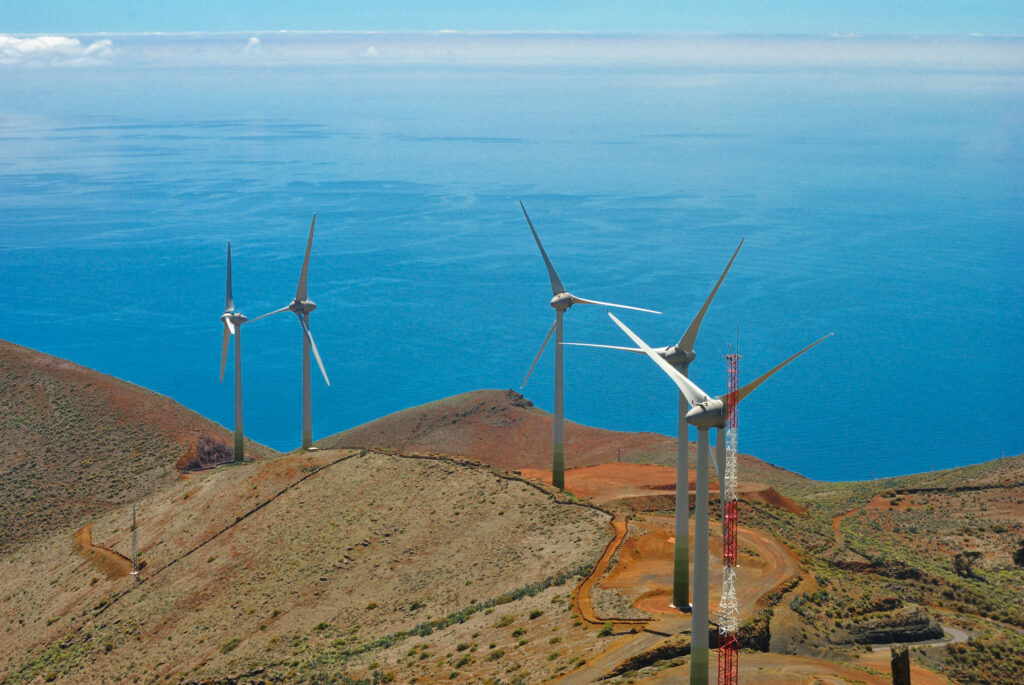
Today, El Hierro is internationally recognized as the first island in the world to operate 100% on renewable energies, thanks to the Gorona del Viento project. But few know that this commitment to sustainability has roots tracing back to those electric bonds from the 40s.
A story that connects past and future
Visiting El Hierro is not just about enjoying its volcanic landscapes, ancestral trails, or crystal-clear waters. It's also connecting with a different way of thinking: one where community, nature, and innovation walk together.
If you want to immerse yourself in this unique spirit, you can watch live the pulse of the island from our webcams in El Hierro, where the wind, the sea, and history continue to write a new page every day.