

A letter of the alphabet that is the emblem of an entire culture.
The history of the letter 'ñ'

History and meaning of the letter ñ
The letter ñ is much more than a character in the alphabet. It is a cultural symbol that represents Spanish-speaking identity. Its origin dates back to the Middle Ages, and its evolution has been key in the formation of Spanish and other Romance languages.
Medieval origin of the ñ
During the Middle Ages, when Latin was evolving into Romance languages, the need arose to represent a nasal and palatal sound. This sound was difficult to write with the available letters. Therefore, copying monks used different combinations like 'nn', 'gn', or 'ni'.
Over time, a tilde was placed over the 'n', giving rise to the first symbol 'ñ'. This form was not only more phonetically precise but also more efficient for writing.
The ñ in the history of Spanish
In the 13th century, King Alfonso X of Castile promoted the standardization of Castilian. This laid the foundation for 'ñ' to become an official part of the language. In 1492, Antonio de Nebrija included 'ñ' in his grammar, consolidating its use.
Other Romance languages also developed their own forms of representing this sound: in Italian and French 'gn' is used, in Portuguese 'nh', and in Catalan 'ny'.
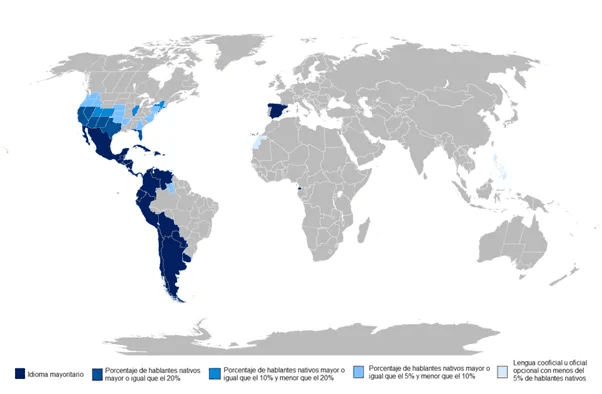
Presence of the ñ in Latin America
The influence of Spanish brought 'ñ' to Latin America. Today it is found in indigenous languages such as Guarani, Quechua, Aymara, and Zapotec. This occurred because native peoples incorporated the writing system introduced by the Spanish.
Additionally, 'ñ' appears in languages outside Ibero-America, such as Chamorro (in Guam), Tagalog (in the Philippines), and Papiamento (in Curacao).
The ñ in the digital age
Despite its cultural importance, 'ñ' faces technological challenges. It is not always available on keyboards nor compatible with all computer systems, especially in email addresses.
In 1993, Spain succeeded in recognizing the need to include 'ñ' in computer equipment. Although the controversy has been overcome, the problem persists in many digital environments.