
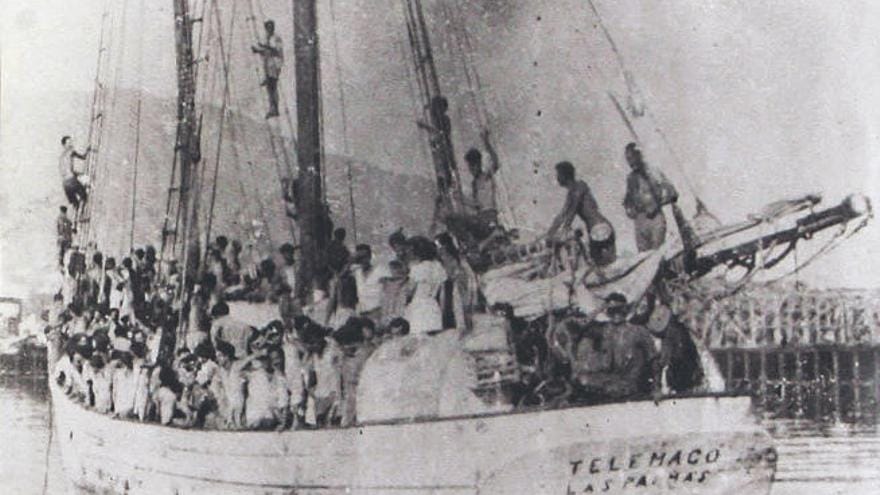
History of the Canary migration to Venezuela: A journey full of hope and sacrifice
Between 1948 and 1950, thousands of Canarians decided to leave their homeland in search of a better life. The Canarian migration to Venezuela was a phenomenon marked by hope, but also by great difficulties.
Many of these emigrants were received with distrust upon arrival. They were detained by authorities and confined to small islands for weeks. The conditions were harsh: poor hygiene, little food, and clothes worn out by salt. Some managed to escape, others fell ill, and some lost their lives before even starting their new story.
The journey itself was a test of endurance. At sea, passengers suffered from hunger, thirst, and illness. The boats were overloaded and many had given all their money to pay for the ticket. Most were farmers or ranchers who sold their houses and animals to embark on this uncertain adventure.
Parallels between the past and the present
The history of the Canary migration to Venezuela can remind us of the current situation of many African migrants arriving in Europe today. However, this is not a recent narrative, but the exodus of thousands of Canarians to Venezuela during the 1940s and 50s.
Now that the Canary Islands are a point of entry for people fleeing poverty and war, it is necessary to remember that, once, it was the Canarians themselves who experienced that same journey.
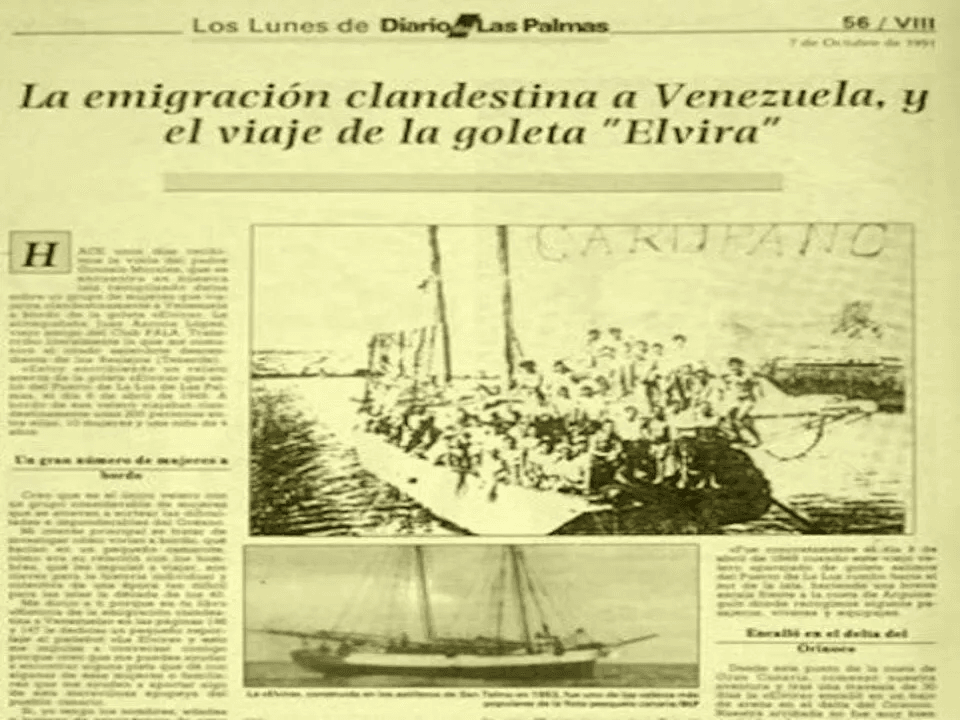
One of the most emblematic ships was El Elvira , a sailing ship just 19 meters long that took 36 days to cross the Atlantic. On board were ten women, a girl, and a group of men, mostly ranchers from Gran Canaria who left everything behind for an opportunity far from home.
Why did they emigrate?
The journey of Canarians to America depended on the fact that life in the Canary Islands was not easy at that time. The economy was precarious, lacking basic services such as electricity and schools in places like El Hierro, and many families sought a future outside the islands.
From the 18th century until well into the 20th century, hundreds of thousands of Canarians emigrated to Latin America. Between 1948 and 1950, at least 65 ships set sail from the Canary Islands bound for South America. It is estimated that, in just eight years of the 20th century, more than 128,000 Canarians left their homeland for an unknown continent.
Legacy of a forgotten migration
The the story of the Canarian immigrants in Latin America is a little-known but deeply human chapter. It reflects the sacrifices of those seeking a better future, no matter the cost.
Young single men, farmers, and political refugees made up a large part of the passengers. Many paid fortunes relative to their daily earnings: an average worker earned barely 12 pesetas a day, while the ticket cost 4,000.
This exodus not only transformed the lives of those who left, but also the cultural identity of entire regions in Venezuela, Cuba, Argentina, and other American countries.