
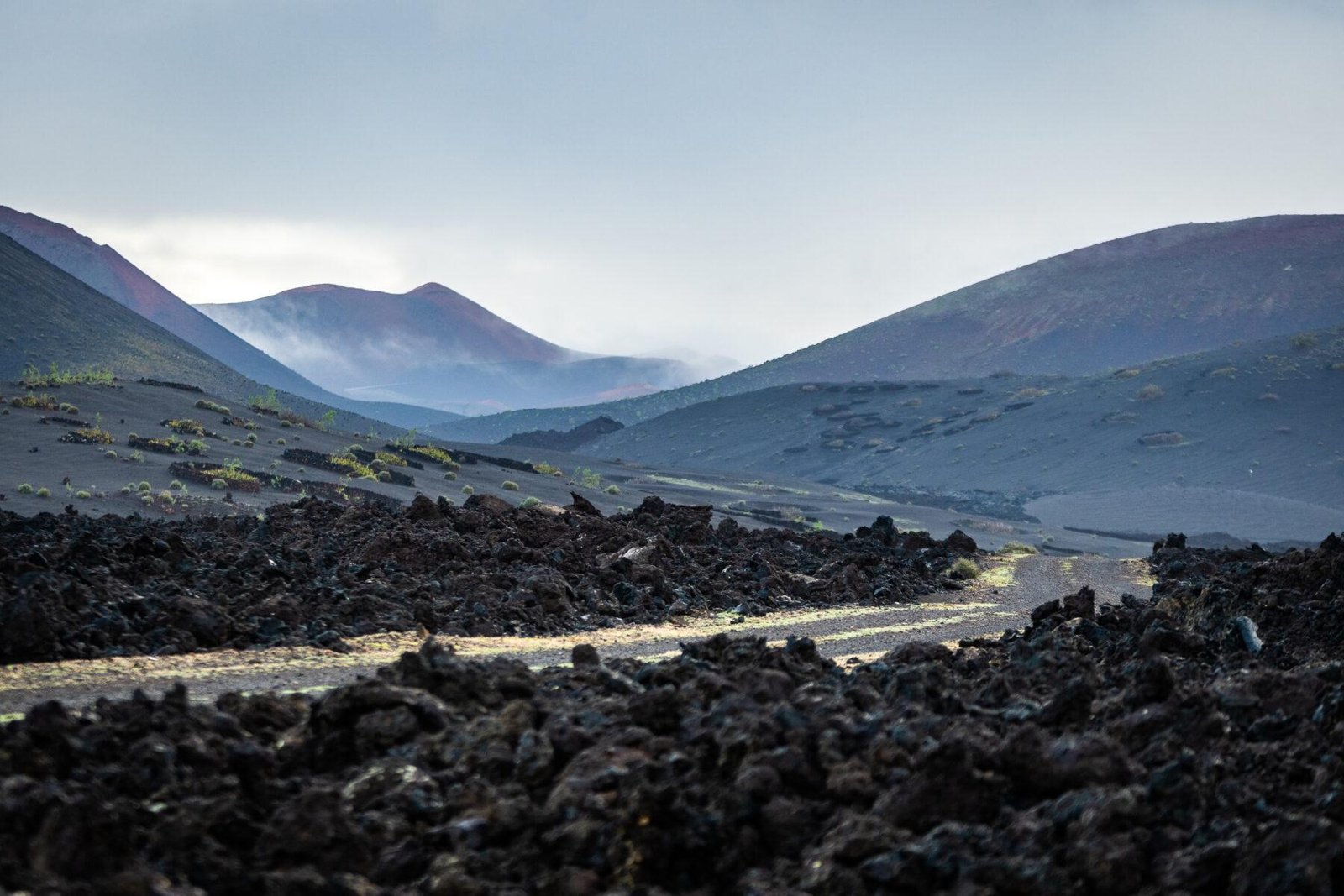
Lunar landscape of Lanzarote: mystery and volcanoes
The island of Lanzarote, the untamed jewel of the Canary archipelago, is a place where nature writes its own poetry in stone, fire, and silence. Its lava fields and its craters shape a lunar landscape so extraordinary that it seems to transcend Earth, transporting us to another world: that of dreams and mystery.
The Timanfaya Fields and the roar of fire
The Timanfaya National Park is the geological and spiritual jewel of the island. Formed between 1730 and 1736, when over a hundred volcanoes erupted, this protected space covers a large part of southwestern Lanzarote. What was once a tragedy for its inhabitants is now an impressive testimony to the transformative power of the Earth.
Walking through this territory is like entering a lunar landscape of ocher, reddish, and black hues. The rocks still seem to pulse underfoot, reminding us that fire continues to breathe beneath the surface. In some places, the ground reaches such high temperatures that heat erupts directly from the volcanic interior. The guides at the Timanfaya Visitor Center even demonstrate how water poured into cracks becomes an instant geyser.
The Devil's Howl: history and legend
Among the most mysterious corners of the park lies the legendary Devil's Howl. It is said that when the wind blows between the fiery mountains, the air produces a deep and chilling sound. The ancient inhabitants interpreted it as the soul of the volcano that never sleeps, a reminder that nature reigns, even though it has allowed us to live alongside it.
This legend, besides its symbolic value, has inspired artists, musicians, and writers over the years. And it's no coincidence: every word that defines Lanzarote —volcano, lunar landscape, fire, silence— is loaded with an almost poetic force. The island is not only explored; it is felt with all the senses.
Ghostly footprints and art in the landscape
The so-called “ghostly footprints” of Timanfaya are not just a natural phenomenon: they are the petrified memory of the volcanic past. In some lava fields, the figures and reliefs seem like traces of footsteps or human forms frozen in time, as if the eruption had captured life in full motion.
The artist César Manrique understood better than anyone the magic of this environment. His vision of an harmony between art and nature transformed the island into an open-air museum. Works such as the Jameos del Agua he Viewpoint of the River incorporate the landscape as an essential element, showing how creativity can coexist with the whims of fire and wind.
Cultural, natural, and playful richness
Lanzarote dazzles not only with its volcanic surroundings. Here, the tourist experience intertwines with tradition and respect for the environment. The white villages contrast with the dark tones of the lava, the wineries of La Geria grow wine in volcanic ash, and the ever-present sea gifts beaches that seem like oases created by imagination.
Additionally, the island offers an intense cultural and gastronomic agenda: music festivals, artisan markets, museums, and spots where visitors can savor local products with views of the Atlantic horizon. It is a destination that invites both contemplation and adventure, ideal for those seeking more than just a vacation: they seek an authentic connection.
Guide for the Curious Traveler
- How to get there: Regular flights connect Lanzarote with major European and Spanish cities.
- What to visit: the Timanfaya National Park, El Golfo, Los Hervideros, La Geria, the Charco de los Clicos, and the César Manrique Foundation.
- When to go: any time is good, although the spring and autumn months offer milder temperatures and less crowding.
For more inspiration, you can discover live webcams of Lanzarote or explore other cultural experiences on our blog .
Experience the lunar landscape
Exploring Lanzarote is embracing the beauty of the uninhabitable. Every corner holds the silent energy of the volcanoes and the serenity of the ocean. Here, time stands still, the sky shines with an impossible clarity, and the colors seem invented.
Come, feel the whisper of the wind among the rocks, listen to the echo of the Devil's Howl, and let your spirit merge with the land that burns. Because Lanzarote is not just visited: it is lived, it is breathed, and it is dreamed.