
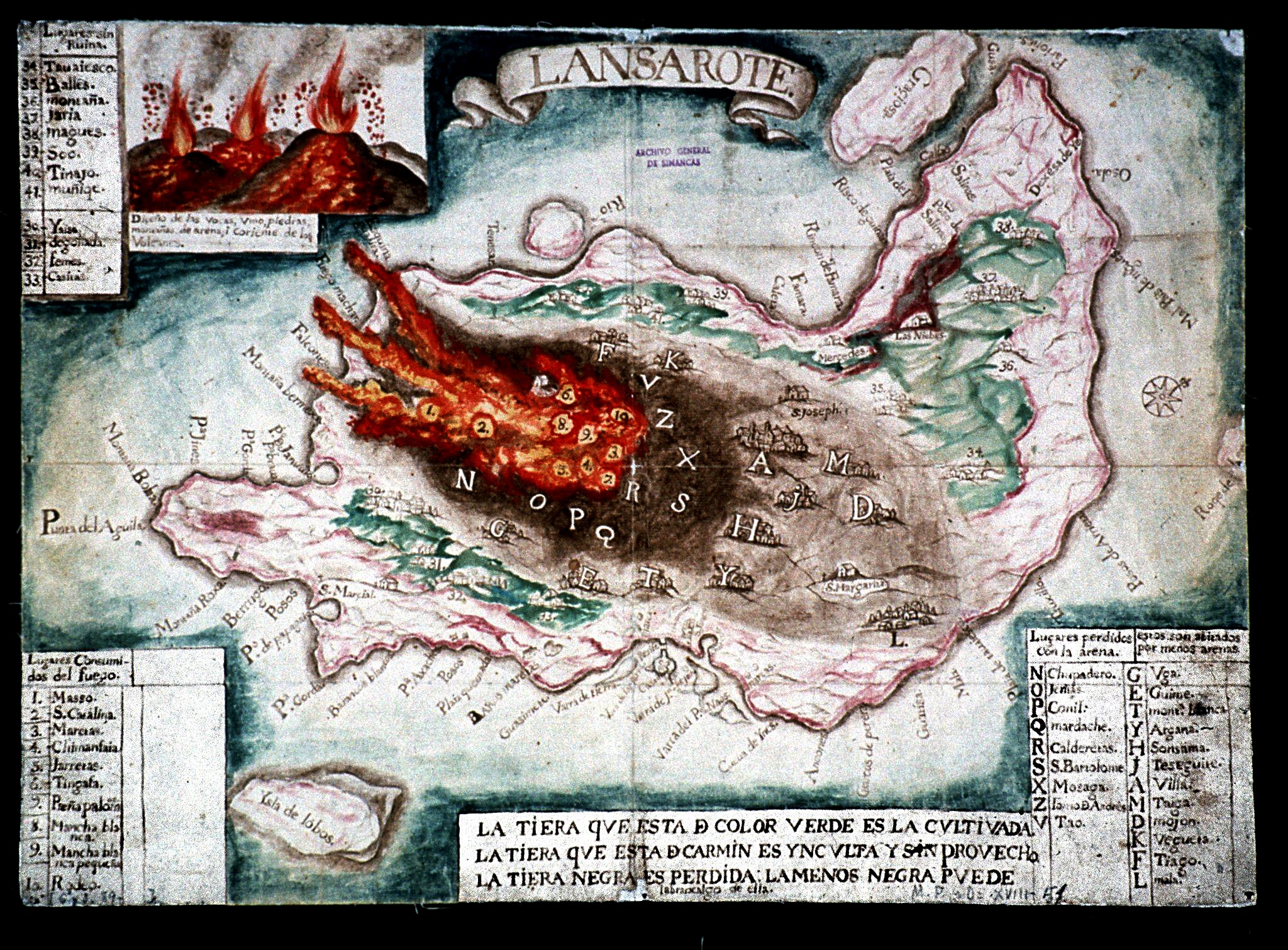
The priest who turned lava into legacy
In the midst of chaos, fear, and uncertainty, there was someone who knew how to look beyond the disaster. In Lanzarote, between 1730 and 1736, the ground opened up for over six consecutive years. More than 30 eruptive fissures buried entire towns, devastated crops, and transformed the landscape forever. While many fled or prayed for the end of the apocalypse, Father Andrés Lorenzo Curbelo, parish priest of Yaiza, took pen and paper. Not to invoke miracles, but to document precisely what we now know as the birth of Timanfaya National Park.
His diary, meticulous and rigorous, is considered one of the first scientific chronicles of a volcanic eruption in Europe. Far from interpreting the phenomena as divine punishments —as was common in his time—, Curbelo observed, measured, described, and reflected. He recorded dates, temperatures, magma behaviors, underground sounds, and even the social impact on the affected communities. Thanks to him, we know that the first tremor was felt on September 1, 1730, and that just days later, the Timanfaya volcano had already begun to devour the fertile land of the farmers.
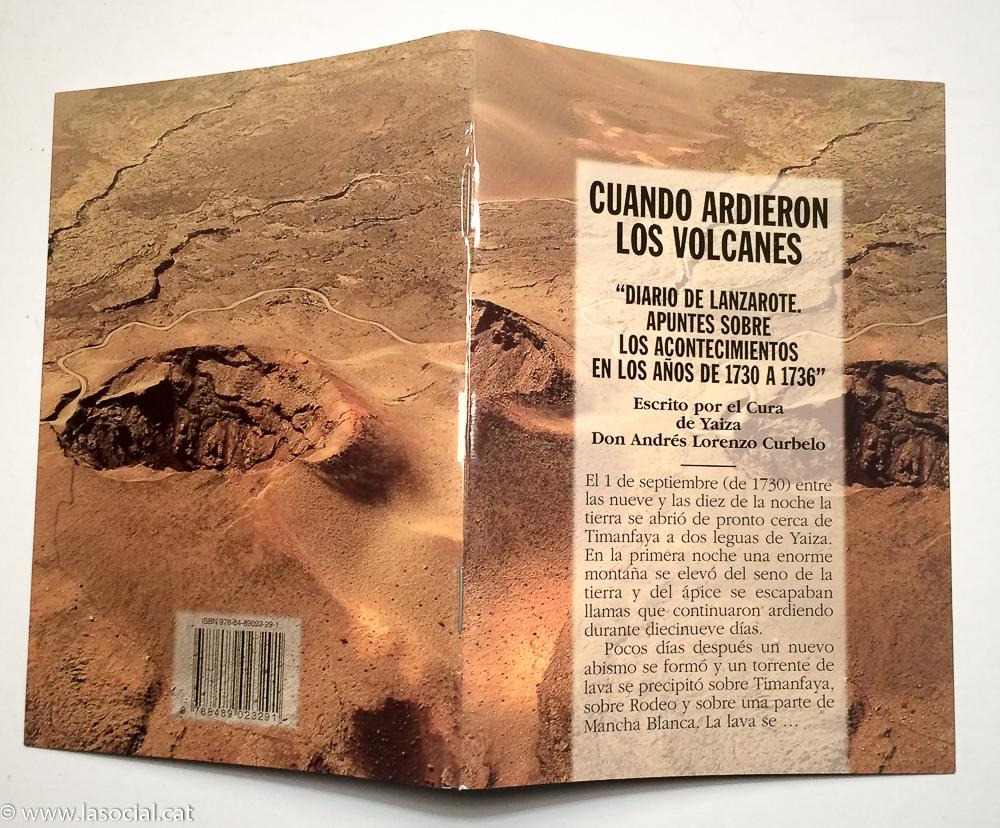
A unique testimony in the history of natural sciences
Father Curbelo was not a geologist, but his intellectual training and curiosity led him to adopt an almost modern approach. In his writings, he describes how the fire “came out of the earth like an open mouth,” how the smoke darkened the sun for weeks, and how the sea boiled upon contact with the lava. But he also emotionally recounts the suffering of the farmers, the forced migration to other islands, and the struggle to rebuild a life on ashes.
His work, titled “Account of the earthquakes and eruptions of Lanzarote”, was sent to the Royal Academy of History in Madrid and is today preserved as a historical treasure. Not only for its scientific value but also for its human dimension. In it, the priest combines faith, reason, and empathy, offering a comprehensive view of one of the most important geological events in the Canary archipelago.
Timanfaya: a landscape born of fire… and memory
Today, when visiting the Timanfaya National Park, one walks over layers of lava that Father Curbelo saw flowing in real time. The paths, rock formations, and even the residual heat that still emanates from the ground have names and dates thanks to his testimony. The park's visitor center includes excerpts from his diary, and in Yaiza, his village, he is honored as a key figure in Lanzarote's identity.
Beyond tourism, his legacy reminds us of something fundamental: science and culture go hand in hand. Without narratives like his, landscapes would be mute. But thanks to his pen, Timanfaya is not just a field of volcanoes; it is an open book about human resilience and the ability to understand the unknown.
Why visit Timanfaya with this story in mind?
- Historical context: Knowing Curbelo's account, each viewpoint takes on a new meaning.
- Environmental education: Ideal for families, students, or geology enthusiasts.
- Responsible tourism: Respecting this environment means recognizing its history and fragility.
- Emotional connection: Feeling the same awe —and fear— that the priest experienced nearly 300 years ago.
Conclusion: a priest, a volcano, and a transformed island
Father Curbelo did not stop the lava, but he achieved something equally valuable: preserving the memory of a geological rebirth. His legacy transcends the religious or scientific; it is a bridge between past and present, between nature and narrative. And in an era of climate change and natural disasters, his approach —observe, understand, share— remains more relevant than ever.
If you ever set foot in Lanzarote, do not only gaze at the horizon of craters. Also listen to the echo of that pen which, in the midst of fire, chose to write the truth.