
It has always been a symbol
The dragon tree of the Canary Islands
The millenary dragon tree: a natural symbol of the Canary Islands
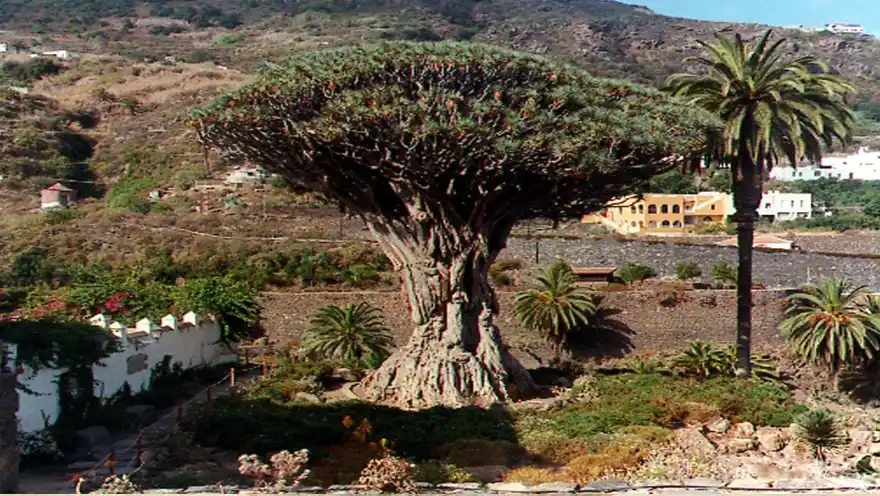
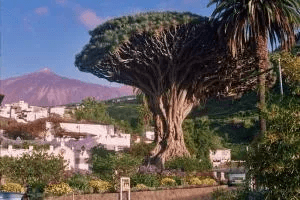
It is one of the most emblematic trees of the Canary Islands. This majestic specimen is not only a historical reference but also a cultural and natural one. It is native to Tenerife, Gran Canaria, La Palma, La Gomera and El Hierro, especially famous is the Drago de Icod , admired by scientists and artists for centuries.
The naturalist Alexander von Humboldt mentioned the Drago de Franchy when he traveled to Teide in 1799. Later, Marianne North depicted it in the gardens of Sitio Litre, in Puerto de la Cruz. These testimonies have turned the dragon tree into an international symbol of the Canary Islands .
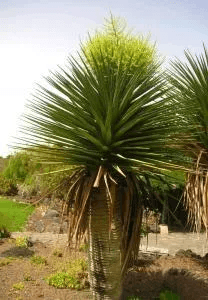
In addition to the Milenary Drago de Icod, there are other notable specimens in municipalities such as Los Realejos, Tacoronte, La Laguna, and Garafía. In Gran Canaria, the Dracaena tamaranae , discovered in Santa Brígida in the late 20th century, stands out.
The interest in preserving Canary flora led to the declaration of the dragon tree as a vegetal symbol of Tenerife in 1991. This tree species has a branched trunk, long leaves, and orange fruits. Its red sap was used by the ancient inhabitants of the islands as a medicinal remedy.

Currently, the Milenary Drago de Icod is at the center of a movement led by Álvaro Fajardo for it to be recognized as a Natural Heritage of Humanity . This year also marks 220 years since Humboldt's visit to the Canary Islands, celebrated by the Humboldt Cultural Association.