
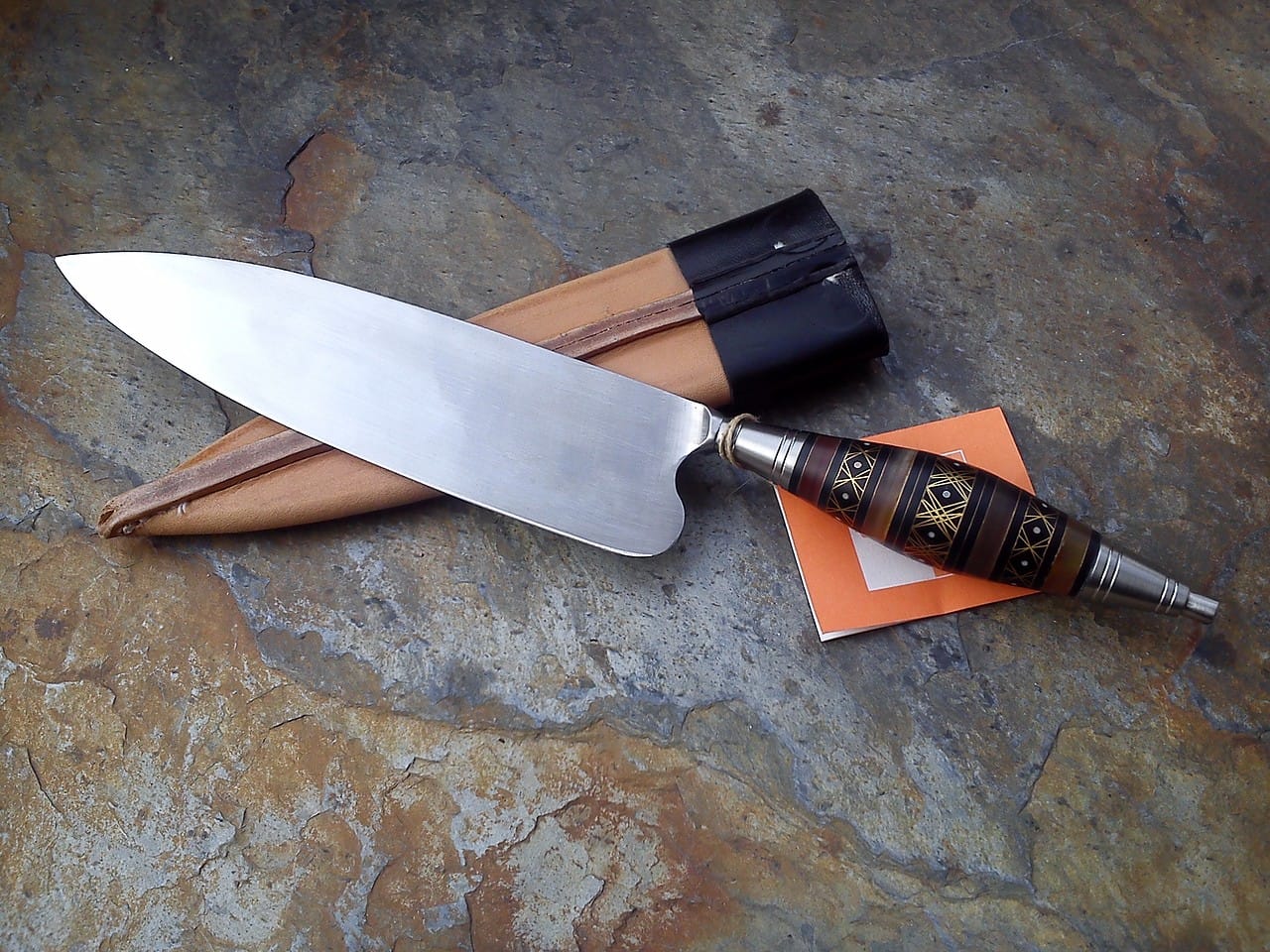
The 'Canarian knife'

The canary knife is part of the Canary tradition, which has a rich and complex history, little known by most of its inhabitants.
An example is the 'canary knife,' a handcrafted tool from this land that unfortunately is at risk of disappearing.
To prevent this from happening, the Cabildo of Gran Canaria has produced a documentary revealing the origins, history, evolution, and typology. 'The canary knife, from the workshop to the gallery' is the title of this documentary, produced by the Foundation for the Study and Development of Canary Craftsmanship – Fedac, an autonomous body directly dependent on the Cabildo of Gran Canaria.
As explained in the documentary, the municipalities of Telde and Santa María de Guía in Gran Canaria are most likely the places of origin of the 'canary knife,' with evidence dating back to the 19th century. However, the specific and exact origin of this activity remains uncertain, although there is evidence that this knife became an essential and indispensable tool in various daily tasks.
The municipalities of Telde and Santa María de Guía are probably the places of origin of the 'canary knife.' With initiatives like these, the Cabildo of Gran Canaria aims to prevent some of the most characteristic trades in Canary history from being forgotten.
'Canary knives,' also known as 'farming knives,' 'country knives,' or 'cabo piezas knives,' were crafted by the island blacksmiths, who learned the art from a young age in family activities. Currently, this tool is little used on the islands, found only in some craft fairs or private collections, making it even more urgent to preserve this tradition and its history.