

🌴 The Dunes of Maspalomas: a desert that breathes alongside the Atlantic
At the southern tip of Gran Canaria, where the sun caresses the land for more than 300 days a year, one of the most evocative landscapes of the archipelago extends: the Dunes of Maspalomas. Far from being a mere tourist backdrop, this environment is a dynamic and protected ecosystem, shaped day by day by the trade winds and the tides of the Atlantic. Each dawn and dusk rewrite its form, turning it into a living desert that never repeats itself.
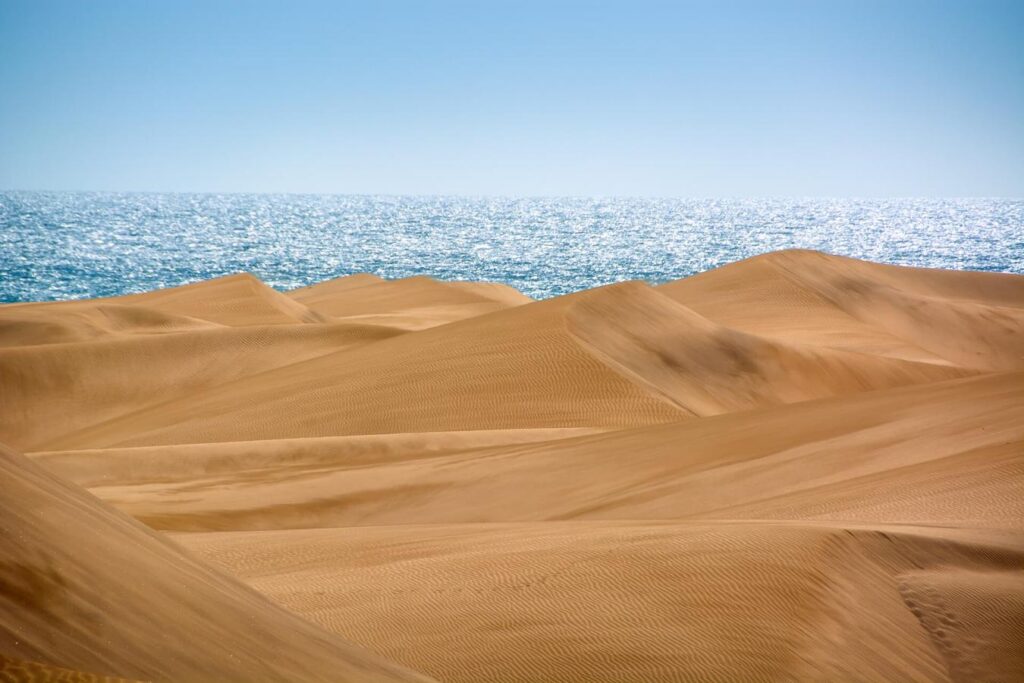
An oasis between sea and sand
The Dunes of Maspalomas are not just sand: they are part of a natural complex that includes the Charca wetland, the El Oasis palm grove and the iconic Maspalomas Lighthouse. This ensemble has been declared Special Nature Reserve since 1987, recognizing its ecological, geological, and cultural value. Here, endemic species like the giant lizard or the rabiche pigeon share habitat with migratory birds that rest in the lagoon before crossing the Sahara.
The contrast between the intense golden of the dunes, the emerald green of the palm grove, and the deep blue of the ocean creates a visual palette that has inspired artists, photographers, and filmmakers for decades. But beyond its beauty, this place is a testimony to how nature and climate have sculpted a unique landscape in Europe.
Why do the dunes move?
The secret of their dynamism lies in the tradewinds, the prevailing northeast winds that regularly blow over the islands. These winds carry sand grains from the beach inland, accumulating them in constantly changing crests and valleys. Unlike continental deserts, here the process is accelerated and visible: a dune can move several meters in a single season.
This natural movement is carefully monitored by environmental technicians, as the balance is fragile. Tourist pressure, trampling, and invasive vegetation can alter the flow of sand, which is why elevated walkways and restricted areas have been implemented to protect the core of the dune system.
Authentic experiences in the Dunes of Maspalomas
Although walking freely on the dunes is prohibited (and for good reasons), there are respectful and deeply enriching ways to enjoy them:
- Sunset walk from the Lighthouse: the best time to capture the golden light that bathes the sandy crests.
- Birdwatching at the Charca: especially in autumn and winter, when herons, flamingos, and sandpipers arrive.
- Guided tours with local guides: provide historical, ecological, and even mythological context about the place.
- Visit to the El Tablero viewpoint: offers a complete panoramic view of the dune system and its relationship with the urban environment.
And yes, although it may seem contradictory, nudism has been a rooted tradition in certain sectors of the adjacent beach for decades, forming part of the cultural identity of this corner of southern Gran Canaria—always within legal limits and respectful of the natural environment.
Conservation and responsible tourism
The management of the Dunes of Maspalomas is an example of sustainable tourism in the Canary IslandsThanks to the collaboration between the Gran Canaria Cabildo, environmental NGOs, and the local community, negative impacts have been reduced through:
- Awareness campaigns (“Don't climb the dunes”).
- Restoration of degraded areas with native plants such as the balanites. or the tabaiba.
- Constant monitoring of water quality in the Charca.
Beyond postcards: the hidden history
Few know that the current dunes are relatively young in geological terms. They were formed just a few thousand years ago, after the last eruption in southern Gran Canaria. Previously, this area was a volcanic cliff. The sea, wind, and time transformed that rock into sand, and then into this almost surreal landscape.
Additionally, beneath the surface lie archaeological remains of the aboriginal inhabitants (the ancient Canarians), who used the area as a passage route and possibly as a place of worship. Recent studies suggest that the Charca may have been a source of fresh water in remote times.
Conclusion: a treasure that deserves protection
The Maspalomas Dunes are not just a tourist icon; they are a natural outdoor laboratory,a refuge for biodiversity and a symbol of nature's transformative power. Visiting them with respect—observing, listening, and learning—is the best way to honor their existence.