
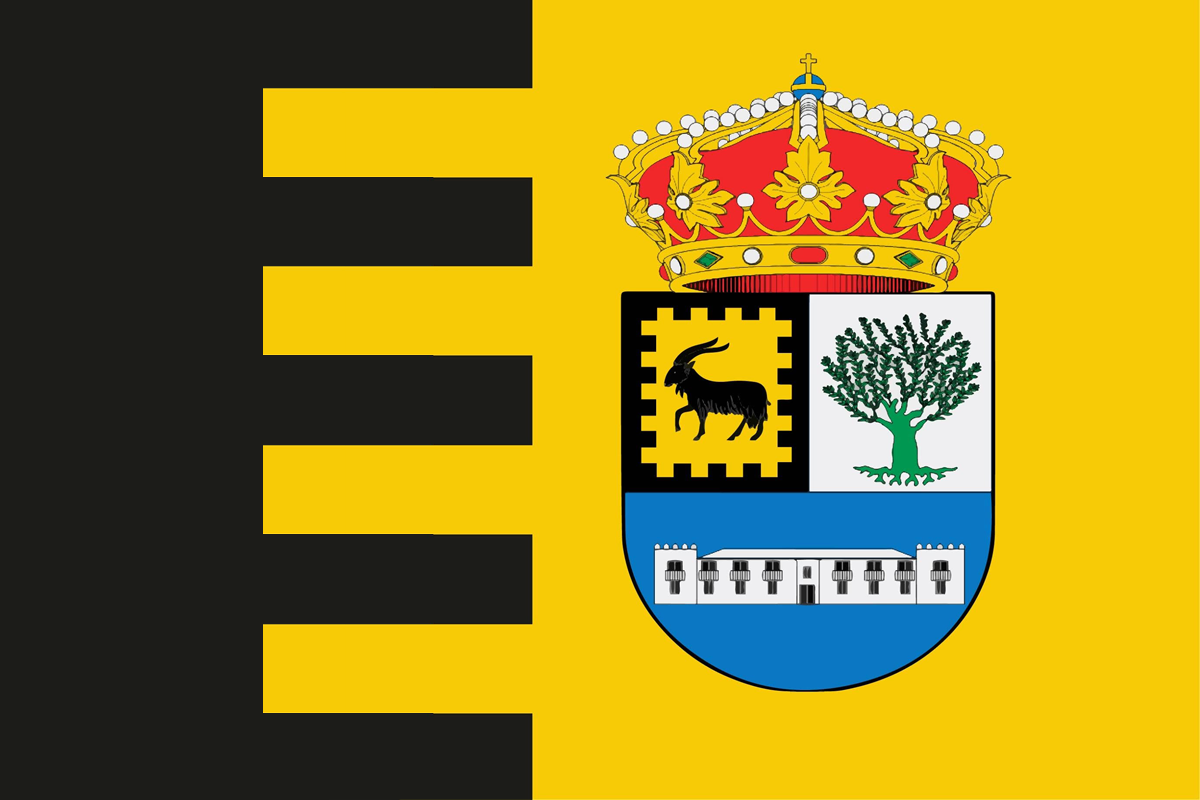
LA OLIVA
Municipality of Fuerteventura
La Oliva, the wild north of Fuerteventura
La Oliva covers the entire northern part of Fuerteventura and is undoubtedly the municipality with the greatest variety of landscapes on the island. Its territory includes the Corralejo Large Beaches, the Natural Park of the Dunes, the Isla de Lobos, the coves of El Cotillo and volcanoes such as Calderón Hondo or the Montaña de Tindaya. All this in a single municipality.
In addition, Corralejo is the main tourist center in northern Fuerteventura. From there you can see Lanzarote on the other side of the strait. Thanks to the CanariasLife Webcams in Corralejo, you can watch live the sea state, the wind and the conditions on the beaches before heading out.
Beaches of La Oliva
The municipality has some of the best beaches in the Canary Islands.They can be divided into two areas:
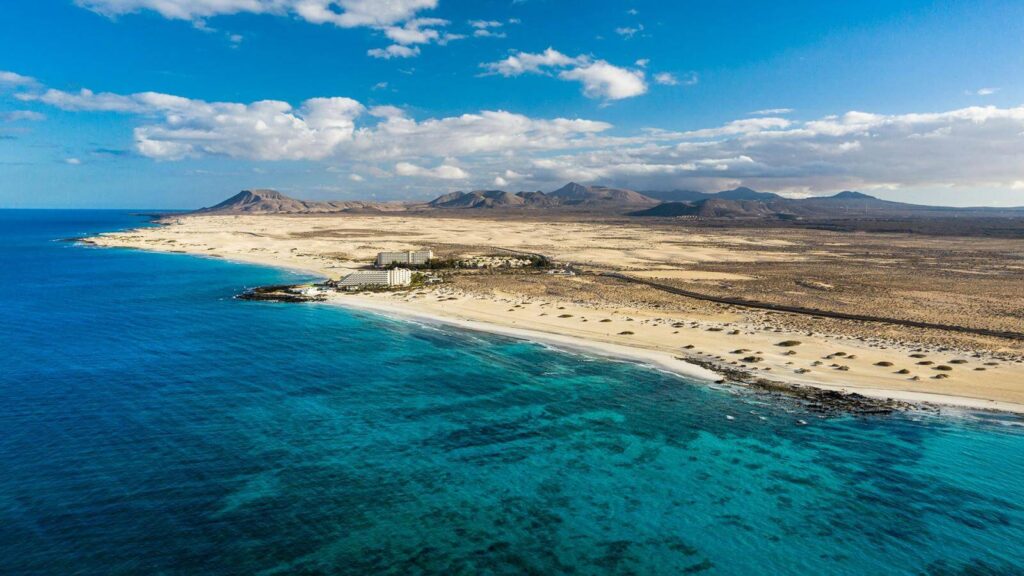
The Corralejo Large Beaches stretching for kilometers along the Natural Park of the Dunes. They are wide, with light sand and turquoise waters. Among them stands out Flag Beach, very popular for kitesurfing y windsurf due to the constant wind.
On the other hand, El Cotillo offers a very different landscape. North of the village are the coves known as Los Lagos, with calm waters ideal for families and snorkel. There is also the Playa de la Concha, considered one of the prettiest in Fuerteventura. To the south of El Cotillo, however, the beaches are more open and have waves, perfect for surf.
Natural Park of the Dunes and Isla de Lobos
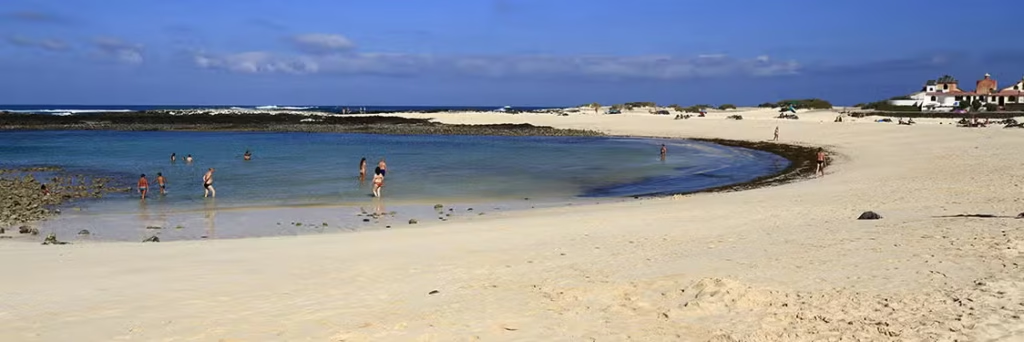
The Corralejo Natural Park protects a unique dune field in Canary Islands. It extends along the coast and creates an almost desert-like landscape next to the Atlantic. It is a perfect space for walking, running, or simply sitting to enjoy the contrast between the sand and the sea.
Just 15 minutes by boat from Corralejo is the Isla de Lobos, a small uninhabited volcanic island. It can be traversed on foot in about two hours via marked trails. Plus, its waters are ideal for snorkel y diving. It is necessary to request a free permit before the visit, as access is limited to 400 people per day.
Volcanoes and mountains
La Oliva has two volcanic landmarks worth knowing. First, the Calderón Hondo, a volcano with an almost perfect crater that takes about 30 minutes to climb. From the top, the views to the north of Fuerteventura and to Lanzarote are spectacular.
Secondly, the Montaña de Tindaya has special historical value. On its slopes, engravings from the mahos, the first inhabitants of the island, have been found. It is a protected place and you cannot climb to the top, but you can walk around its base.
Culture and heritage
In the village of La Oliva is the Casa de los Coroneles, a large manor house from the 18th century that now serves as an art and exhibition center. It is one of the most important civil buildings in Fuerteventura.
It is also worth visiting the Grain Museum La Cilla, which explains the importance of agriculture in the history of the island. Furthermore, the village has a 17th-century church and a tranquil atmosphere that contrasts with the activity of Corralejo.
Gastronomy in La Oliva
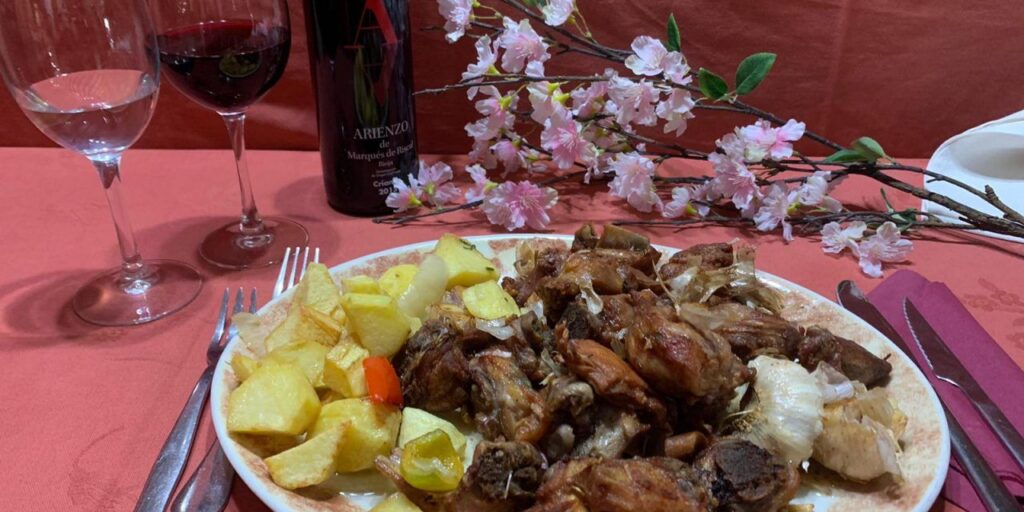
Restaurants in Corralejo y El Cotillo offer a good mix of local cuisine and options for all tastes. Typical dishes include scalded gofio, the wrinkled potatoes with mojo, fresh fish and the majorero cheese with Protected Designation of Origin.
In El Cotillo, watching the sunset from a terrace with a plate of fish is one of the best culinary experiences on the island. In fact, El Cotillo is considered one of the best spots to Fuerteventura to watch the sunset.
How to get to La Oliva
Corralejo is about a 40-minute drive from the Fuerteventura Airport via the FV-1. There are also frequent guaguas from line 6 of Tiadhe connecting the airport and Puerto del Rosario with Corralejo.
To get to El Cotillo from Corralejo is about 20 minutes via the FV-101. However, to visit the village of La Oliva, the Casa de los Coroneles or the Montaña de Tindaya it's better to go by car, as they are inland.
Frequently asked questions about La Oliva
What are the best beaches in La Oliva?
The Corralejo Large Beaches for sand and dunes, Flag Beach for kitesurfing y windsurf, Los Lagos from El Cotillo for calm waters and families, and the Playa de la Concha for one of the most beautiful views of Fuerteventura.
How to visit Isla de Lobos?
By boat from Corralejo, about 15 minutes of sailing. A free prior permit is necessary, as access is limited to 400 people per day. The island can be explored on foot in about two hours and is ideal for hiking y snorkel.
What is Montaña de Tindaya?
It is a sacred mountain with engravings from the mahos, the first inhabitants of Fuerteventura. It's a protected area: you can't climb to the top, but you can walk around its base. It is located within the municipality of La Oliva.
Can you surf in Corralejo?
Yes, northern Fuerteventura is one of the best destinations for surf Europe. Corralejo y El Cotillo have beaches with waves for all levels. Additionally, the conditions of wind make Flag Beach a key spot for kitesurfing.
What is the weather like in La Oliva?
La Oliva has a warm and dry climate year-round. The wind is common, especially in summer. You can check the live conditions with the webcams in Corralejo in CanariasLife.
Is there a webcam in La Oliva?
Yes, in CanariasLife you can see the Las Grandes Playas de Corralejo live, with a view of the Las Grandes Playas and the sea state in real time.