
Charco de San Ginés Arrecife Live
The lagoon of the white boats, the heart of the capital of Lanzarote


This is how the heart of the San Ginés Lagoon
👉 What feeling does it give you right now?
The Pulse reflects how this place is perceived right now.

Perfect day

Strong wind

Rough sea

Very quiet

Ideal Promenade

Variable day
San Ginés Promenade: everyday life by the water
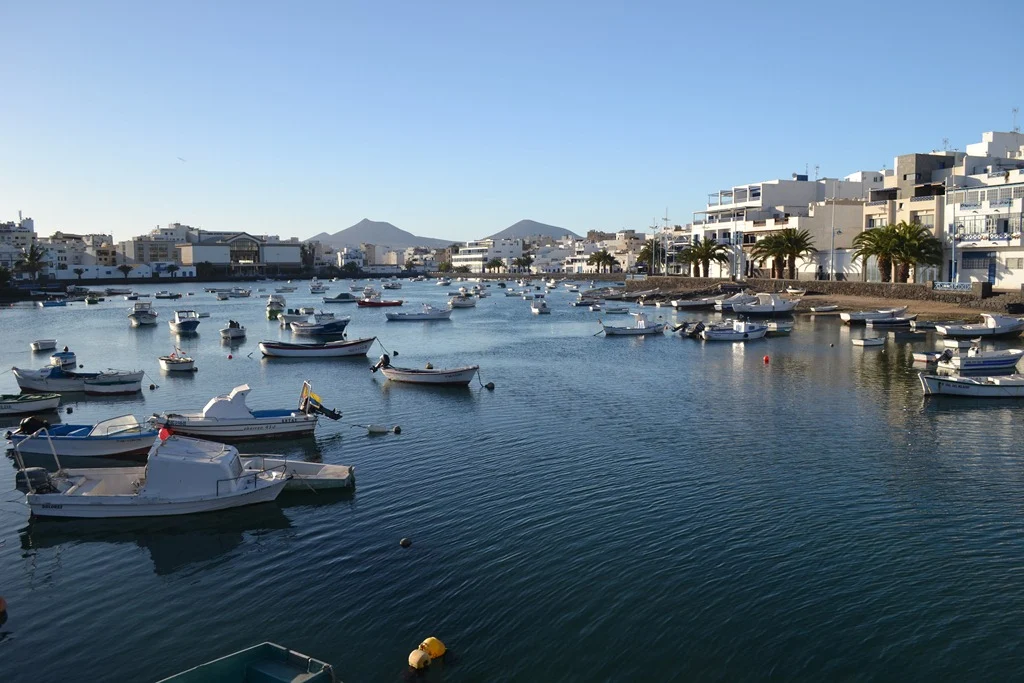
The Charco de San Ginés Arrecife is the most photogenic natural lagoon in the capital of Lanzarote, surrounded by white houses, palm trees, and fishing boats that sway on the still water. It is one of the most authentic corners of the entire island.
Thanks to our live camera of Charco de San Ginés, you can see in real time the atmosphere of the lagoon, the moored boats, and the promenade that surrounds it before planning your visit to Arrecife.
Our live camera of Charco de San Ginés shows in real time the lagoon with its moored boats, the white promenade in the foreground, and the houses and palms of Arrecife (Lanzarote) in the background. It is the most direct way to see the atmosphere of the heart of the capital before arriving on the island.
What is Charco de San Ginés in Arrecife
The Charco de San Ginés (Arrecife) is a natural saltwater lagoon located in the historical center of the capital of Lanzarote. Covering an area of about 70,000 square meters, it communicates with the sea through a small opening at its northern end that allows the water to renew with the tides.
Additionally, its origin is volcanic and its history is linked to the first settlers of Arrecife, who in the 15th century found in its shores a sheltered place to build the first houses and tie up their boats.
San Ginés Promenade: everyday life by the water
Today, Charco is the most beloved meeting point for the residents of Arrecife. From there, the San Ginés Promenade connects with the Avenida de la Mancomunidad, the waterfront promenade that leads to Playa del Reducto and the islet of Fermina.
In the mornings, fishermen prepare their gear next to the boats; in the afternoons, families stroll along the water. It is precisely that daily rhythm that makes the San Ginés Lagoon one of the most authentic places in Lanzarote.

Charco de San Ginés Arrecife: the best moments of the day
The lagoon of the San Ginés Lagoon changes appearance throughout the day in a way that few views in Lanzarote can match. In the morning, with the low light from the east, the water takes on a deep blue hue and the white boats create a perfect reflection on the still surface.
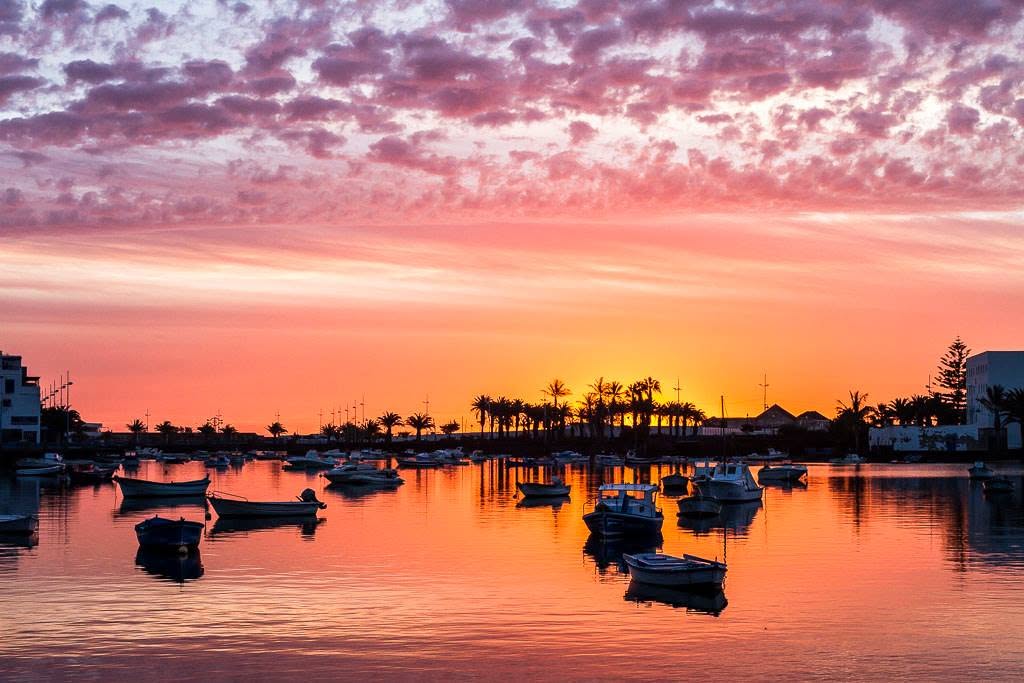
At noon, when the sun is directly overhead, the color shifts to turquoise. In the afternoons, however, is when the Charco reaches its most special moment: the sunset light dyes the white facades orange and turns the lagoon into one of the most photographed scenes in the entire capital.
Thanks to our live camera of Charco de San Ginés, you can choose the best time of day to visit the lagoon before you leave, checking the light, wind, and atmosphere in real time.
What to see around Charco de San Ginés in Arrecife
The Charco is the ideal starting point to explore the historical center of Arrecife (Lanzarote). Just a few steps away is the Iglesia de San Ginés, the oldest parish in the capital, with its white façade and tower reflected in the lagoon.
From there, the Paseo de San Ginés connects with the Avenida de la Mancomunidad, the promenade that leads to Reducto beach and the Fermina islet. In the opposite direction, the Castle of San Gabriel and the Bridge of the Balls —visible from our live camera of Arrecife— complete the historical route of the city.
Gastronomy and tips for visiting the Charco de San Ginés
The restaurants and bars of the Paseo de San Ginés are the favorites of Arrecife residents: grilled limpets, fresh fish of the day, wrinkled potatoes with mojo, and Lanzarote cheese cured with paprika, all at more reasonable prices than in the tourist areas of the south of the island.
Additionally, the craft market that sets up next to the lagoon some weekends offers local products hard to find in other parts of Lanzarote.
On the other hand, the Charco de San Ginés can be visited all year round, as the promenade is freely accessible and free of charge. For parking, the blue zones of the adjacent streets are the most practical option. If you want to discover more corners of the island, also check the live cameras of Lanzarote in CanariasLife.
Most common questions
What does the live camera show of Charco de San Ginés Arrecife?
The camera shows the lagoon in real time with its moored boats, the white promenade in the foreground, and the houses and palms of Arrecife in the background. It is the most direct way to see the atmosphere of the heart of the capital of Lanzarote before arriving.
What is the Charco de San Ginés in Arrecife?
With an area of about 70,000 square meters, it connects to the sea through a small opening at its northern end. This opening allows the water to renew with the tides. It is the most beloved meeting point for the locals and one of the most photogenic spots on the island.
When is the best time to visit Charco de San Ginés?
It can be visited year-round and at any time. In the morning, the water has a deep blue hue with perfect reflections. At sunset, the orange light on the white facades transforms the lagoon into one of the most photographed scenes in the capital. Check the live camera to choose the best moment.
Are there restaurants in the Charco de San Ginés?
Yes. The Paseo de San Ginés that surrounds the lagoon is home to bars and restaurants where locals eat, offering fresh fish, limpets, wrinkled potatoes, and cheese from Lanzarote at prices more affordable than in the south of the island.
What to see near the Charco de San Ginés?
Just a few steps away are the Church of San Ginés, the oldest in Arrecife, and the Paseo de San Ginés, which connects to the Avenida de la Mancomunidad, the Reducto beach, and the Fermina islet. In the opposite direction, the Castle of San Gabriel and the Bridge of the Balls complete the city's historical route.
Does it cost money to visit the Charco de San Ginés?
No. The promenade surrounding the lagoon is free and open access all day. Only the restaurants and services in the area have a cost. For parking, the blue zones on the adjacent streets are the most practical option.
