
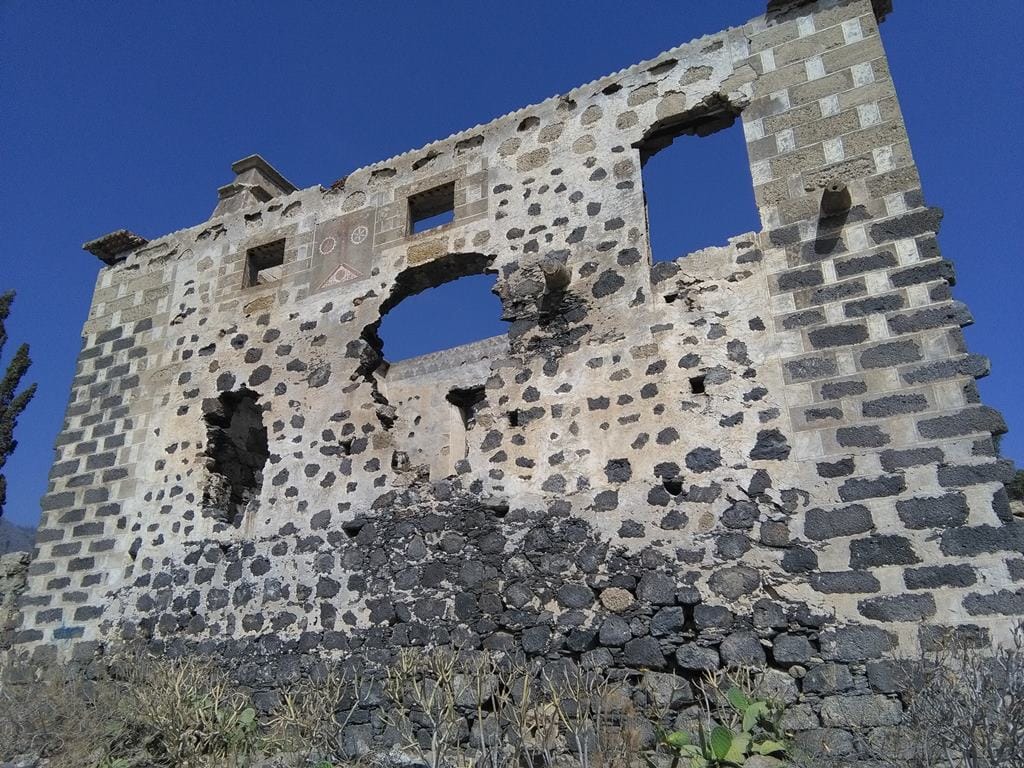
A key monument in the history of Adeje
The recovery of Casa Fuerte for the people of Adeje

Casa Fuerte of Adeje: History and legacy of a colonial monument
In the 16th century, the coastal area of Adeje suffered continuous pirate incursions, which motivated the construction of a stronghouse as a refuge and center of local power.
Origin and defensive function
In 1555, the construction of the Casa Fuerte of Adeje, completed the following year by order of Pedro de Ponte, who wanted to protect his sugar mill. This building served a dual purpose: to protect the inhabitants from external attacks and to serve as the headquarters of the Lordship of Ponte, a dominion that controlled a large part of the region.
For three centuries, it was the political, economic, and social heart of Adeje. It was much more than a noble house: it was a strategic fortification with defensive elements, such as its tower and walls. In 1902, a fire destroyed much of the complex, from which the tower, the entrance, and some walls were preserved.
Structure and architectural characteristics of this colonial monument of the Canaries
Casa Fuerte had an almost square floor plan and occupied about 7,200 square meters. It included a keep, warehouses, granaries, stables, a smithy, a bakery, ovens, and even an oratory. Additionally, it had housing for administrators and workers.
Economic and cultural importance of Casa Fuerte in Adeje
This space was not only a fortified residence but also a productive center. Agricultural, livestock, forestry, and artisanal activities were developed. They cultivated cereals, sugar cane, fruits, and vegetables, and maintained pens with cows, donkeys, and camels.
Today it is a Cultural Interest Asset since 1986, located opposite the Church of Santa Ursula in the historic center of Adeje. Since 2018, restoration work has been underway, and part of the complex is already open to visitors. Its preservation allows for a better understanding of the history of the colonization of Tenerife and the role of large fortifications in the development of the islands.
If you want to learn more about the history of the islands, you can check this article about the history of the Canaries. And if you visit the south of Tenerife, take a look at our webcams of Costa Adeje.