
What to see in Moya, Gran Canaria
Selva de Doramas and traditional sweets from the north
Moya Gran Canaria, the green village of the poet and the laurisilva
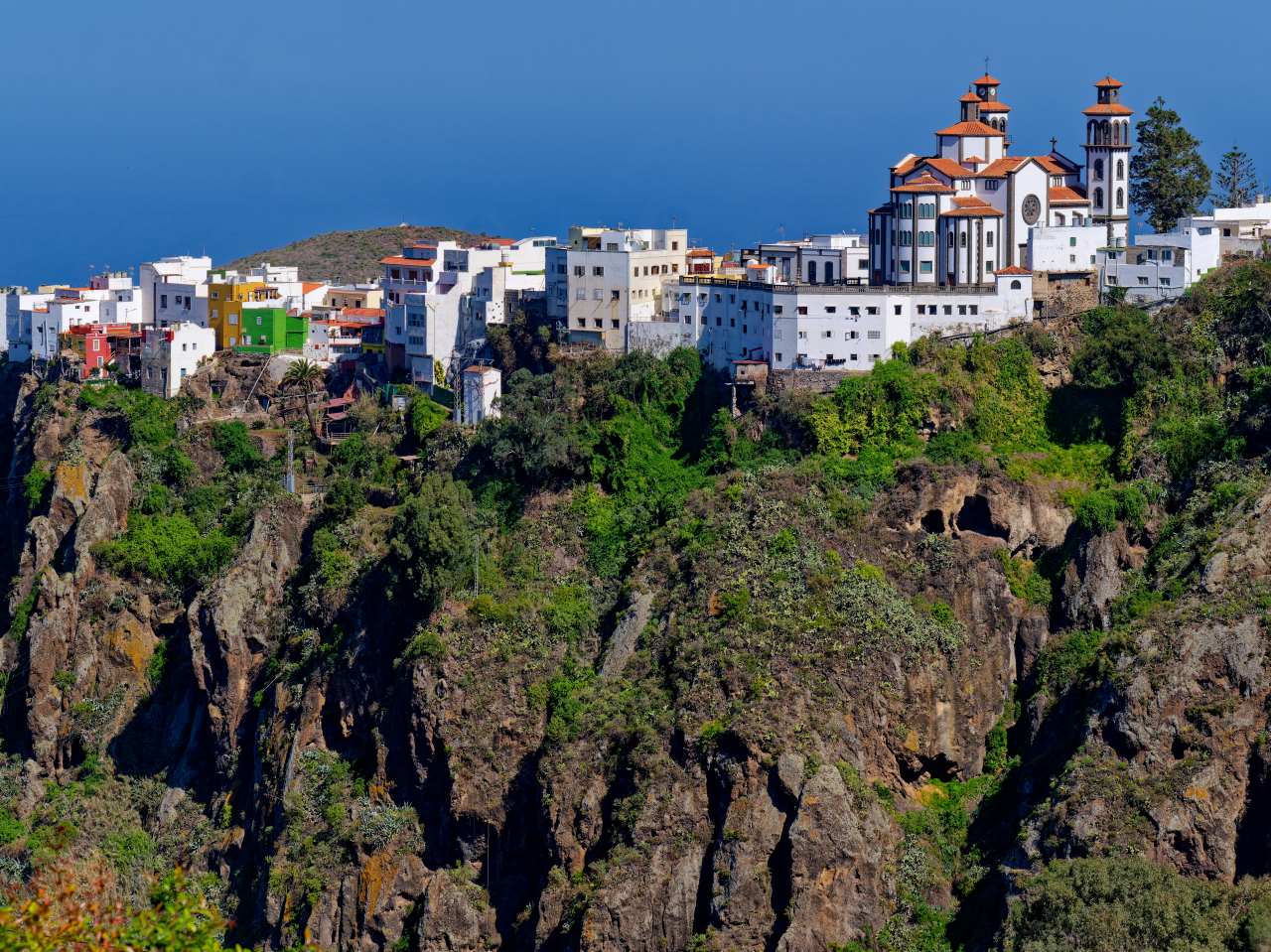
Moya is one of the greenest municipalities in the north of Gran Canaria and one that surprises many visitors. Located between the Moya and Azuaje ravines, at about 400 meters altitude, it preserves 65% of its territory as a Protected Natural Space.
Its great natural attraction is the Tilos de Moya, one of the last remnants of laurisilva on the island. Furthermore, the municipality is the birthplace of the poet Tomás Morales, the major reference of literary modernism in Canary Islands, and houses a church that rises above the void of a ravine. Check the webcams of Gran Canaria and check the weather before visiting.
Los Tilos de Moya
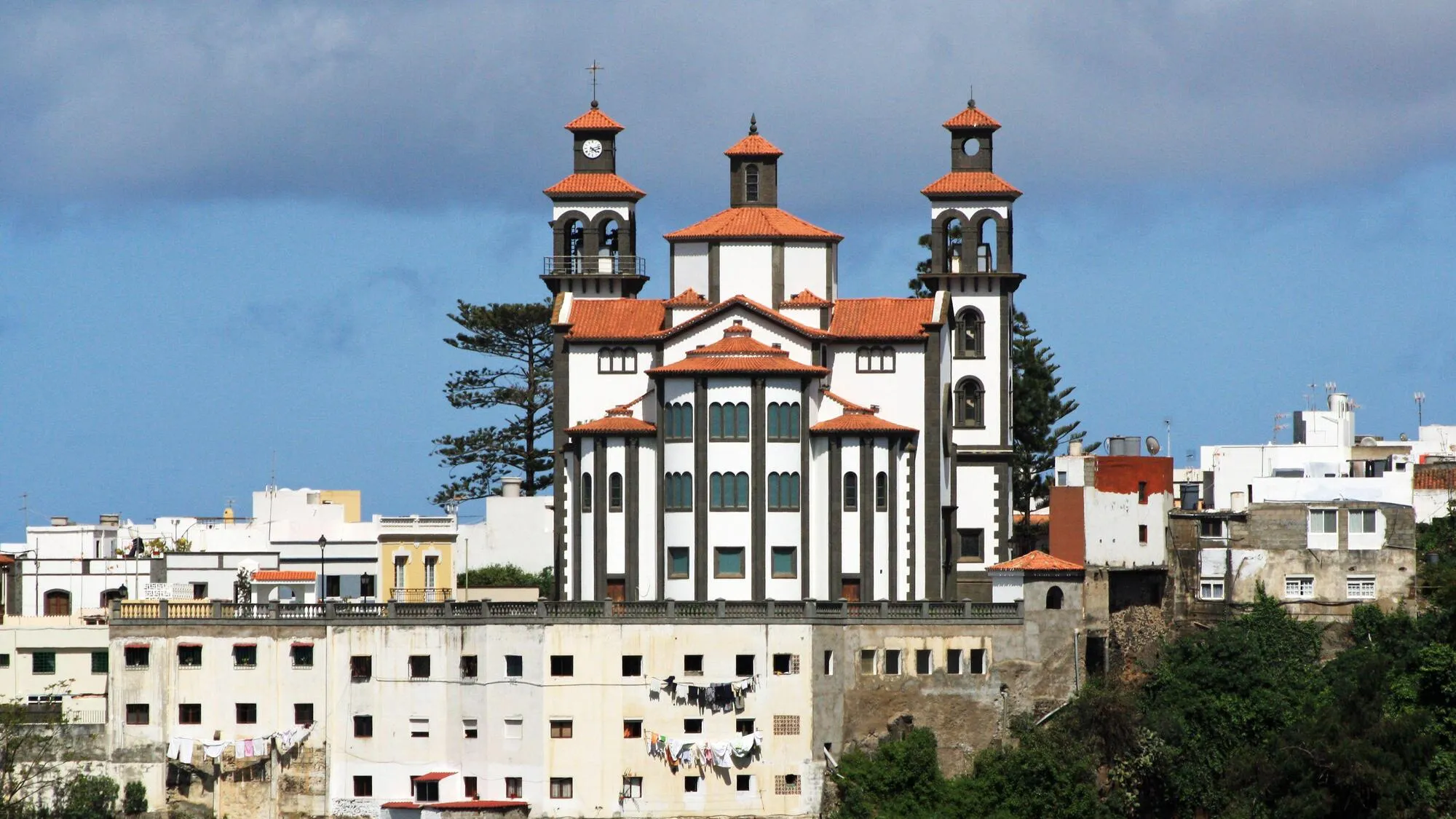
The Los Tilos de Moya Special Natural Reserve is the most valuable natural area in the municipality. With 91.5 hectares, it is part of the Doramas Rural Park and gets its name from the til (Ocotea foetens), the most abundant tree in this humid forest. In the 16th century, it began to decrease due to logging. Today, it is one of the last remnants of laurisilva that remain in Gran Canaria.
The trail is circular, with 2 kilometers of low difficulty and a duration of about 60 minutes. It begins next to the Los Tilos restaurant and traverses the Laurel ravine among tiles, laurels, barbusanos, and fayas. Along the way, traditional irrigation channels, corners, and ponds are preserved that show how water has always been essential in the municipality. Additionally, bird lovers can find finches, warblers, blackbirds, and canaries among the vegetation. The trail ends at the Interpretation Center, where the flora, fauna, and history of the reserve are explained.
The Church of Our Lady of Candelaria and the historic center
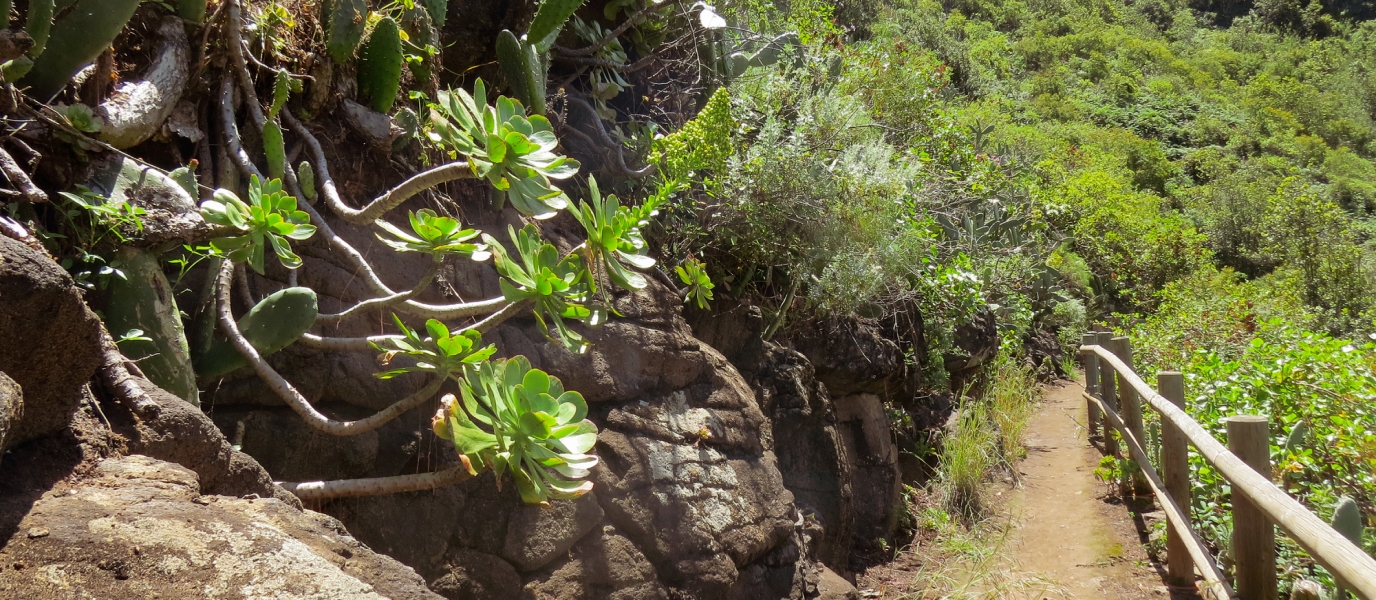
The Iglesia de Nuestra Señora de la Candelaria is the most striking monument of Moya. It rises on the very edge of the cliff that drops into the Barranco de Moya, creating an image that surprises from the very first moment. The temple dates back to 1957, in a neo-Romanesque style with Gothic elements: three naves, two attached towers, and a large rose window on the facade. Inside, it houses the Flemish image of the Virgin of Candelaria from the 15th century and two sculptures by the artist José Luján Pérez.
Behind the church, there is a viewpoint over the ravine with views of the lower course of Los Tilos. The historic center also concentrates the Heredad de Aguas de Moya — a basalt stone building from where the water of the ravine was managed —, the City Council and the statue of Juanita la Moyera, a tribute to the women who for generations sold the sweets of the municipality.
Tomás Morales and the House Museum
Tomás Morales (1884-1921) was born in Moya and is the most important Canary writer in the history of Spanish letters alongside Benito Pérez Galdós. His poetry made him the central figure of literary modernism in SpainThe The Tomás Morales House Museum occupies his birthplace in the Plaza de la Candelaria, in front of the church. Its rooms house the poet's documentary collection, his library, and a rich collection of paintings related to his figure. It opens Monday to Friday from 9:00 AM to 8:00 PM, Saturdays from 10:00 AM to 8:00 PM, and Sundays from 10:00 AM to 2:00 PM.
Fontanales and the coast
The district of Fontanales, in the peaks of the municipality, houses the Hermitage of San Bartolomé, built in 1872 and one of the most unique buildings in Moya due to its location on a slope with views of the northern ravines. From Fontanales, the views over the Doramas Rural Park and the northern coast of Gran Canaria are among the most wide-ranging and clear in the municipality.
The coast of Moya has an extension of about 4 kilometers with the La Caleta beach and several natural pools of crystal-clear water suitable for swimming most of the year. The coastal environment contrasts with the green of the midlands and creates one of the most varied landscapes in the north of the island.
The bizcochos and the gastronomy
Moya are famous throughout Gran Canaria for its artisanal bizcochos and its suspiros, a traditional pastry that families in the municipality have been making for generations.
The Casa Juana is the best-known reference: its homemade bizcochos are a must-have souvenir for anyone visiting the municipality. The restaurants in the center serve wrinkled potatoes with mojo, grilled meats and northern Canary cuisine with vegetables from local gardens. The contrast between the midlands cuisine and the fresh fish from the coast makes Moya a complete destination for gastronomic tourism in the north of the island.
How to get to Moya
Moya is about 25 kilometers of Las Palmas de Gran Canaria via the GC-2 highway and the GC-700 road (approximately 30 minutes by car). For the Tilos de Moya, the starting point of the trail is about 2.6 kilometers from the village center via the GC-700. From Las Palmas, bus line 106 of Global connects the capital with Moya with frequent departures. Check also the map of the municipalities of Gran Canaria to help you navigate the island.
Frequently asked questions about Moya Gran Canaria
What are the Tilos of Moya?
The Los Tilos de Moya Special Natural Reserve is one of the last remnants of laurisilva of Gran Canaria, with 91.5 hectares within the Doramas Rural Park. The circular trail of 2 kilometers of low difficulty traverses the forest in about 60 minutes. Access is from the Los Tilos restaurant, 2.6 km from the center of Moya via the GC-700.
Why is the church of Moya so unique?
The Iglesia de Nuestra Señora de la Candelaria rises on the edge of the cliff that drops vertically into the Barranco de Moya, creating a visually striking image. The temple dates back to 1957, is in a neo-Romanesque style with Gothic elements and houses a Flemish image of the Virgin from the 15th century and two sculptures by José Luján Pérez.
Who was Tomás Morales?
He was the greatest modernist poet of Canary Islands (1884-1921), born in Moya. His work places him alongside Benito Pérez Galdós as the two great figures of Canary literature in the history of Spanish letters. The The Tomás Morales House Museum occupies his birthplace in the square in front of the church of Moya.
What are the bizcochos of Moya?
They are a traditional artisanal pastry from the municipality, made by local families for generations. The Casa Juana is the best-known reference. They are taken as souvenirs and are one of the most sought-after culinary products in northern Gran Canaria.
Is there a beach in Moya?
Yes. The coast of Moya has about 4 kilometers with the La Caleta beach and several natural pools of crystal-clear water suitable for swimming almost all year round. The coastal environment contrasts with the green of the interior of the municipality.
How to get to Moya from Las Palmas de Gran Canaria?
It is about 25 kilometers via the GC-2 and GC-700, approximately 30 minutes by car. By bus, the line 106 Global connects Las Palmas with Moya with frequent departures. To reach Los Tilos, continue 2.6 kilometers more from the center via the same GC-700 road.