
Canarian Identity: between Spain and Europe
Canarian identity has been forged looking toward the Atlantic. It was born plural, became mixed, and today expresses itself as a composite identity that coexists with Spanish and European identities without contradiction. For many islanders, saying 'I am Canarian' also means saying 'I am Spanish' and 'I am European', a daily trilogy that is activated depending on the context: in a pilgrimage in La Gomera, in a Social Security office, or during an Erasmus in Lisbon. This natural ability to alternate identity registers is one of the strengths of the Archipelago, and is part of the Canarian lifestyle that is deeply valued. Moreover, enjoying life in the Canary Islands is a reflection of Canarian essence, a rich mixture of ancient heritages and new cultural proposals.
Historical layers that overlap
Talking about Canarian identity is talking about the overlap of layers and Canarian heritage that is transmitted from generation to generation. None cancel out the other; they all interact. The history of the Canary Islands is woven with episodes that reflect both the memory of an indigenous past and the African influence alongside other international currents.
- Aboriginal layer: Guanche memory, archaeology, toponymy, symbols, and the intangible heritage studied today in museums and cultural routes.
- Hispanic and Portuguese layer: language, institutions, patronal festivals, devotions, and Canarian traditions that are part of the rich history.
- Atlantic layer: routes with America, emigration and return, guitars and timples that learned to dance with the Caribbean, and even stories of the wine ships that sailed the ocean.
- European layer: autonomous statute, belonging to the European Union as an Outermost Region, cohesion policies, and a framework of shared rights.
This layered integration was neither linear nor harmonious. The conquest was traumatic, colonization reorganized lands and power, and modernity brought waves of emigration and return that remixed cultural codes. From these frictions, institutions such as councils emerged, an economy that has always been partly port and scale based, and an Atlantic sensitivity that distinguishes the islands within Spain, reinforcing Canarian identity at each step of its history.
Dual identity without friction: Canarian and Spanish/European
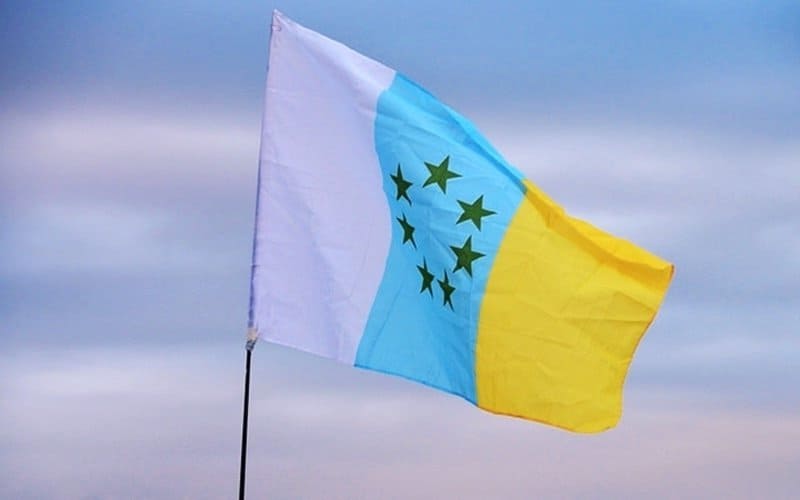
Far from a dilemma, identity is experienced as multi-belonging. The average Canarian combines local references with national and European affinities depending on moments and spaces, expressing them directly at festivals and cultural gatherings, where real-time broadcasts of traditional celebrations can even be seen on webcams. There are gestures and loyalties that illustrate this coexistence: pride in the National Team, attachment to the seven-star flag in cultural contexts, and the relaxed use of European programs that fund research, mobility, or heritage.
A useful way to read this coexistence is to look at what activates each level of belonging.
| Level of belonging | What activates in daily life | Symbols and practices | Spaces where it is reinforced |
|---|---|---|---|
| Island | Neighborhood, pilgrimage, sports club, council | Wizard costume, place names, healthy rivalries, living memory of history in Tenerife | Local festivals, island media |
| Archipelago | Shared culture, Canary language, sports | Timple, folías, lucha canaria, Canary Day, and recognition of Canary heritage | Regional radio and TV, schools |
| Spain | Social rights, state network, Constitution | Selection, Civil Guard, health system | Universities, general administration |
| Europe | Mobility, RUP funds, European citizenship, collaboration on live projects | Euro, European flag, R&D programs | Erasmus programs, Atlantic cooperation |
This table does not establish watertight borders. It serves to show how distinct identities are activated without conflict: Canary identity reaffirms at each level without opposing it to Spanish identity, but operates on another scale. European belonging, in turn, situates the Canary Islands in transnational networks with Azores, Madeira, or Guadeloupe that share challenges of remoteness, insularity, and dependence on tourism.
It is important to highlight that Canary identity is strengthened by integrating each of these scales, adding another valuable layer to the contemporary debate in the history of the Canaries.
Living culture that articulates the us
Canary identity is recognized primarily in its material and immaterial culture, reflecting a history of the Canaries full of nuances and significant episodes. Three traits act as columns:
- Language and accent: a Spanish with its own phonetics and lexicon, Andalusian and Portuguese heritage, and Caribbean echoes from back-and-forth migration; this accent and way of speaking are inseparable parts of memory and history.
- Sound and choreographic arts: isas, folías, and malagueñas, together with the timple as an emblem. Canary music feels the same in a square in Tenerife, where part of the history of Tenerife is also narrated, as it does in a Venezuelan gathering in Las Palmas, merging Canary traditions with modern rhythms.
- Knowledge and techniques: silbo gomero as a long-distance language, lucha canaria in the arena, the shepherd's leap as a profession turned sport. These practices inherit the heritage and constitute a living Canary heritage.
All of this is renewed. Young people producing trap with sampled timples, teachers teaching silbo in school, lucha clubs that have formed entire generations. Culture is not a museum; it is a lived practice in real-time and in spaces where webcams can capture the essence of the Canaries in festivals and celebrations.
Some everyday markers:
- Voices: bus, machango, baifo, magua.
- Gestures: the “¿todo bien, mi niño?” that opens doors.
- Cuisine: sancocho, gofio, wrinkled potatoes with mojo, island cheeses.
- Calendar: carnivals that function as rites of inversion and belonging, pilgrimages that bring entire neighborhoods together and revive Canary traditions.
Each of these elements intertwines to tell the story of the Canaries, highlighting the Canary identity that has transformed over the years.
The island dispute: a mirror that distorts and also stimulates
The so-called island dispute between Tenerife and Gran Canaria It has a history of more than a century. It was born out of a struggle among elites for the capital, infrastructure, and university, leading to rivalries with popular translations, from politics to football derbies, marking important episodes in the history of the Canary Islands.
Today its identity function is ambivalent:
- The positives
- It stimulates healthy emulation for better services and projects, reinforcing Canary identity in every initiative.
- It forces an agreement on a balance of seats and investments that distributes power and resources, solidifying part of the heritage and traditions of the Canary Islands.
- It keeps local pride alive without denying the archipelagic condition, reminding us of the history and heritage shared by both sides.
- The risks
- It can foster clientelism and narratives of comparative grievance, echoing old memories and historical disputes.
- It complicates strategic decisions if everything is viewed through an insular lens and does not consider the common history.
- It prolongs symbolisms that do not reflect the current reality of inter-island cooperation.
A minimal chronology helps to understand its sedimentation, without needing to enter into exact dates:
| Scope | Point of friction | Functional outcome today |
|---|---|---|
| Capital status | Distribution of seats and symbols | Shared capital status and alternation, validating the history of the Canary Islands with each distribution |
| University | Location of campuses and faculties | Two universities that cooperate and strengthen Canary heritage |
| Infrastructure | Ports, airports, hospitals | More balanced planning and recognition of Canary traditions |
| Sports | UD Las Palmas vs CD Tenerife | Ritualized rivalry, playful identity that enriches the history in Tenerife |
The dispute no longer sets agendas as it once did. It survives more in jokes, memes, and football discussions, showcasing the Canary identity in all its complexity and historical legacy.
Robust regionalism, minority independence
The political expression of Canarianness has mainly manifested in an autonomist key. The cabildo system grants real power to each island, and the autonomous government articulates common policies. In parliament, state parties and regional formations coexist, along with distinctly insular parties in El Hierro o La Gomera that look after local interests and preserve the rich memory and history of the Canary Islands.
Three factors explain why regionalism predominates:
- Geographical condition: an archipelago is not just any periphery. It requires proximity decisions and an administrative law that understands insularity and the African influence in the formation of the territory.
- Institutional architecture: cabildos, Statute of Autonomy, Economic and Tax Regime with specific incentives, and status as an Outermost Region in the EU, which reinforce the heritage and identity of the Canary Islands.
- Perceived utility: self-government is seen as an effective tool for negotiating with Madrid and Brussels, without renouncing memberships that ensure access to markets, security, and social rights, solidifying the history and traditions of the Canary Islands.
Why has independence not gained massive traction?
- A strong composite identity, celebrating Canarian identity in every corner.
- Economic and logistical costs of an exodus that few see as advantageous, highlighting the strength of heritage in the Canary Islands.
- Extended family ties with the mainland and America that blur mental borders and reinforce the history of the Canary Islands.
- Tangible benefits of the Spanish and European framework that strengthen both heritage and Canarian traditions.
There are minorities that advocate for self-determination, especially in cultural or postcolonial contexts, and their presence in networks and on the streets during significant dates is visible. However, their electoral representation is minimal. The general trend of the last decade directs energy towards more and better autonomy, not towards secession, solidifying a Canarian identity that is recognized in every political and cultural action.
Differences by islands and by generations
Living the identity is not the same from a neighborhood in La Laguna, a rural district on La Gomera, or a town on Fuerteventura. There are nuances:
- Capital islands: higher density, polarization between urban and rural, and greater visibility of insular tensions in media that tell the story of the Canary Islands through live reports and documentaries with webcams.
- Green and smaller islands: strong local pride, centrality of tradition, and denser kinship networks, focusing on a heritage that reinforces Canarian traditions.
- Tourist areas: coexistence with floating populations, languages in the street, and a more cosmopolitan daily identity, where one can even appreciate the Canarian lifestyle on every corner.
Generationally, the picture looks like this:
- Hyperconnected youth consuming global culture while absorbing local symbols naturally, reaffirming Canarian identity in multiple dimensions.
- Adults who have experienced changes in the Statute and remember more intense migrations, preserving the history and memory of a constantly changing Canary Islands.
- Elders who uphold traditions and crafts, living bridges to a non-idealized past, ensuring that heritage and history remain alive.
Recent immigration and the return of Canarians from the mainland or America add new layers to this framework. Identity expands to include biographies from Senegal, Venezuela, Italy, or Germany that are now part of the human landscape of the Canary Islands, enriching collective memory and heritage. This diversity does not negate Canarian identity but multiplies the flow of history, Canarian traditions, and the influence of shared memory.
Language, education, and media: the great transmitters
Schools, regional media, and cultural institutions have been decisive in disseminating Canarian identity from La Restinga to Corralejo. These spaces are an essential part of the mission to transmit both history and heritage, broadening collective memory.
Keys to transmission:
- Curricula that include archaeological heritage, insular literatures, traditional music, and the history of the Canary Islands, highlighting Canarian identity in class.
- Regional radio and television that create common references, showcasing all the Canary Islands and broadcasting cultural events live.
- Public programs that protect the silbo, Canarian wrestling, or the timple, and support contemporary creation, integrating also Canarian traditions and the essence of a rich heritage.
- Museums and routes that connect indigenous history, conquest, and creolization without falling into fantasies of an idyllic past, reinforcing memory and the Canarian lifestyle.
The language acts as a great adhesive. It's not a distinct language; it's a Spanish with its own musicality that makes any Canarian recognizable within two minutes of conversation. This accent is not blurred by Netflix or TikTok; it is reinvented and reinforces Canarian identity, articulating the history and heritage forged in the Canaries.
Useful comparisons: Azores and Madeira, Balearic Islands and Galicia
Looking at other archipelagos helps to place nuances in history. Both the Azores and Madeira share the status of outermost regions and intense diasporas. Regionalisms with strong institutional presence, and little inclination towards rupture, contrasted with the Balearic Islands, where insular identity is articulated together with a linguistic base in Catalan. Galicia, for its part, maintains a strong cultural identity, a history of American emigration, and regionalism that coexists with the presence of the State without paralysis. These comparisons enrich the discussion about heritage, memory, and the legacy of the Canaries, reaffirming that Canarian identity is nourished by all these influences and relationships.
Practical identity policy: where it is played
The playing field of identity is not limited to flags and speeches. It is played out in public policies that directly affect the lives of all those who seek to live in the Canaries, highlighting the Canarian lifestyle and its unique essence. Investments are made in strategic initiatives that promote:
- Mobility: subsidies for transportation between islands and with the mainland, vital for the feeling of being an archipelago and for watching the flow of activities live, often shared via webcams.
- Taxation: incentives that allow for production and job creation in a territory with logistical extra costs, strengthening the heritage and history of the Canaries.
- Culture: sustaining musical, editorial, and theater circuits that circulate insular production, celebrating Canarian heritage and traditions at every event.
- Education and research: universities with strength and Atlantic cooperation for ocean science, renewable energies, or astrophysics, reaffirming Canarian identity and the history that supports it.
- Housing and tourism: balance between the right to live on one's own land and tourism activities that cover part of the bills, ensuring that heritage, memory, and cultural legacy remain intact.
When these policies work, Canarian identity becomes a shared confidence that manifests in every aspect of living in the Canary Islands. When they fail, cracks and rhetoric of insular grievance emerge, reigniting disputes from the past, echoing old memories and historical challenges.
Myths, symbols, and critique: a mature ecosystem
The idealization of the Guanche past coexists with a critical perspective that prefers to speak of creolization, diaspora, and the history of the Canary Islands told from various angles. This conversation is healthy. It allows us to appreciate the depth of the archaeological sites, the beauty of the tagorores, and at the same time, recognize that ancient society was diverse and complex, without the need to turn it into a utopia. Thus, Canarian heritage is protected while Canarian traditions are valued.
Three lenses to view symbols without naivety:
- Archaeology and science to separate evidence from myth, consolidating history and memory.
- Art and literature to reinterpret the past and present with freedom, highlighting African influence in many cultural processes.
- Cultural policy to open spaces for debate and avoid exclusive appropriations, helping to build a Canarian identity that constantly renews itself.
This combination has allowed the whistling language to be a living heritage, that the Canarian struggle is taught with pride and that the timple sounds both in a parranda and in a symphonic auditorium, further consolidating Canarian identity in every artistic manifestation.
Immediate challenges and levers for the future of Canarian identity
Identity does not freeze. It sharpens in the face of concrete challenges and expands with new opportunities, always being a reflection of the heritage, memory, and history of the Canary Islands. Among the challenges are:
- Dependence on tourism and the need to diversify, while also protecting Canarian traditions and intangible heritage.
- Pressure on housing in tourist and capital areas, where the right to live in the Canary Islands is balanced with market demands.
- Energy costs and logistics of remote islands, aspects that require innovative solutions to continue building the history of the Canary Islands.
- Management of migration flows with humanity and efficiency, integrating the diversity that enriches Canarian heritage and identity.
- Climate vulnerability and land protection, challenges that also reflect lessons on memory and past strategies.
Levers for the future:
- Atlantic science and technology: marine energies, astrophysics, climate change observatories, that drive a future based on heritage and history.
- Culture as an industry: music, audiovisual, literature, video games with a Canarian label, reflecting Canarian identity in all its dimensions.
- Atlantic urban diplomacy: networks with cities from Madeira, Azores, Cape Verde, and a dialogue with other outermost regions that enrich memory and cultural legacy.
- Multilingual education that maintains the accent and opens horizons, conveying a Canarian identity that is reaffirmed through history.
- Inter-island cooperation to avoid duplicities and overcome the inertia of the dispute, reinforcing Canarian identity and shared heritage.
Let's imagine a Day of the Canaries in which, after a hard-fought institutional struggle, a young group plays a blend of isas with electronic music, and a school choir performs a piece in silbo. In the stands, there are grandparents who emigrated to Venezuela and grandchildren who came from Dakar, neighbors from Arucas and from La Orotava, lab technicians from the Astrophysics Institute and fishermen who were at the Canary-Saharan bank at dawn. Everyone applauds 'our own', celebrating that Canarian identity that is forged in history and heritage, embracing both Canarian traditions and African influence, as well as contributions from the European continent. This is how the Canarian lifestyle is lived, a mix that continues to evolve, where every fiber of being captures the memory, the legacy, and the history of the Canaries, intertwining art, politics, and culture in a wonderful narrative of identity.
Each of these aspects, from heritage to modern live communication channels and webcams, reinforces a Canarian identity that is reinvented and celebrated every day, ensuring that the heart and history of the Canaries continue to beat in every corner of the archipelago.