
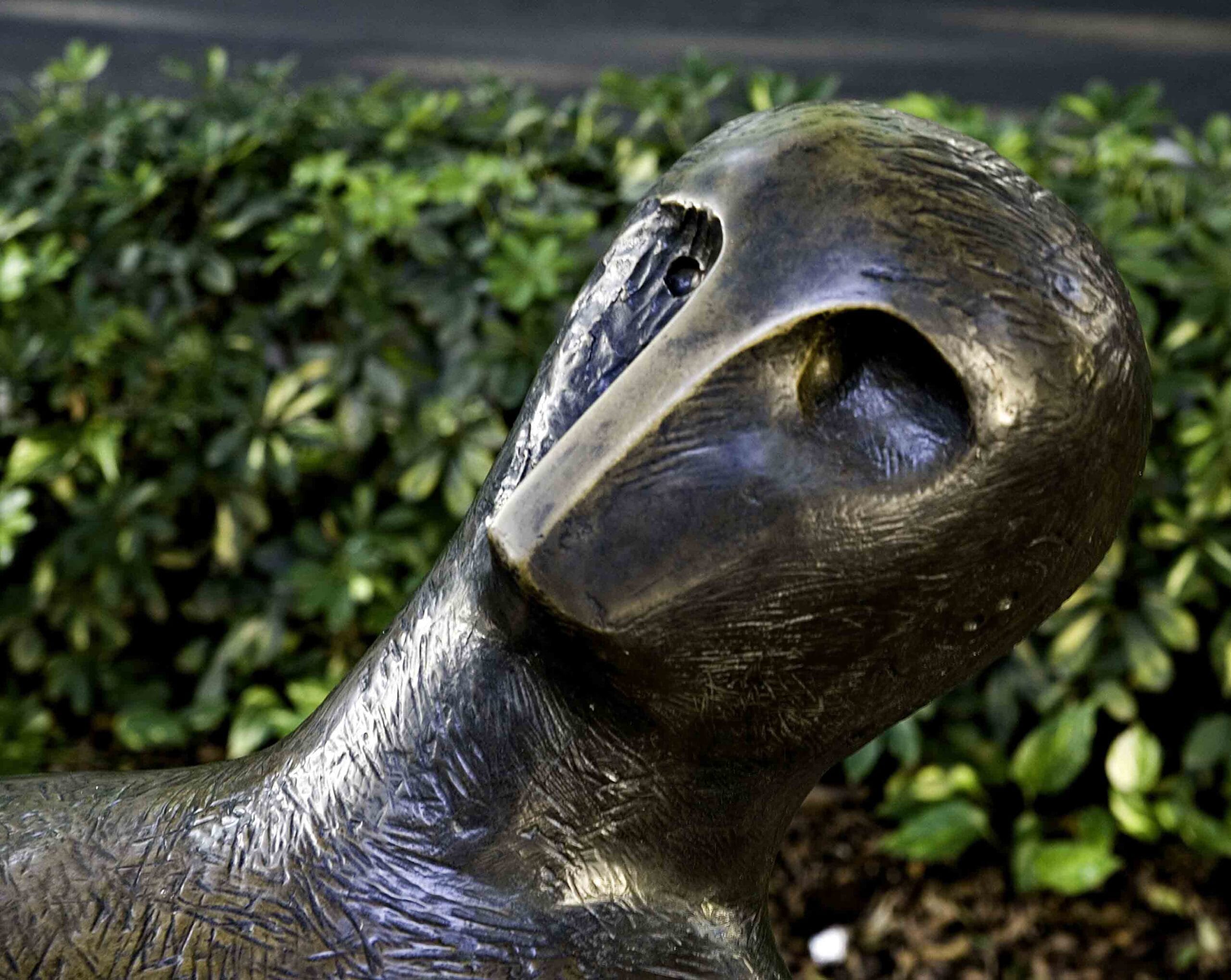
The Warrior of Goslar, Henry Moore
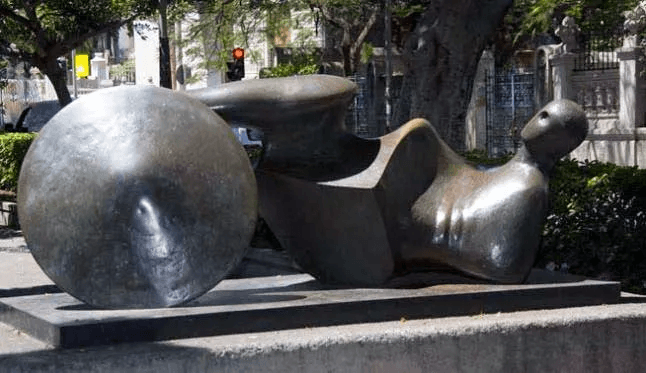
The Warrior of Goslar is a bronze sculpture by the British Henry Moore (1898–1986), one of the great sculptors of the 20th century. It is located on the Rambla of Santa Cruz de Tenerife and is considered the only work of Moore that can be seen in Spain. Its name comes from the German city of Goslar, which awarded the artist its prestigious prize, the Kaiserring, in 1975, and where another casting of the sculpture is kept.
The Warrior of Goslar: An icon of modern sculpture
The work depicts a wounded warrior lying on the ground, with a body reduced to organic and rounded shapes. It measures about three meters in length and revisits a theme that Moore dealt with multiple times throughout his career: the figure of the fallen warrior, symbolizing both the fragility and resilience of the human being.
Henry Moore, one of the most influential sculptors of the 20th century, worked with an innovative vision that broke with traditional norms of figurative sculpture. In his pieces, he sought to explore space, form, and texture, using materials such as bronze, marble, and wood. His work has been widely recognized not only for its aesthetics but also for the philosophical depth it conveys, exploring themes such as war, struggle, peace, and human nature.
Henry Moore in Tenerife: A bridge between art and local culture
The history of this sculpture in Tenerife begins with the I International Exhibition of Sculpture in the Street, held in Santa Cruz in 1973, which filled the city with works by avant-garde artists. Moore participated then with another piece, a reclining figure that had to return to its place of origin after the exhibition ended. Due to public interest, the sculptor allowed a version of the Warrior of Goslar to remain in the city, which already owned it by the late 1970s.
Today it is part of the large outdoor sculpture museum of Santa Cruz, with dozens of works scattered throughout the Rambla, García Sanabria Park, and other streets in the center, including pieces by artists such as Joan Miró. Before your walk, you can see the city atmosphere live with our webcams of Santa Cruz de Tenerife.
Conclusion
If you visit Santa Cruz, it's worth walking along the Rambla and stopping in front of this work: it's a unique opportunity to see up close the work of one of the great names in modern art, right on the street and without paying admission.