
What to see in La Aldea de San Nicolás, Gran Canaria
The western valley facing the Atlantic
The Village of San Nicolás Gran Canaria, the wild west of the island
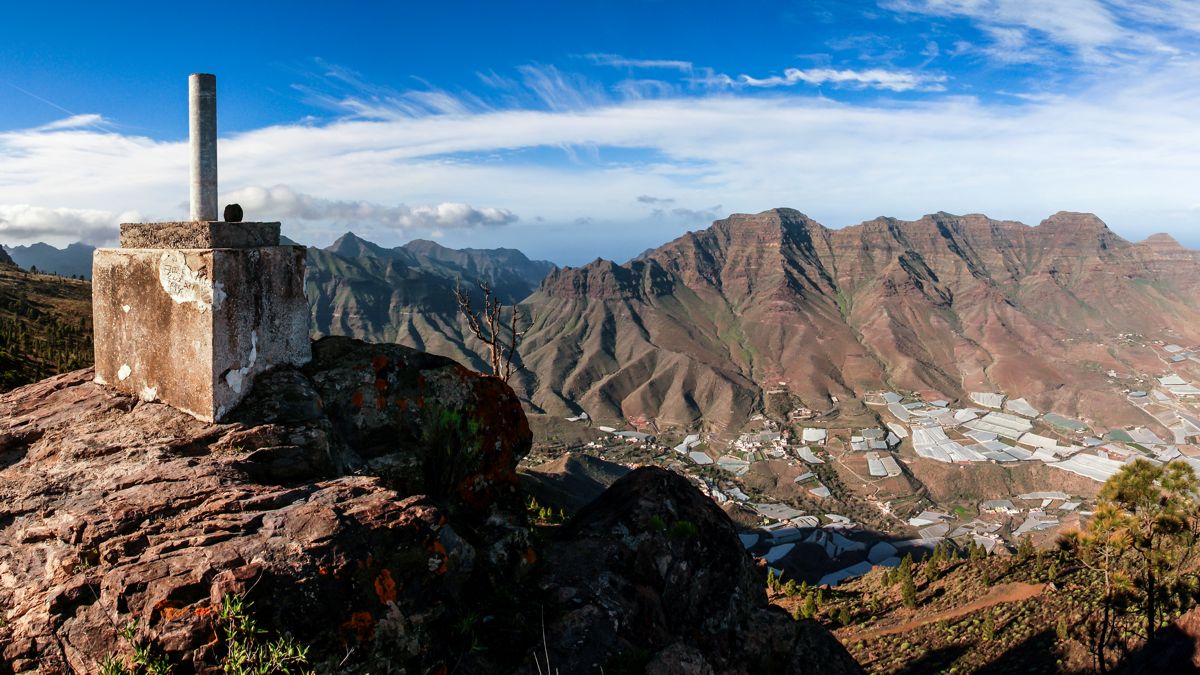
The Village of San Nicolás is the westernmost municipality of Gran Canaria and one of the largest on the island, with 139 square kilometers. Its coast of 33 kilometers of cliffs, virgin beaches, and protected marine environments make it one of the most authentic nature destinations in the archipelago. Until 2005 it was called Saint Nicholas of Tolentino, but the locals have always simply known it as The Village. Its historical isolation — accessible for decades only by boat or mountain road — has preserved a landscape, a gastronomy, and a way of life that mass tourism has not altered. Check the webcams of Gran Canaria and check the weather before visiting.

The Balcón Viewpoint
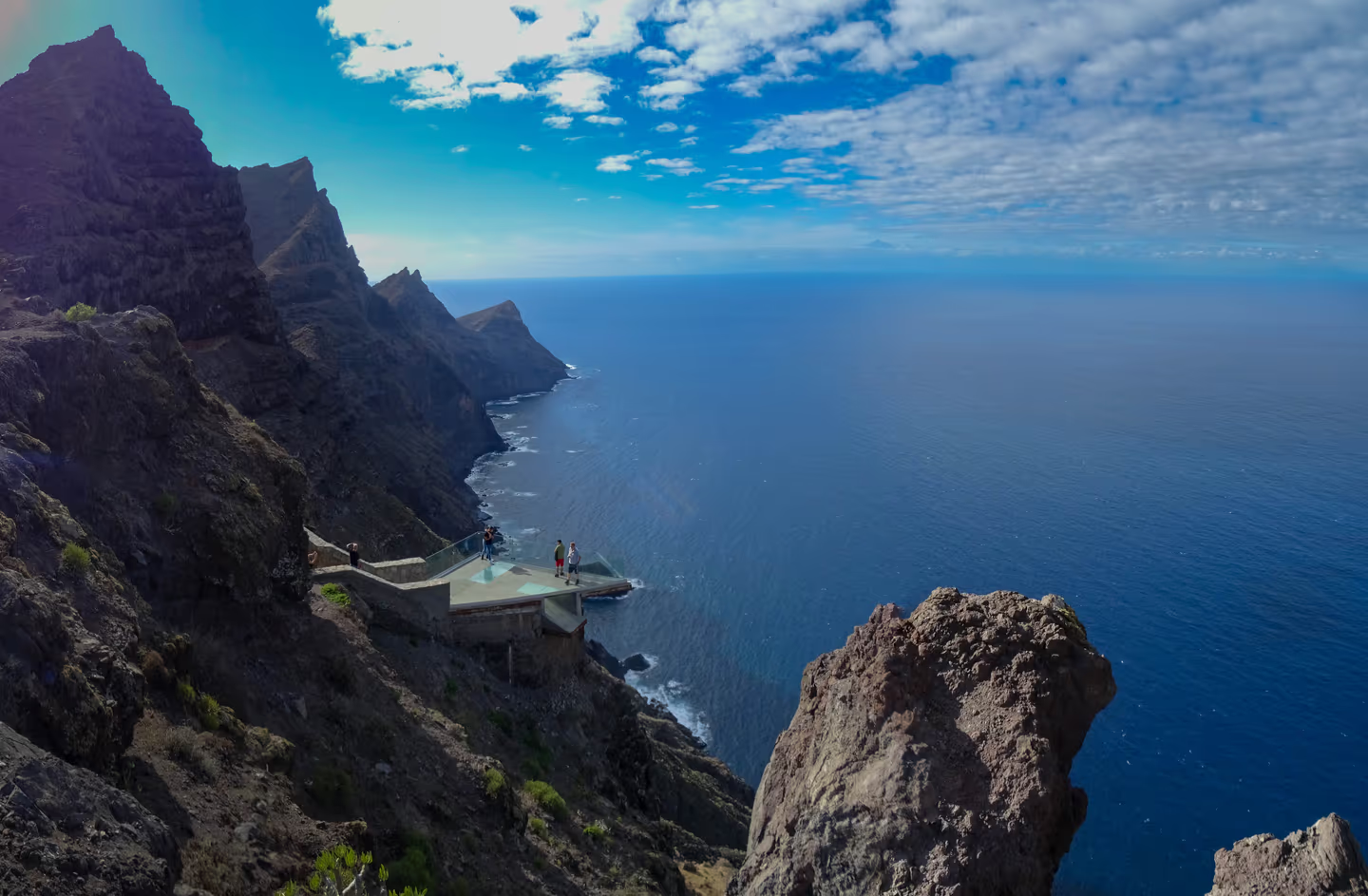
The Balcón Viewpoint is the most famous viewpoint in the west of Gran Canaria and one of the most striking stops on the circular route of the island. It is located on the road GC-200, on a cliff that drops vertically to the Atlantic Ocean. From the balcony hanging over the void, you can see the dragon's tail — the popular name for the jagged, zigzagging cliffs of the western coast — and the wide Valley of La Aldea inland. On clear days, Tenerife it appears on the horizon.
Access is very easy: there is parking on the road and the viewpoint can be reached in a few minutes. The sunset from the Balcón is one of the most photographed in Gran Canaria. Additionally, in 2018 the Starlight Foundation designated this spot as one of the three viewpoints in the municipality for astronomical observation, making the place a double visit: when the sun sets, the spectacle continues looking up.
Güi-Güi Beach and the pristine coast
The Güi-Güi beach is considered one of the wildest and most beautiful beaches of all Gran Canaria. You can only reach it on foot from Tasartico, in a hike of about 3 hours one way along a mountain trail, or by boat from the port of The Village. There are no services, nor car access. This difficulty is precisely what preserves it. The Güi-Güi Special Nature Reserve surrounds it with cliffs, ravines, and a marine biodiversity of great value, including seagrass meadows — marine algae meadows — of exceptional ecological importance.
The coast of the municipality also includes the beaches of Tasarte and Tasartico, more accessible by car and with a tranquil, local atmosphere highly appreciated by visitors seeking to distance themselves from the large tourist areas in the south.
Cactualdea and natural spaces
Cactualdea is the largest cactus theme park in all Europe, opened in The Village in 1995 by the Beisel family. Its facilities bring together thousands of varieties of cacti and succulents from around the world on a journey that combines botany and Canarian culture: it includes aboriginal caves, a Canarian wrestling area, and a display of the stick game. It is a surprising visit for everyone and one of the most original on the island.
The municipality is also part of three large protected natural spaces. The Inagua Integral Nature Reserve covers the ancient massif of the northwest with valuable pine forests and exceptional panoramic views. The Tamadaba Natural Park, shared with Agaete and Artenara, is one of the largest pine forests of Gran Canaria. Meanwhile, the Rural Park of the Nublo includes part of the territory of the municipality, connecting it with the volcanic heart of the island.
The historical center and living museums
The historic center of The Village preserves stone and mud houses from the 17th and 18th centuries and balcony houses from the 18th century that showcase Canarian popular architecture in its purest state. The Balcony House, the Casas Blancas and the Runner House are the most representative examples. The Church of San Nicolás de Tolentino, built in 1972, is the center of the town.
The Living Museums of La Aldea are a unique proposal on the island: a staging of rural life in the 20th century with locals as actors and guides. The threshing with animals, the making of bread in a wood-fired oven, the milking of goats, the tasting of milk with gofio, and the making of cheese can be seen and experienced live. Visits are by appointment through the Tourist Office. The Old Flour Mill — one of the five that the municipality preserves — also has a small museum about gofio production.
Astrotourism and night sky
The Village of San Nicolás is part of the Starlight Tourist Destination of Gran Canaria with three designated points for astronomical observation: the Balcón Viewpoint, the Cruz del Siglo and La Sabinilla. The low population density, the absence of light pollution, and the clarity of the air in the west of the island create an exceptional night sky. Additionally, the Tasartico Astronomical Observatory allows guided observations with a telescope in one of the darkest sites in the municipality.
Gastronomy in La Aldea
The gastronomy of The Village has a star product: the octopus ropa vieja, a dish created on the beach of Tasarte that combines fresh octopus from the coast with chickpeas and vegetables from the interior. It is a very local fusion that does not exist in any other municipality on the island. On the other hand, tomatoes, avocados, and bananas from the valley's gardens are export products and can be bought directly at the artisan market on the first Saturday of each month in the church square. The cuisine of The Village combines fresh fish from the Atlantic with potatoes, gofio, and goat cheeses from the interior.
How to get to La Aldea de San Nicolás
The Village of San Nicolás is about 60 kilometers of Las Palmas de Gran Canaria via the road GC-200 (approximately 70-80 minutes by car on a winding mountain road). From the south of the island, the route through Mogán and the GC-200 is the most common. It is recommended to have your own car because public transport frequencies are very limited in the area. The Balcón Viewpoint is on the GC-200 road, before reaching the village coming from the south. Check also the map of the municipalities of Gran Canaria to help you navigate the island.
Frequently asked questions about La Aldea de San Nicolás Gran Canaria
What is the Balcón Viewpoint of The Village?
It is a viewpoint on the GC-200 road above a vertical cliff on the west coast of Gran Canaria. From the hanging balcony, you can see the zigzag cliffs known as the dragon's tail, the Valley of La Aldea and, on clear days, Tenerife. It is one of the astronomical observation points in the municipality, and the sunset from there is one of the most photographed on the island.
How to get to Güi-Güi Beach?
You can only reach it on foot from Tasartico in a hike of about 3 hours one way along a mountain trail, or by boat from the port of The Village. There is no car access or services. The difficulty of access is what preserves its virgin character. It is part of the Güi-Güi Special Nature Reserve.
What is Cactualdea?
It is the largest cactus theme park in Europe, opened in The Village in 1995. It features thousands of varieties of cacti and succulents from around the world. Its facilities also include aboriginal caves, a Canarian wrestling space, and displays of Canarian popular culture. It is a surprising visit for everyone.
What is octopus ropa vieja?
It is a dish created on the beach of Tasarte, in the municipality of The Village of San Nicolás. It combines fresh octopus from the coast with chickpeas and vegetables from the interior, creating a very local fusion that does not exist in any other municipality of Gran Canaria. It is the most representative dish of the municipality's gastronomy.
Is La Aldea a good destination for astrotourism?
Yes. The municipality is part of the Starlight Tourist Destination of Gran Canaria with three designated points: the Balcón Viewpoint, the Cruz del Siglo and La Sabinilla. In addition, the Tasartico Astronomical Observatory offers guided observations with a telescope. The low light pollution of the west of the island makes this area one of the best places in Gran Canaria to see the stars.
How to get to La Aldea from Las Palmas de Gran Canaria?
It is about 60 kilometers on the GC-200, taking 70 to 80 minutes by car on a winding mountain road with many curves. From the south, the most common route goes through Mogán and continues along the GC-200. It is recommended to have your own car because public transport has very limited frequencies.