
What to see in Agüimes, Gran Canaria
Historic town in the southeast of Gran Canaria
Agüimes Gran Canaria, the southeastern town with indigenous history
Agüimes is one of the municipalities with the strongest identity in the southeast of Gran Canaria. Its name has aboriginal origins and means "place of special virtue," a definition that remains true today. The historic center, with more than 130 sculptures scattered across its cobbled lanes, makes it a unique open-air museum on the island. A few kilometres away, the Guayadeque Ravine and the coast of Arinaga round out a municipality of surprising variety. You can check the live cameras of Gran Canaria to see conditions on the island before visiting.
The historic centre: an open-air museum
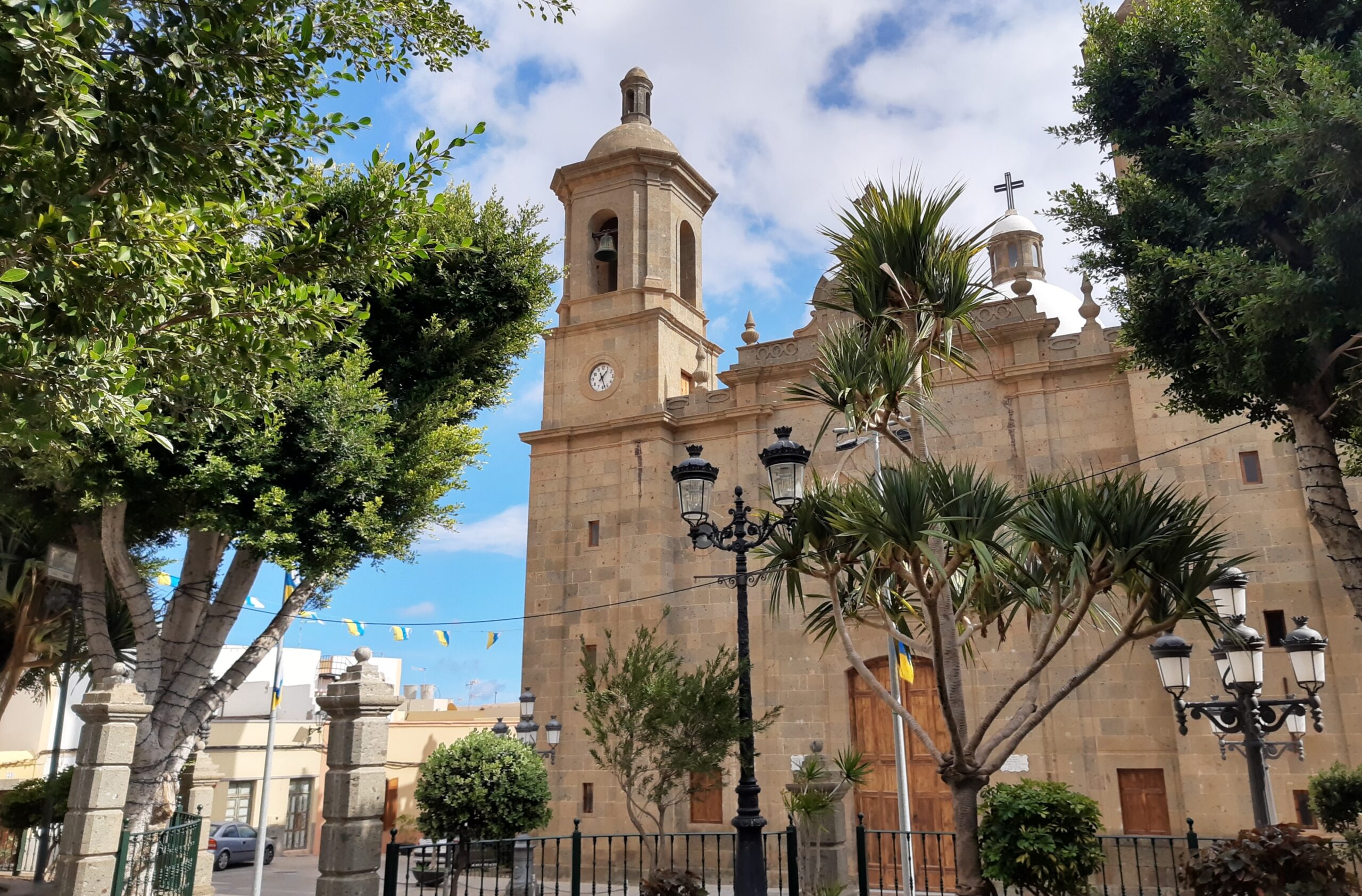
The historic centre of Agüimes is one of the best-kept in the southeast of Gran Canaria. Its cobbled streets, colourfully fronted houses and wooden balconies create a peaceful, authentic atmosphere far from mass tourism. Its heart is the Plaza del Rosario, overlooked by the imposing Iglesia de San Sebastián, a cathedral-style Neoclassical building declared a Monumento Histórico Artístico Nacional in 1981.
More than 130 varied sculptures are scattered through the streets of the centre: from the famous Camello del Callejón de la Vegueta to the Homenaje a la Música or the sculpture of Princesa Catalina, daughter of the island's last indigenous king, who lived and died in Agüimes in the 16th century. The Episcopal Palace, today the Museo de Historia de Agüimes, and the Centro de Interpretación del Casco Histórico in the Plaza de San Antón round out the cultural visit.
Guayadeque Ravine
The Guayadeque Ravine is one of the most impressive natural sites on Gran Canaria and the municipality's great attraction. Declared a Natural Monument and Cultural Heritage of Interest, this 16-kilometre canyon separates Agüimes from the neighbouring municipality of Ingenio and was one of the island's main indigenous settlements.
What makes the ravine so distinctive are its cave houses, many of them still inhabited, and its restaurants carved into the rock, where you can eat traditional Canarian food in a completely unique setting. The Guayadeque Interpretation Center is an excellent starting point for understanding the ravine's history and biodiversity, home to 68 native plant species and the famous giant lizard of Gran Canaria.
Beaches and the coast of Arinaga
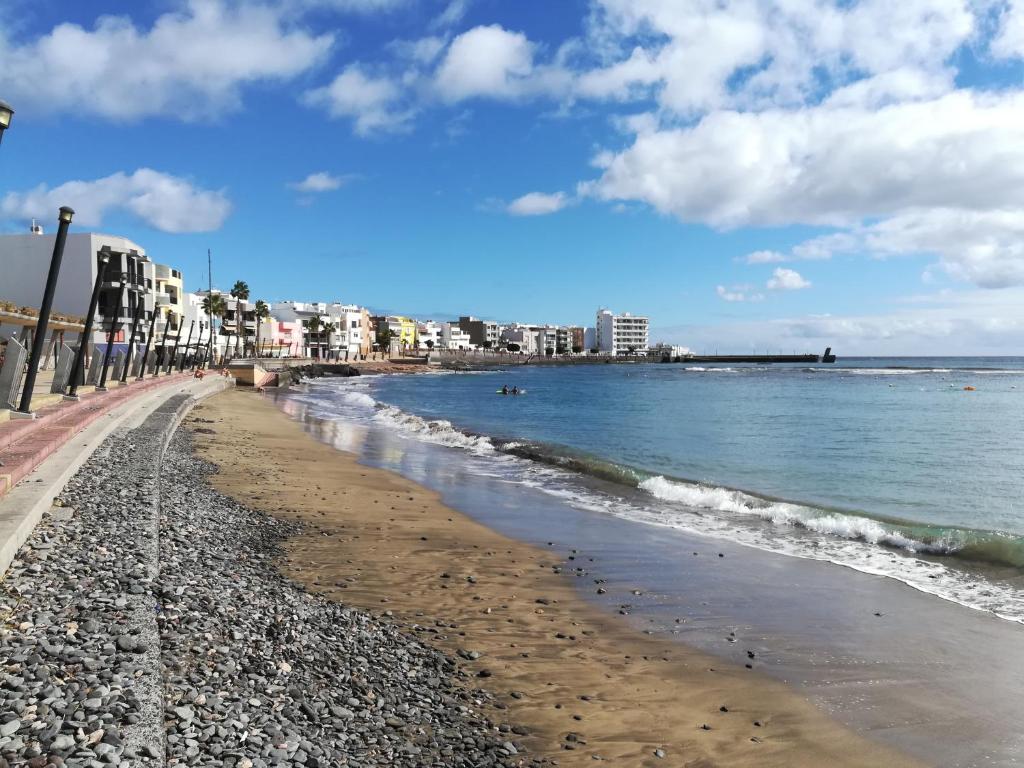
Agüimes' coastline is concentrated in Arinaga, a fishing village 9 kilometres from the historic centre. The Playa del Cabrón, north of Arinaga, is considered one of the best diving and snorkelling spots of all Gran Canaria thanks to its crystal-clear waters and protected seabed. It is within a protected marine area.
The Playa de Vargas, a little further north, is internationally known among windsurfing fans for the steady wind in the area. Next to the village, the Playa de Arinaga has a 4-kilometre seafront promenade with palm trees, sculptures and views of the inland mountains. Quieter and more local, it's perfect for combining a swim with the fish restaurants along the promenade.
Temisas: the village of olive trees
Heading up from the centre of Agüimes towards the interior, Temisas is a small hamlet perched on the mountain, surrounded by one of the oldest olive groves on Gran Canaria. Its narrow streets, stone houses and panoramic views of the ravine and the sea make it one of the most photogenic spots in the southeast of the island. It is the calm, rural counterpoint to the coastal atmosphere of Arinaga.
Gastronomy in Agüimes
Agüimes' gastronomy has its own well-recognised identity on Gran Canaria. The municipality is famous for its bread, whose quality has become a common saying on the island. The goat cheeses, with the designation of origin Señorío de Agüimes, have won top prizes at island tasting competitions in their cured, semi-cured and fresh varieties.
The cave restaurants of Guayadeque Ravine are a unique dining experience: vegetable stews, grilled meats, wrinkled potatoes with mojo and traditional pastries, eaten inside the rock. On the coast, the restaurants of Arinaga offer fresh fish, grilled prawns and local seafood.
How to get to Agüimes
Agüimes is in the southeast of Gran Canaria, about 25 kilometres from the Gran Canaria airport (about 20 minutes by car via the GC-1). From Las Palmas de Gran Canaria it's approximately 35 kilometres and 30 minutes via the motorway.
By public transport, the Global bus line 11 connects Las Palmas with Agüimes, with frequent departures. To get to Arinaga from the centre there are local buses, or about 15 minutes by car via the GC-100. Also check the Gran Canaria webcam map to help you navigate the island.
Frequently asked questions about Agüimes Gran Canaria
What to see in Agüimes in one day?
In one day you can explore the historic center with its sculptures and the Iglesia de San Sebastiánvisit the Guayadeque Ravine and eat at one of its cave restaurants, then finish on the coast at Arinaga for a swim at Playa del Cabrón.
What is the Guayadeque Ravine?
The Guayadeque Ravine is a natural 16-kilometre canyon declared a Natural Monument, with inhabited cave houses, restaurants carved into the rock and rich indigenous archaeology. It is one of the most distinctive places on Gran Canaria.
Which is the best Agüimes beach for diving?
The Playa del Cabrón, north of Arinaga, is considered one of the best beaches on Gran Canaria for diving and snorkelling spots thanks to its crystal-clear water and protected seabeds within a marine protected area.
What is Señorío de Agüimes cheese?
It's a goat cheese with the municipality's own designation of origin, made in the Los Corralillos and Era del Cardón areas. It comes in cured, semi-cured and fresh varieties, and has won several first prizes at island tasting competitions in Gran Canaria.
How do you get to Agüimes from the airport?
The Gran Canaria airport is about 25 kilometres from Agüimes, approximately 20 minutes by car via the GC-1. By public transport, the Global bus line 11 connects Las Palmas with Agüimes with frequent departures throughout the day.