

The whistling that survives in the ravines of Tenerife
When it comes to whistled languages in the Canary Islands, everyone thinks of the Silbo Gomero, recognized by UNESCO as an Intangible Cultural Heritage of Humanity. But few know that Tenerife also had —and still retains vestiges of— its own whistled communication system, deeply rooted in rural and isolated areas of the island.
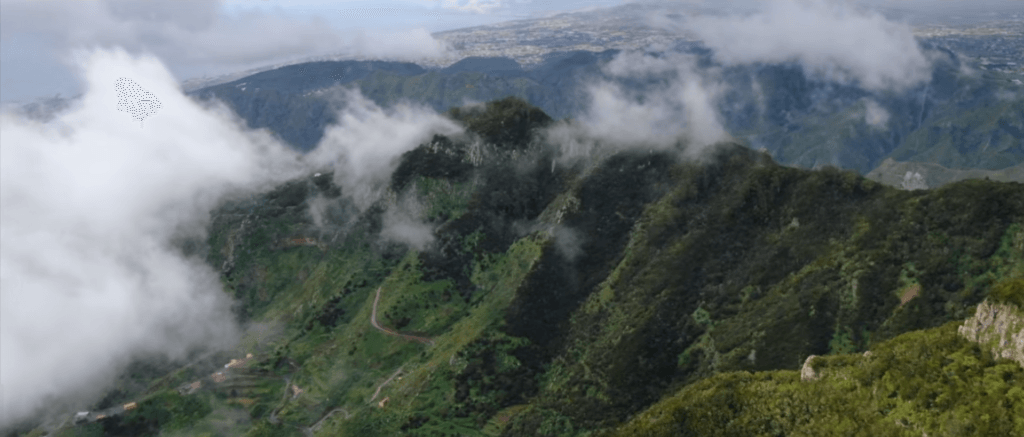
Unlike the Gomero whistling, which is more standardized and documented, the Tenerife whistling was never formalized or taught in schools. It was a practical resource, transmitted orally among shepherds, farmers, and neighbors in deep valleys like those of Anaga, Teno o Vilaflor, where the echo and distance made conventional shouting impossible.
Origins and function of the whistling in Tenerife
This communication system was not a new 'language', but rather a phonetic adaptation of Spanish (or of Guanche in ancient times) transformed into whistles. Each vowel and consonant was turned into a sharp or grave inflection, modulated according to the intention of the message. A long whistle could mean 'come!', while a short and repeated sequence signaled danger.
Shepherds used it to coordinate the movement of livestock, warn of storms, or even arrange meetings. In places like Chinamada, Taganana o Masca, where houses are separated by kilometers of elevation, whistling was as common as the morning greeting.
Why did it almost disappear?
With the arrival of roads, mobile phones, and rural depopulation since the 1960s, the Tenerife whistling lost its practical utility. The new generations did not learn it, and many considered it 'something for grandparents'. Today, only a few elderly people in remote areas remember how to modulate certain messages, although they no longer use it actively.
Unlike La Gomera —where the Whistle was revitalized through educational policies— in Tenerife there was never an official recovery program. However, researchers from the University of La Laguna and local ethnographers have recorded testimonies and recordings that prove its real and functional existence until well into the 90s.
Key differences with the Gomero Whistle
| Origin | Adaptation of Spanish (possibly with Guanche roots) | Direct evolution from the Guanche language |
| Structure | Less codified, more improvised | Standardized phonological system |
| Transmission | Oral, informal, familial | Taught in schools since 1999 |
| Current state | On the verge of extinction, with no active speakers | Revitalized, with hundreds of practitioners |
A heritage that deserves to be saved
Although it does not have the international recognition of the Gomero Whistle, the Tenerife whistling is a fundamental part of the rural identity of Tenerife. It represents the ingenuity of its inhabitants to overcome the hostile geography and maintain social cohesion in isolated environments.
From CanariasLife, we believe that this legacy should be made visible. Not only as a historical curiosity but as a living testimony of a way of life that respected the environment and made the most of its resources without altering them. And what better way to honor it than with a live webcam from Chinamada or Taganana, where the silence of the ravine still holds echoes of those whistles.
Common questions
Is there still someone who speaks the whistling of Tenerife?
Yes, although there are very few. Some elders in areas like Anaga or Teno remember whistled phrases or signals, but they no longer use them in daily life.
Can you learn the Tenerife whistle?
Currently, there are no formal courses, but researchers and cultural associations are collecting material for future recovery initiatives.
Is the Tenerife whistle the same as the Silbo Gomero?
No. Although they share the same function (communication at distance through whistles), they differ in origin, structure, and degree of formalization.
Why hasn't it been protected like the Silbo Gomero?
Mainly due to the lack of early documentation and because its use was more dispersed and less visible. Furthermore, Tenerife prioritized other cultural manifestations in its heritage policies.
Where can I hear examples of the Tenerife whistle?
Some recordings are archived in the University of La Laguna Library and in ethnographic projects like "Voices of the Mountain". Occasionally, they are included in local documentaries about rural culture.